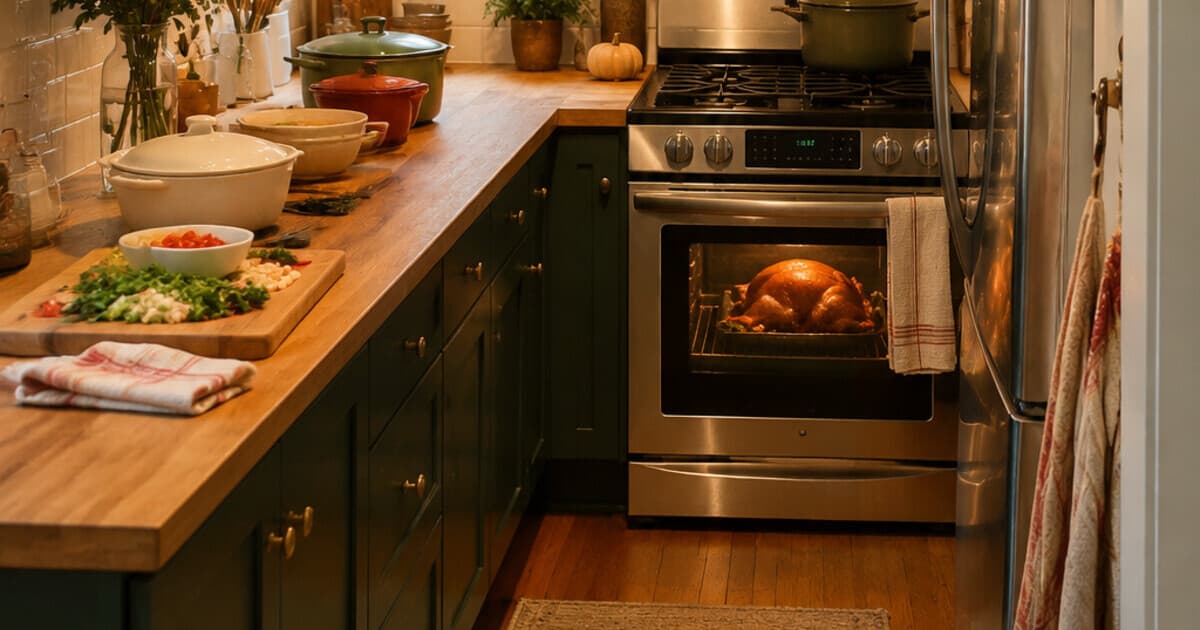
One oven is enough for Thanksgiving. The problem is not the number of racks; it is asking the oven to roast a turkey, brown three casseroles, warm rolls, and rescue a cold side at the same moment. A workable plan gives the turkey one protected block, moves flexible dishes elsewhere, and treats the turkey's rest as valuable oven time. The schedule below is built for a normal home kitchen, not a catering line.
QUICK REFERENCE
Classify every Thanksgiving dish before scheduling the oven
| Dish type | Oven rule | Planning move |
|---|---|---|
| Turkey or main roast | Protect the recipe temperature and full cook window | Schedule first |
| Exact-temperature side | Do not change the setting unless instructions allow it | Move earlier/later or offload |
| Flexible reheat dish | Share only when allowed temperature ranges overlap | Group in the turkey-rest window |
| No-oven dish | Keep it off the oven schedule | Use stovetop, slow cooker, refrigerator, or room-temp service |
Start with an oven map, not a recipe pile
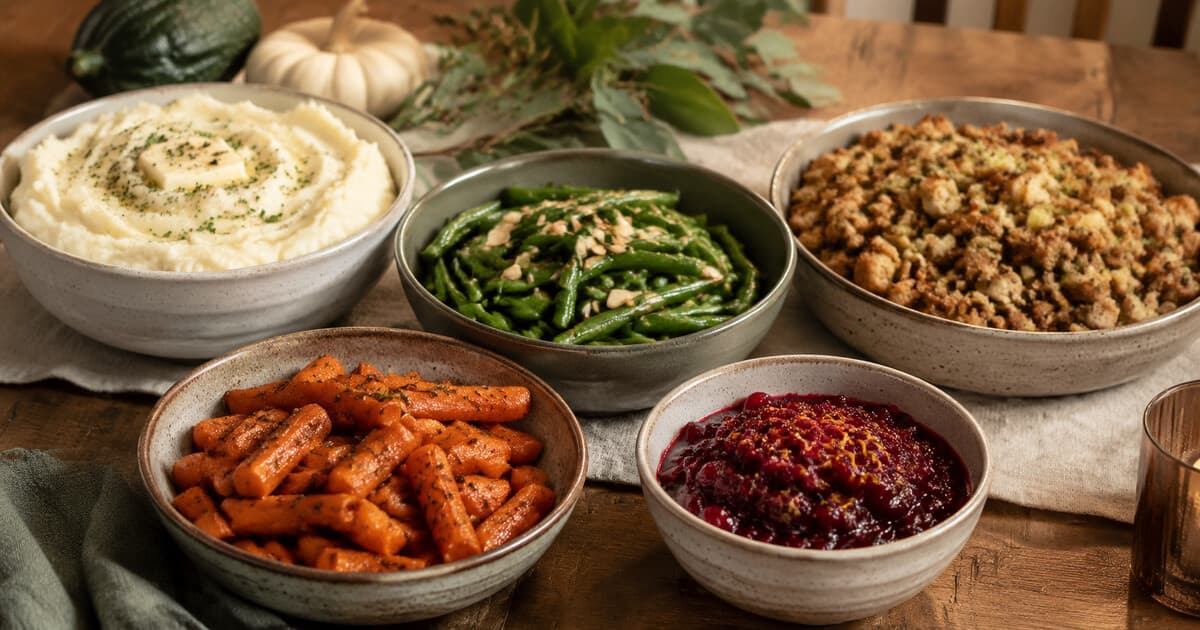
Write down every dish that wants the oven, its preferred temperature, how long it needs, and whether it is cooking from raw or simply reheating. You will usually discover that fewer dishes truly need the oven than the menu made it seem. Pie can be baked the day before. Mashed potatoes can live on the stovetop or in a slow cooker. Cranberry sauce needs no oven at all. Gravy belongs on a burner.
Then label each oven dish as rigid or flexible. The turkey is relatively rigid because food safety and its size determine the roast. A casserole that is already cooked and only needs to heat through is flexible. Rolls are very flexible. A crunchy topping is usually a five- or ten-minute finishing job rather than a forty-minute oven reservation.
- Rigid: turkey or another large roast that needs a full cooking cycle.
- Flexible: cooked casseroles that only need reheating.
- Quick finish: rolls, browned toppings, toasted nuts, crisp crumbs.
- Move elsewhere: mashed potatoes, gravy, cranberry sauce, salad, cold appetizers.
Group temperatures only when the recipe allows it
Write down the temperature printed in each recipe first. Some casseroles and reheating instructions explicitly allow a range or give alternate temperatures; those are the dishes you can group. If a recipe gives one temperature and does not say it is flexible, keep that setting exact and solve the conflict with timing, make-ahead prep, holding, or another appliance instead of inventing a middle temperature.
Keep poultry especially strict. USDA says a whole turkey should be roasted in an oven set no lower than 325°F and cooked to a minimum internal temperature of 165°F, measured in the appropriate parts of the bird. The thermometer, not the visual color of the skin, decides when the turkey is done.
The turkey goes first because it creates the best handoff window
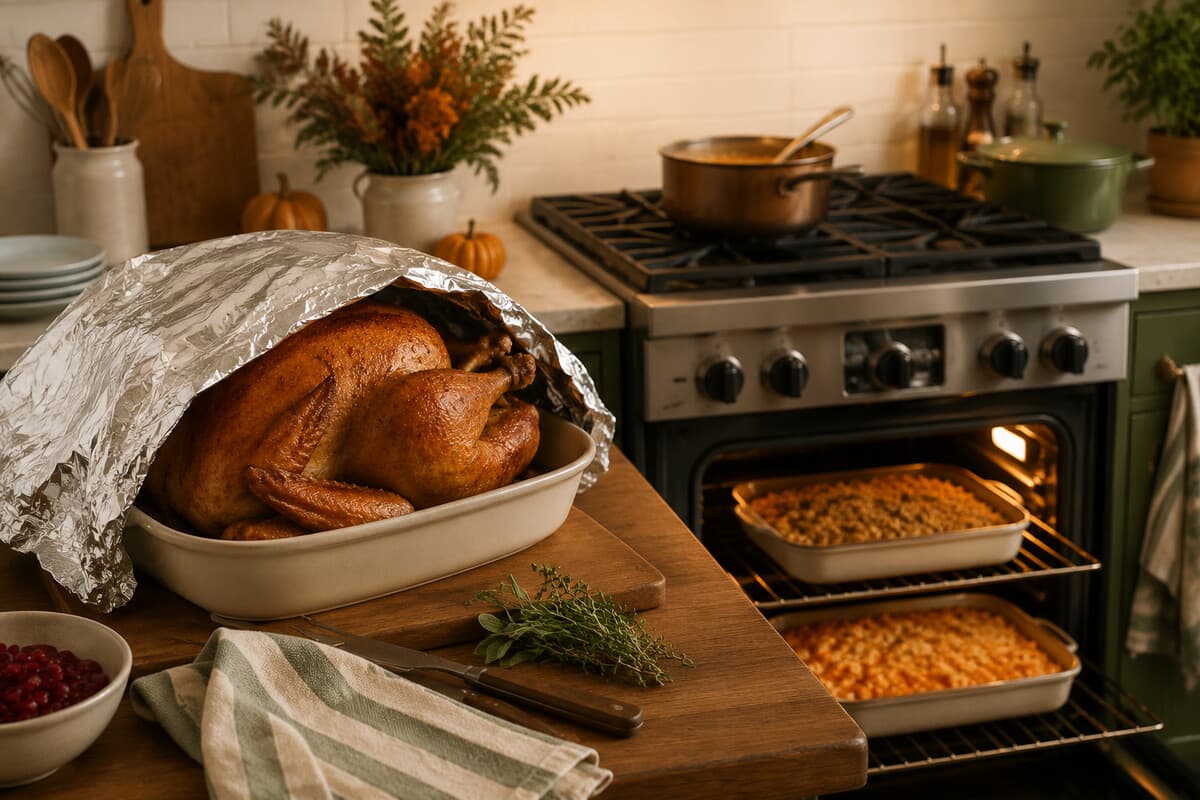
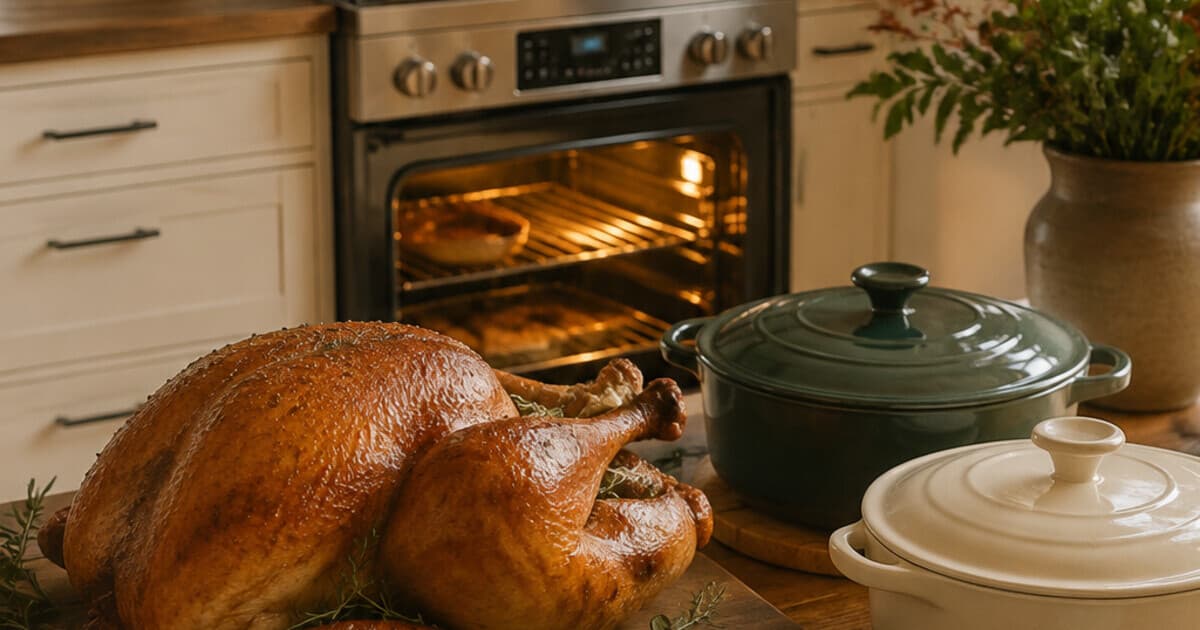
Plan for the turkey to finish before your intended dinner time, not at it. Once it is cooked, it needs time before carving anyway. That rest is when the oven changes jobs. Pull the bird, tent it loosely, clear the roasting pan from the hot zone, and load the casseroles that need reheating or browning.
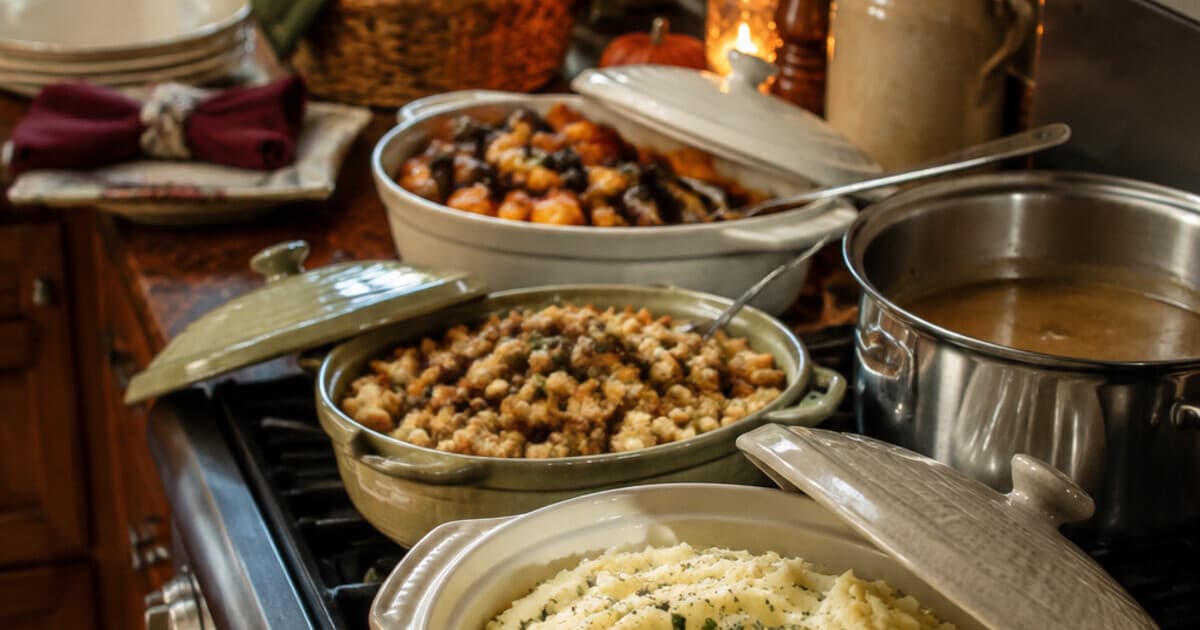
Do not promise yourself that a giant cold casserole will become piping hot in fifteen minutes. If a side was refrigerated, account for a real reheating window. Smaller or shallower dishes heat faster than deep ones. If two sides can share a rack at the same temperature, place them in together and rotate only if your oven has obvious hot spots.
Worked example: Thanksgiving dinner for 8 with one oven
Treat this as capacity math, not a universal recipe timetable. If your tested turkey schedule has the bird leaving the oven about an hour before a 5:00 dinner, stage two reheating sides beside the oven before that handoff, keep potatoes and gravy on the stovetop, and reserve rolls for the final few minutes. The important constraint is that the turkey owns the oven first; the exact clock times still come from the recipes and thermometer you are actually using.
Reverse timeline: the day before
Bake desserts that do not need to be oven-fresh. Assemble only casseroles whose recipes explicitly support overnight refrigeration. For stuffing or dressing, prepare the dry and cooked wet components separately; USDA advises mixing them only just before cooking. Make cranberry sauce, salad dressing, gravy base, and any stovetop components. Put each finished or safely assembled dish into the exact pan it will use on Thanksgiving so you are not transferring food during the busiest hour.
Tape a small note to each pan with the reheating temperature and estimated time. This is not excessive organization; it lets another person help without asking you six questions while you are checking the turkey.
Reverse timeline: four to five hours before dinner
Get the turkey into the oven based on its recipe, size, and expected cooking range, leaving a cushion before dinner. Keep the stovetop mostly free while the bird roasts. Use that time for mashed potatoes, gravy components, cold dishes, table setup, and cleaning as you go.
If one side genuinely benefits from baking early and can be reheated well, cook it before the turkey only if your schedule allows. Otherwise, keep the pre-turkey period simple. The main goal is not making progress everywhere; it is avoiding a traffic jam later.
Reverse timeline: about one hour before dinner
Start checking the turkey early enough that an unexpectedly fast bird does not surprise you. When it reaches the safe internal temperature called for by USDA guidance, remove it. This is the handoff: adjust the oven to the shared side-dish temperature, put in the longest reheating casseroles, and start or finish gravy on the stovetop.
Move mashed potatoes to their holding method. Keep salad undressed. Put serving bowls, carving tools, and trivets in place. You are buying yourself a clean final twenty minutes.
Reverse timeline: the final 20 minutes
Check the center of reheated casseroles rather than trusting a browned top. Add crisp toppings near the end so they do not steam into softness. Warm rolls last; they need very little time and do not deserve to delay dinner. Dress the salad, transfer gravy, and carve the turkey only when the serving area is ready.
If one side is five minutes behind, serve five minutes later. A calm table with hot food is better than hitting a text-message dinner time while the stuffing is cold in the middle.
One-oven Thanksgiving checklist
Run this list when you finalize the menu, not after the turkey is already roasting.
- Every oven dish has a temperature, time, and pan written down.
- Pies and other stable desserts are baked ahead when possible.
- No more than two or three sides depend on the post-turkey oven window.
- Mashed potatoes, gravy, and at least one vegetable have an off-oven plan.
- The turkey has a working food thermometer and a realistic finish cushion.
- Reheating dishes are shallow enough to warm efficiently.
- Crunchy toppings and rolls are saved for the final minutes.
- Serving bowls, utensils, and trivets are out before the oven handoff.
- You have decided which dish can be served warm rather than scorching hot if timing slips.
Do not use unsafe warming shortcuts to protect the schedule
USDA guidance says hot foods being held for service should stay at 140°F or warmer, and perishable food should not sit in the 40°F to 140°F danger zone for more than two hours—or more than one hour when the ambient temperature is above 90°F. If a dish will wait a long time, use an appliance or method that can actually maintain a safe temperature rather than assuming a towel on the counter will do it indefinitely.
For leftovers, refrigerate perishable food within two hours (one hour above 90°F) and divide large amounts into shallow containers so they cool faster. The schedule is only successful if dinner is both calm and safe.
TAKE IT TO PAPER
Useful printables for this plan
SOURCES
Sources & references
These links support factual rules, quantities, safety guidance, or planning context. The final prioritization and sequencing in this guide are editorial decisions. See how sources are chosen.
- Public guidanceUSDA FSIS — Happy Thanksgiving!fsis.usda.gov
- Editorial referenceThe Kitchn — The Oven Space/Time Continuumthekitchn.com
- Public guidanceUSDA FSIS — Stuffing and Food Safetyfsis.usda.gov
FAQ
Questions people ask before guests arrive
Can I cook Thanksgiving dinner with only one oven?
Yes. Let the turkey have the oven first, prepare desserts and recipe-supported casseroles ahead, keep uncooked stuffing components separate until just before cooking, move potatoes and gravy to stovetop or slow-cooker methods, and use the turkey resting window to reheat and brown the final sides.
Can Thanksgiving side dishes bake together at one temperature?
Some casseroles and reheating dishes can share an oven when their recipes explicitly allow overlapping temperature ranges. If the instructions give one exact temperature, keep it exact and solve the conflict another way. Poultry safety is separate: roast turkey according to safe guidance and verify doneness with a thermometer.
How long should I plan between turkey coming out and dinner?
Build in enough time for the turkey to rest and for your reheating dishes to become properly hot. In many menus that means roughly 30 to 60 minutes of oven handoff time, depending on how many cold casseroles need reheating.
What Thanksgiving foods should not use oven space at the last minute?
Mashed potatoes and gravy are better candidates for stovetop or verified hot holding; cranberry sauce, salads, and other dishes specifically intended for cold or room-temperature service can stay out of the final oven window. Save that oven window for foods that truly benefit from baking or browning.