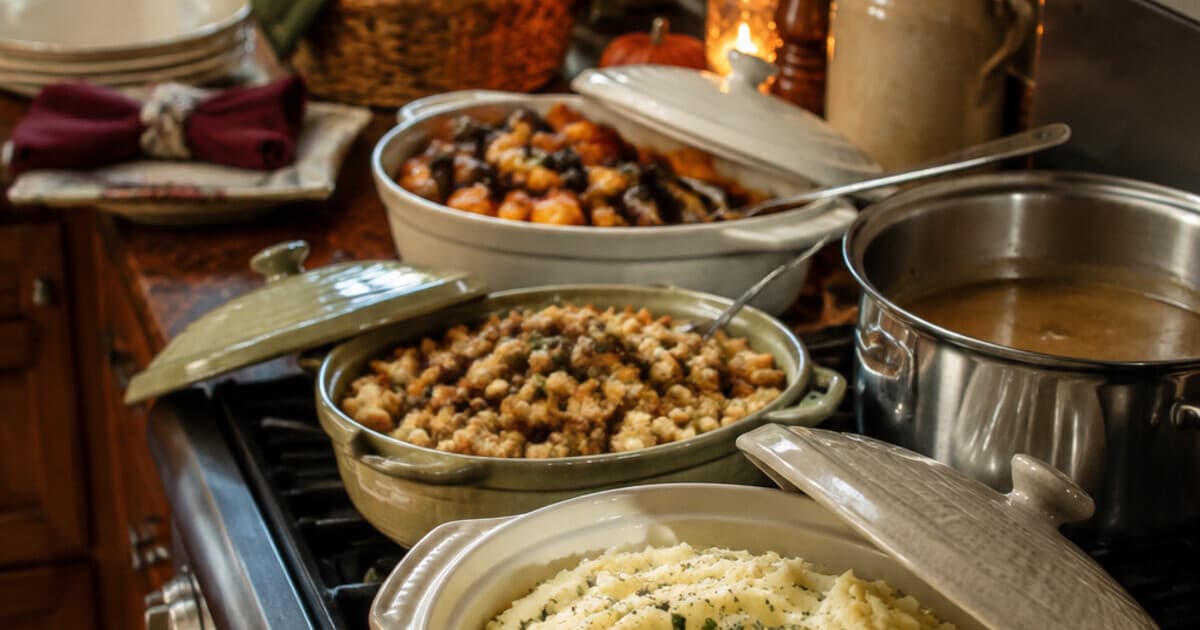
The hardest Thanksgiving temperature is not 325°F or 375°F. It is “still good when everyone finally sits down.” Different foods finish at different times, and treating them all the same creates either cold potatoes or dried-out casseroles. The easier approach is to give each dish its own holding plan. Some foods like gentle heat, some need to stay crisp, and some were never required to be piping hot in the first place.
Sort dishes by texture before choosing a warming method
Moist foods tolerate holding better than crisp foods. Mashed potatoes, gravy, braised greens, creamed vegetables, and some casseroles can sit on controlled gentle heat if you protect their moisture. Fried onions, toasted crumbs, roasted vegetables, and rolls lose their best texture when trapped under steam for an hour.
Create three groups: hold hot, reheat near dinner, and serve warm or at room temperature only when that dish is specifically intended and safe for that style of service. This is the part most Thanksgiving schedules skip. When every dish is labeled “must be hot,” the host ends up reheating everything at once.
Best method for mashed potatoes, gravy, and other moist sides
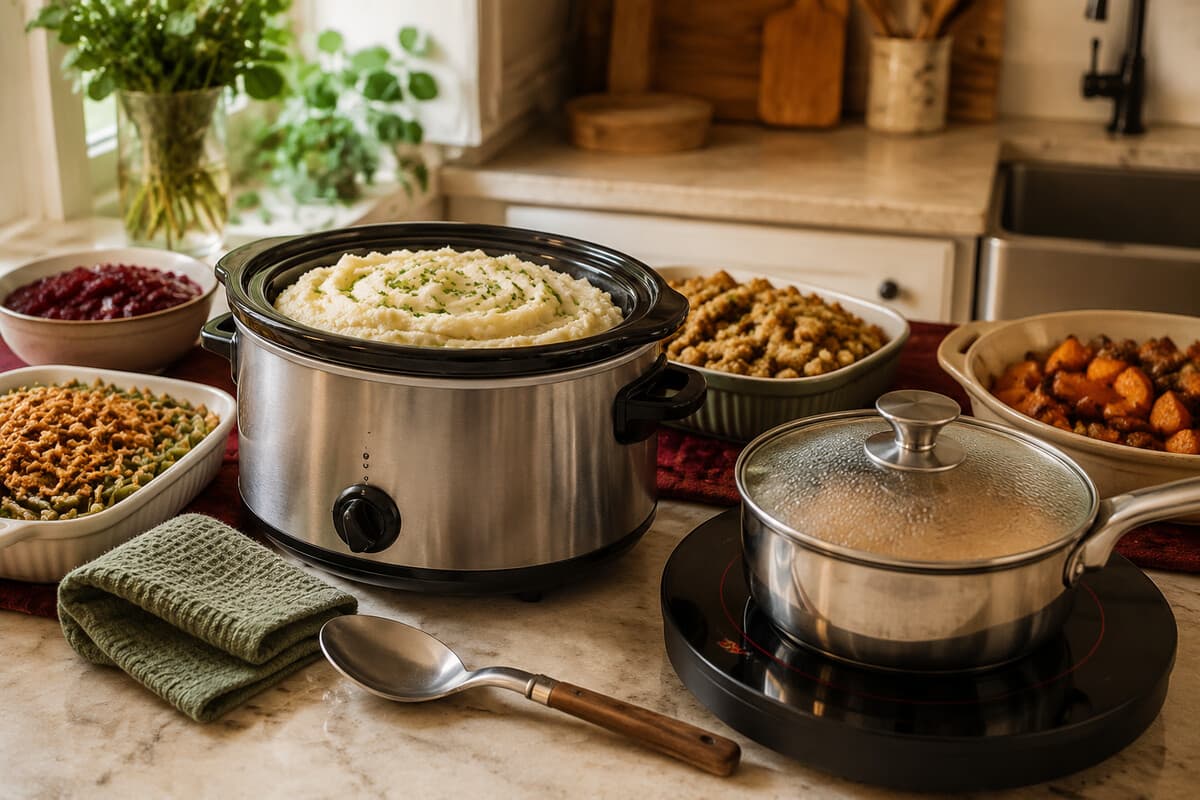
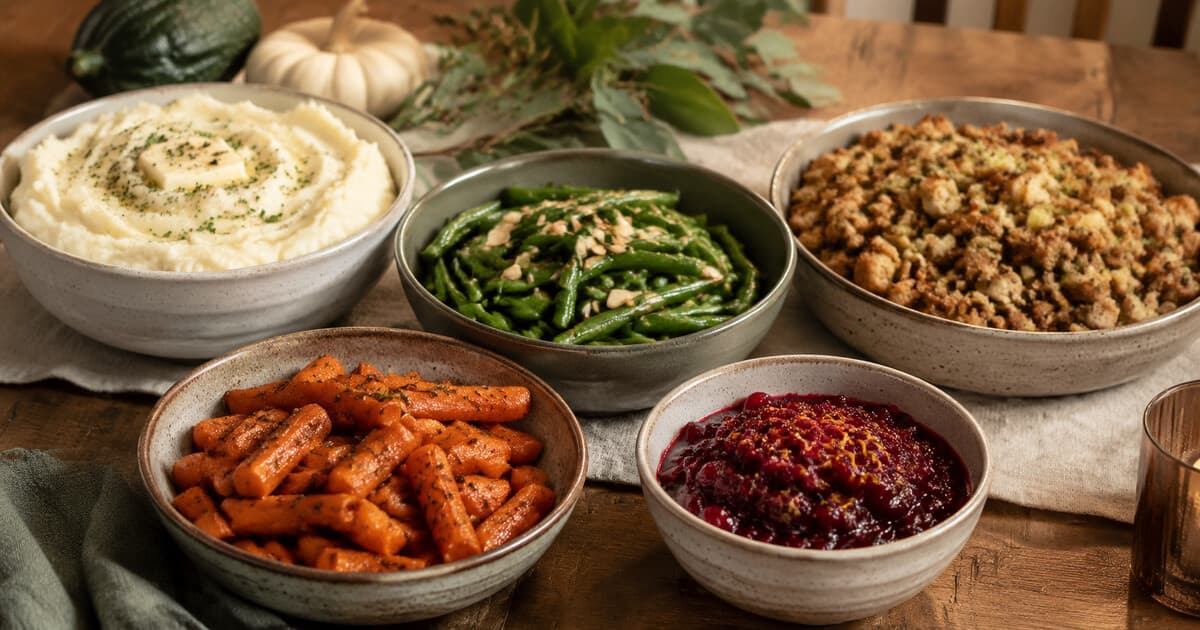
Mashed potatoes are good candidates for a slow cooker or another controlled warming method because they can be stirred and loosened if they tighten. Keep the lid on most of the time and add a little warm milk, cream, broth, or butter only if the texture needs help. Gravy can stay over very low heat for a shorter period or move to a preheated insulated vessel, then receive a final stir before serving.
Do not assume every appliance's “warm” setting holds the same temperature. Check the food itself when safety matters. USDA guidance says hot foods held for service should remain at 140°F or warmer.
Best method for casseroles and stuffing
If a casserole finishes thirty minutes early, cover it to slow heat loss and hold it in a genuinely warm environment rather than on a cold stone counter. If it will wait longer, use a low oven, warming drawer, electric warming tray, slow cooker where appropriate, or a chafing setup that can maintain safe hot-holding temperature.
Protect the top according to texture. Cover creamy casseroles so they do not dry out. If the dish has a crisp topping, hold the base covered and add or re-crisp the crunchy layer just before serving. Stuffing can tolerate a short covered hold, but a long steam bath makes the top soft.
Best method for turkey
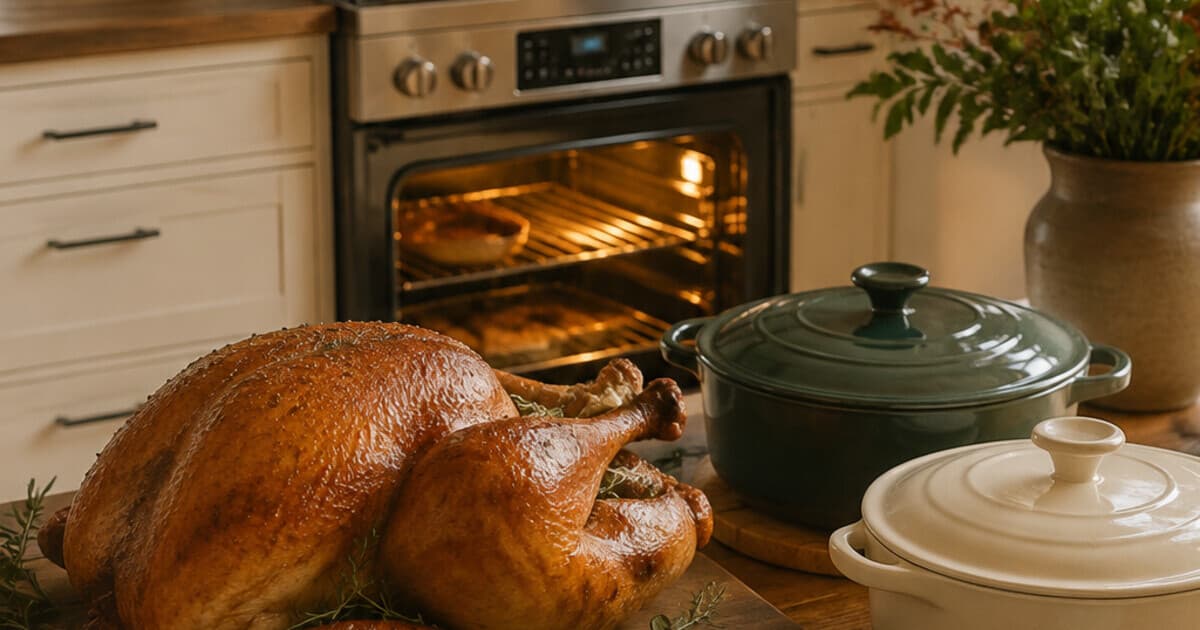
A whole roasted turkey needs a rest before carving, which naturally gives you a short buffer. Do not carve it the moment it leaves the oven simply because the sides are not ready; slicing exposes much more surface area and lets heat and moisture escape faster.
If dinner is substantially delayed, do not rely on a foil tent for hours. USDA guidance for cooked dinners emphasizes keeping hot food at 140°F or above or refrigerating it when the wait becomes long, then reheating appropriately. For ordinary Thanksgiving timing, the better fix is usually to make the sides catch up during the turkey's normal resting window.
Turkey finished early? Choose a short-hold or chill-and-reheat plan
USDA says a fully cooked turkey can be kept warm, covered with foil, in an oven that maintains the meat at 140°F or above, but holding it hot for more than a couple of hours hurts quality. If the delay is becoming long rather than a normal rest, carve the cooked turkey into smaller portions, refrigerate it in shallow containers, and reheat it to 165°F for service. Do not let a finished bird sit on the counter while you hope the schedule catches up.
Best method for rolls, roasted vegetables, and crisp toppings
These are not holding foods. Bake or reheat rolls near the end, then place them in a basket with a clean towel for a short trip to the table. Roasted vegetables are often better warm than repeatedly reheated into softness. Crisp toppings should go on during the final oven pass.
This is where perfectionism creates bad food. A green vegetable that is pleasantly warm can be better than one that spent forty minutes under heat becoming dull and soft. Save active warming for foods that truly need it.
Reverse timeline: two days to one day before
As you prep each dish, write its holding method beside it: slow cooker, oven, warming tray, insulated carrier, stovetop, cold, or room-temperature service only when the dish is specifically intended for it. Make sure the appliance and serving dish are compatible. If three dishes all require your only slow cooker, you have not solved the problem yet.
Choose one fallback. A toaster oven, countertop oven, slow cooker, electric pressure cooker with a suitable warm function, or insulated carrier can become valuable secondary capacity, but only use equipment according to its instructions and only when it can maintain the food safely.
Reverse timeline: 45 minutes before dinner
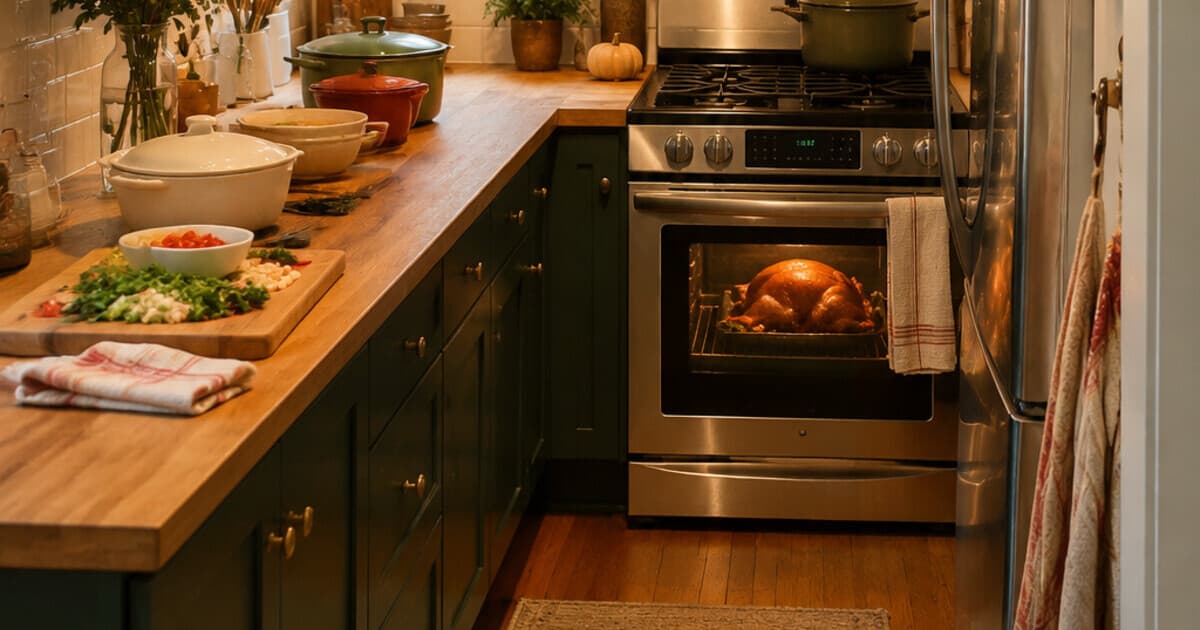
Move moist sides into their holding positions. Reheat casseroles that were made ahead. Keep cold dishes refrigerated. Put crisp toppings and rolls aside for later. Check the turkey and start making room for the oven handoff.
If guests are already grazing, resist putting the entire meal on the buffet early. Small appetizer portions are easier to refresh, and the main dinner stays at the right temperature until people are actually ready to eat.
Reverse timeline: 15 minutes before dinner
Give everything one final texture check. Stir potatoes. Whisk gravy. Uncover or crisp casseroles if needed. Warm rolls. Dress salad. Transfer foods into serving dishes only if doing so will not cool them unnecessarily.
If you are serving buffet-style, put out smaller amounts and replenish from safely held food rather than setting every pan out for the entire evening. That is easier on both texture and food safety.
Thanksgiving warm-holding checklist
A holding plan is complete when every hot dish has somewhere specific to go.
- Mashed potatoes or other moist sides have a gentle controlled heat source.
- Gravy has a low-heat or insulated holding plan.
- Casseroles are covered or uncovered according to the texture you want.
- Crunchy toppings are saved for the end.
- Turkey is not carved far in advance just to make the table look ready.
- Rolls and roasted vegetables are treated as late-finish foods, not long-hold foods.
- Hot-held perishable food can stay at 140°F or warmer.
- Cold perishable food stays at 40°F or colder until service.
- Leftover containers are ready so food does not linger on the table all night.
Know when warming turns into unsafe holding
USDA states that bacteria grow rapidly in the 40°F to 140°F danger zone. Perishable food left at room temperature should be refrigerated within two hours—or within one hour when the ambient temperature is above 90°F—and hot food being held for service should remain at 140°F or warmer. Leftovers should be cooled promptly in shallow containers and reheated to 165°F when reheating is required.
That is why a warming strategy should be based on actual heat, not wishful insulation. Towels and insulated carriers are useful for short transfers and brief waits, but long holding needs temperature control.
TAKE IT TO PAPER
Useful printables for this plan
SOURCES
Sources & references
These links support factual rules, quantities, safety guidance, or planning context. The final prioritization and sequencing in this guide are editorial decisions. See how sources are chosen.
- Public guidanceUSDA FSIS — Turkey Basics: Handling Cooked Dinnersfsis.usda.gov
- Public guidanceUSDA FSIS — What Should I Do If the Turkey Is Done Too Soon?ask.fsis.usda.gov
- Public guidanceUSDA FSIS — Leftovers and Food Safetyfsis.usda.gov
- Editorial referenceThe Kitchn — 7 Alternative Ways to Keep Thanksgiving Dishes Warmthekitchn.com
FAQ
Questions people ask before guests arrive
What is the best way to keep mashed potatoes warm for Thanksgiving?
A slow cooker or another gentle controlled warming method works well for mashed potatoes because the dish can be stirred and loosened if needed. Keep the food safely hot and avoid aggressive heat that scorches the bottom.
Can I keep Thanksgiving side dishes warm in the oven?
Yes for dishes that tolerate it, but use a low enough setting to avoid continued cooking and verify that the food stays safely hot. Crisp vegetables and toppings are usually better reheated or finished closer to serving instead of held for a long time.
How do I keep turkey warm while the sides cook?
Let the whole turkey rest before carving and use that rest period as your side-dish oven window. A loose tent can reduce heat loss for a short normal rest, but a long delay requires a true safe hot-holding or chill-and-reheat plan rather than leaving the bird on the counter.
What temperature should hot Thanksgiving food be held at?
USDA guidance says hot foods being held for service should stay at 140°F or warmer. Perishable food should not remain at room temperature for more than two hours, or one hour when ambient temperatures are above 90°F.