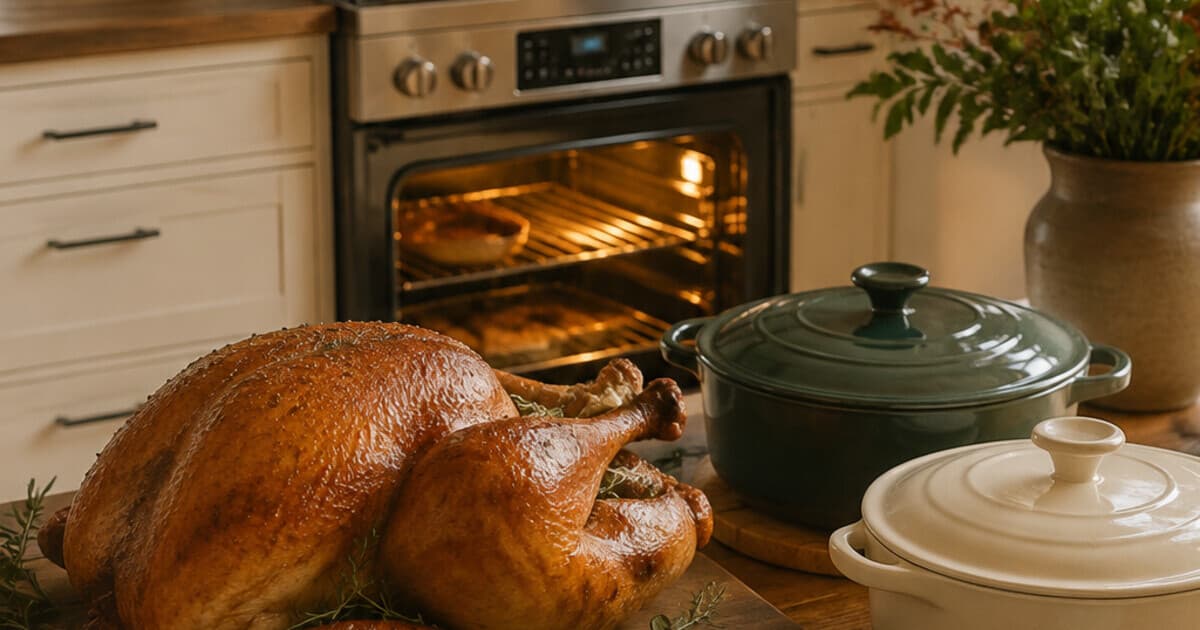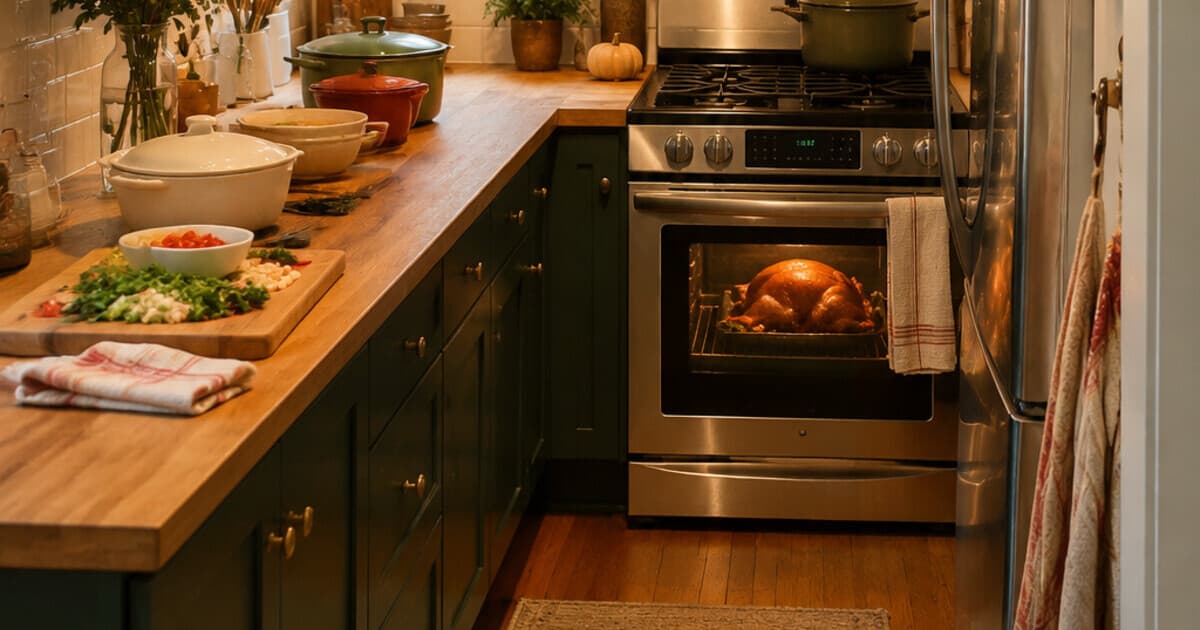
A small kitchen can cook a very good Thanksgiving. It just cannot also be the bar, coat closet, appetizer table, dish-return station, family reunion, and place where six people ask whether they can help. Space problems are usually flow problems first. The fix is to move guest-facing jobs out of the kitchen, reduce how many dishes need active cooking, and decide where food lives before, during, and after dinner.
QUICK REFERENCE
Move each hosting job out of the kitchen when possible
| Job | Better location | Why |
|---|---|---|
| Drinks | Living/dining room station | Stops refrigerator traffic |
| Coats and bags | Bedroom or entry zone | Keeps chairs and counters usable |
| Appetizers | Table away from prep surfaces | Guests stop clustering near the stove |
| Dirty dishes | Dedicated landing zone | Protects sink space during final cooking |
Create a no-guest cooking zone
Your kitchen does not need to be closed like a restaurant, but it needs a protected triangle around the oven, sink, and main prep counter. Put drinks somewhere else. Put appetizers somewhere else. Put the trash can where guests can use it without standing in front of the refrigerator.
If the room is open-plan, create the boundary with furniture and function rather than rules. A drink tray on a console table gives people a reason to stop before they reach the stove. A basket with napkins and appetizer plates in the living room redirects traffic better than saying “please stay out of the kitchen” every ten minutes.
Move the drink station first
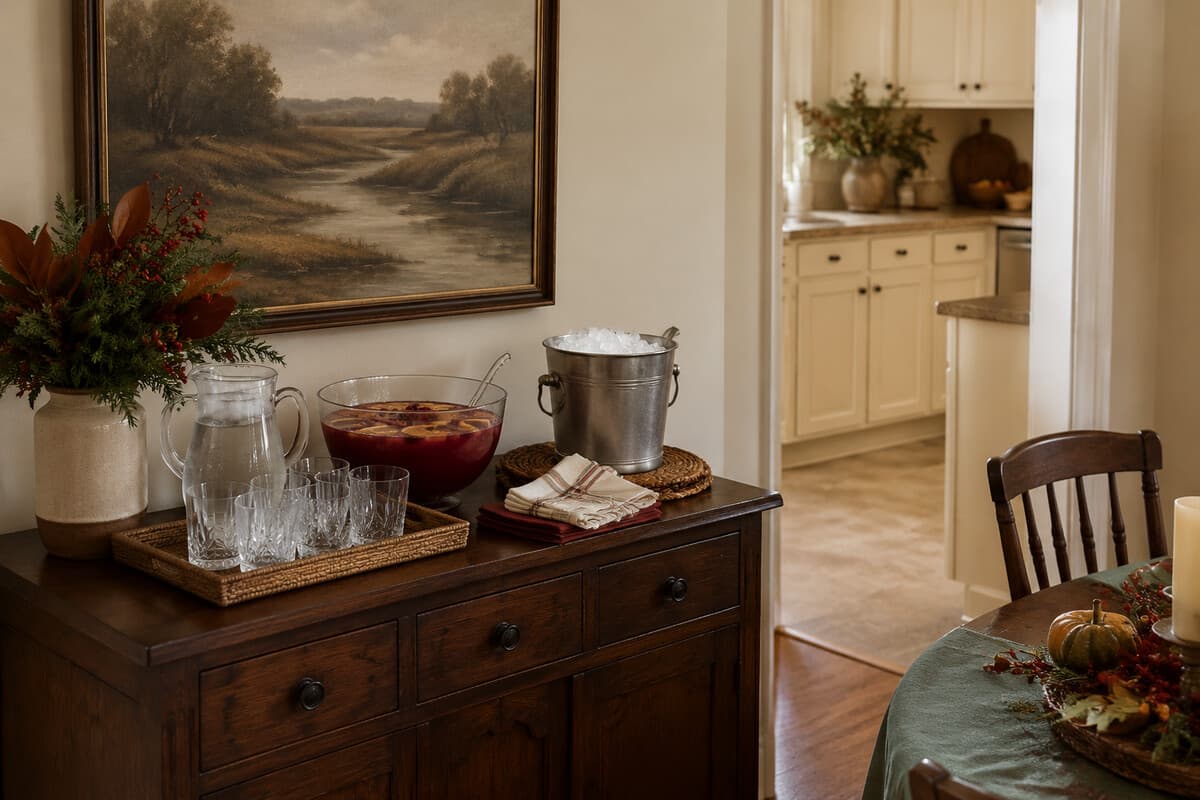
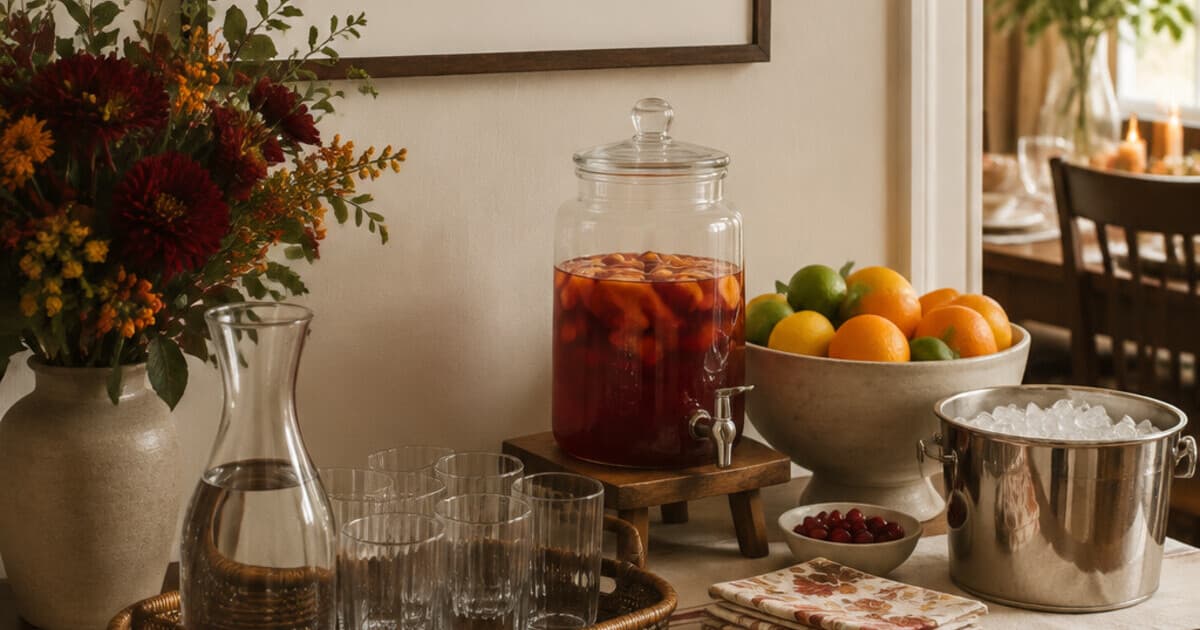
A beverage station is one of the highest-return small-space moves because drinks cause constant repeat traffic. Set water, sparkling water, wine if you are serving it, openers, cups, napkins, and ice outside the cooking area. A dining-room sideboard, console, sturdy shelf, bar cart, or cleared end of a table works.
Grouping drinks away from the kitchen keeps guests from repeatedly entering the work zone and makes self-service feel intentional rather than improvised. Put water, cups, ice, and openers together so a refill does not become a trip through the cooking area.
Use the refrigerator like a schedule, not a storage closet
Two or three days before Thanksgiving, remove bulky drinks, expired condiments, and anything you will not use. Chill beverages in a cooler if that safely frees refrigerator space. Use stackable containers for prepped ingredients and label them by dish.
Do not prep a casserole just because it can be made ahead if you have nowhere to store the pan. In a tiny refrigerator, component prep can be smarter: cooked onions in a small container, trimmed green beans in a bag, sauce in a jar, crumbs in the pantry. Assemble when the large pan can move directly toward cooking.
Serve from outside the kitchen when possible
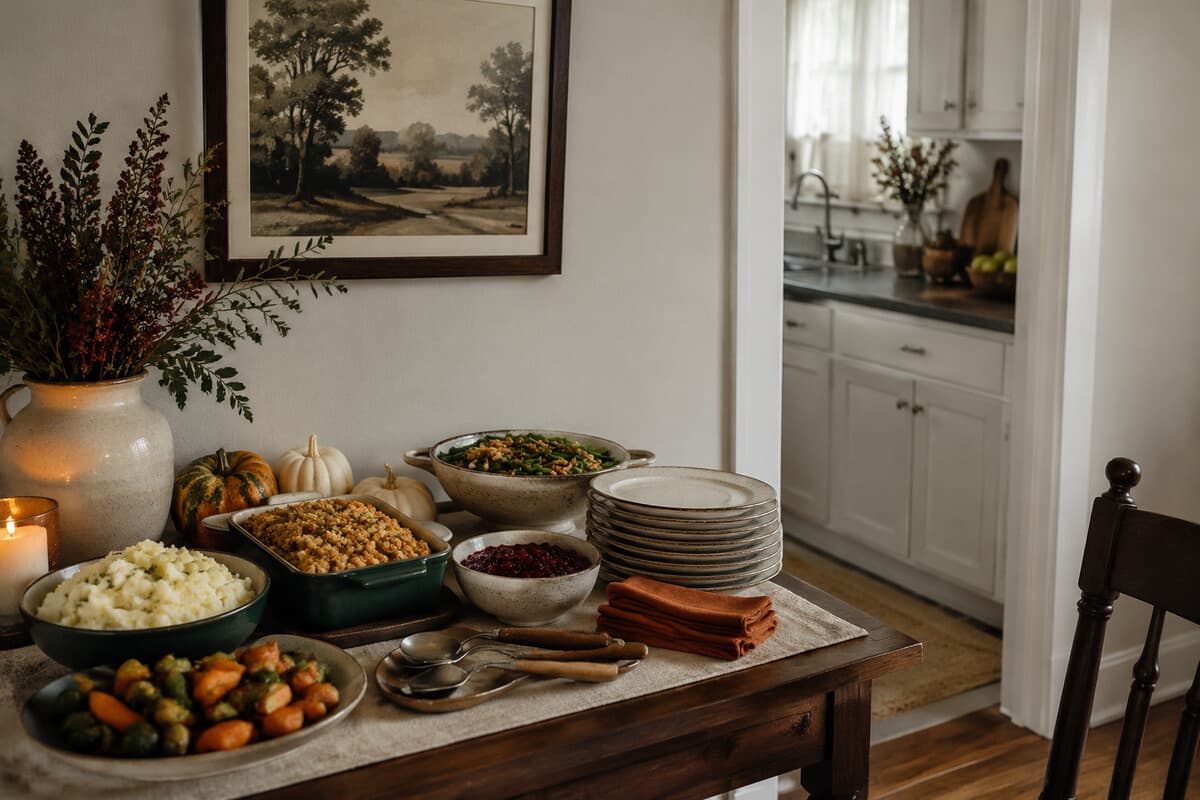
A buffet does not require a formal sideboard. A cleared dining table edge, folding table against a wall, or sturdy console can become a serving line. Group plates at the beginning and gravy near the foods it belongs with. Keep the dessert table closed until after dinner so it does not consume valuable serving space early.
If you truly have no separate surface, serve a few dishes family-style at the table and leave backups in the kitchen. The goal is not displaying every ounce of food at once. Smaller serving bowls can be refilled and take less room.
Reverse timeline: one week out
Count chairs, not just guests. Decide where coats go, where drinks go, where appetizers go, where the buffet goes, and where dirty dishes go. Measure the roasting pan against the oven if you have any doubt. Pull out the folding table or extra chairs now rather than on Thanksgiving morning.
Write each menu item beside one location: refrigerator, freezer, pantry, oven, stovetop, slow cooker, cold serving, or a dish specifically intended for room-temperature serving. If every line says refrigerator plus oven, redesign the menu.
Reverse timeline: the day before
Finish make-ahead food, but keep bulky final assembly to what the refrigerator can support. Empty the dishwasher and dish rack. Put serving platters and utensils in the dining area rather than stacking them on the kitchen counter.
Clear one counter completely. That counter is your emergency space tomorrow. A small kitchen feels twice as functional when one surface is intentionally empty.
Reverse timeline: two hours before guests arrive
Move drinks and appetizers to their outside-the-kitchen stations. Put coats and bags somewhere obvious. Set up a tray for used glasses if people will reuse them. Move any decorative objects that reduce useful surface area.
Finish the cooking tasks that create the most mess, then reset the sink. When guests arrive, the kitchen should be in production mode, not still recovering from vegetable peeling.
Small-kitchen Thanksgiving checklist
If the room still feels crowded, fix the traffic before buying another appliance.
- Drinks are outside the kitchen.
- Appetizers are outside the kitchen.
- Guest coats and bags have a destination.
- One counter is intentionally clear.
- Turkey and roasting pan physically fit the oven.
- Only a few sides need last-hour oven space.
- At least two stovetop burners remain usable near dinner.
- Serving dishes are staged outside the main prep zone.
- The buffet or family-style serving plan does not block the refrigerator or oven.
- The refrigerator has room for leftovers before dinner begins.
- Trash, recycling, and dirty-dish return are easy to find.
Do not let space-saving become food-safety improvisation
A crowded kitchen is not a reason to leave perishables on a porch, garage floor, or counter where the temperature is not controlled. USDA advises keeping cold perishable foods at 40°F or below and refrigerating food within two hours when it is not being safely hot-held, or within one hour when the ambient temperature is above 90°F.
A cooler packed with sufficient ice or frozen gel packs can be useful for cold beverages or appropriate foods when used correctly, but treat it as temperature-controlled storage, not magic extra square footage. Check that cold food actually stays cold.
TAKE IT TO PAPER
Useful printables for this plan
SOURCES
Sources & references
These links support factual rules, quantities, safety guidance, or planning context. The final prioritization and sequencing in this guide are editorial decisions. See how sources are chosen.
- Editorial referenceHomes.com — Big Thanksgiving, Small Spacehomes.com
- Public guidanceUSDA FSIS — Leftovers and Food Safetyfsis.usda.gov
FAQ
Questions people ask before guests arrive
Can I host Thanksgiving in a small apartment kitchen?
Yes. Keep the menu smaller, make most sides ahead, move drinks and appetizers out of the kitchen, use a separate buffet or family-style serving plan, and protect one clear prep counter. The main challenge is traffic and staging rather than the size of the room itself.
Where should I put a Thanksgiving drink station in a small home?
Put it on a stable surface outside the primary cooking path: a console, sideboard, bar cart, sturdy shelf, or cleared end of the dining table. Include water, cups, napkins, ice, and openers so guests do not need to enter the kitchen repeatedly.
How do I make refrigerator space for Thanksgiving?
Clear unused bulky items, move safely chilled beverages to an iced cooler when appropriate, use stackable prep containers, and avoid assembling every large casserole days ahead if smaller component containers would use less space.
Is buffet or family-style better in a small space?
Either can work. A narrow separate buffet reduces table crowding if you have a wall or spare surface, while family-style can work when there is no extra furniture. Use smaller serving bowls and refill them rather than putting every pan on display at once.