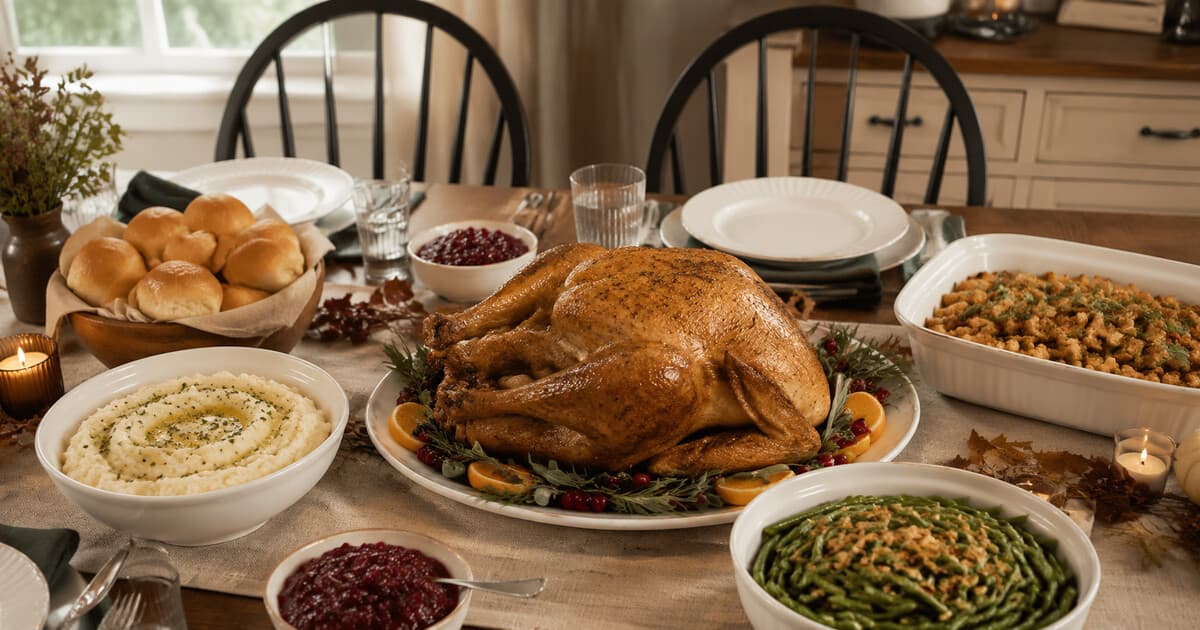
Hosting Thanksgiving for the first time feels harder than an ordinary dinner because one meal has somehow accumulated family tradition, poultry logistics, six competing side dishes, and a national expectation that everything be hot at once. The way through is not becoming more ambitious. It is deciding what matters, giving the oven fewer jobs, and accepting that a perfectly good Thanksgiving can contain store-bought rolls and exactly one kind of potato.
Build the smallest complete Thanksgiving menu
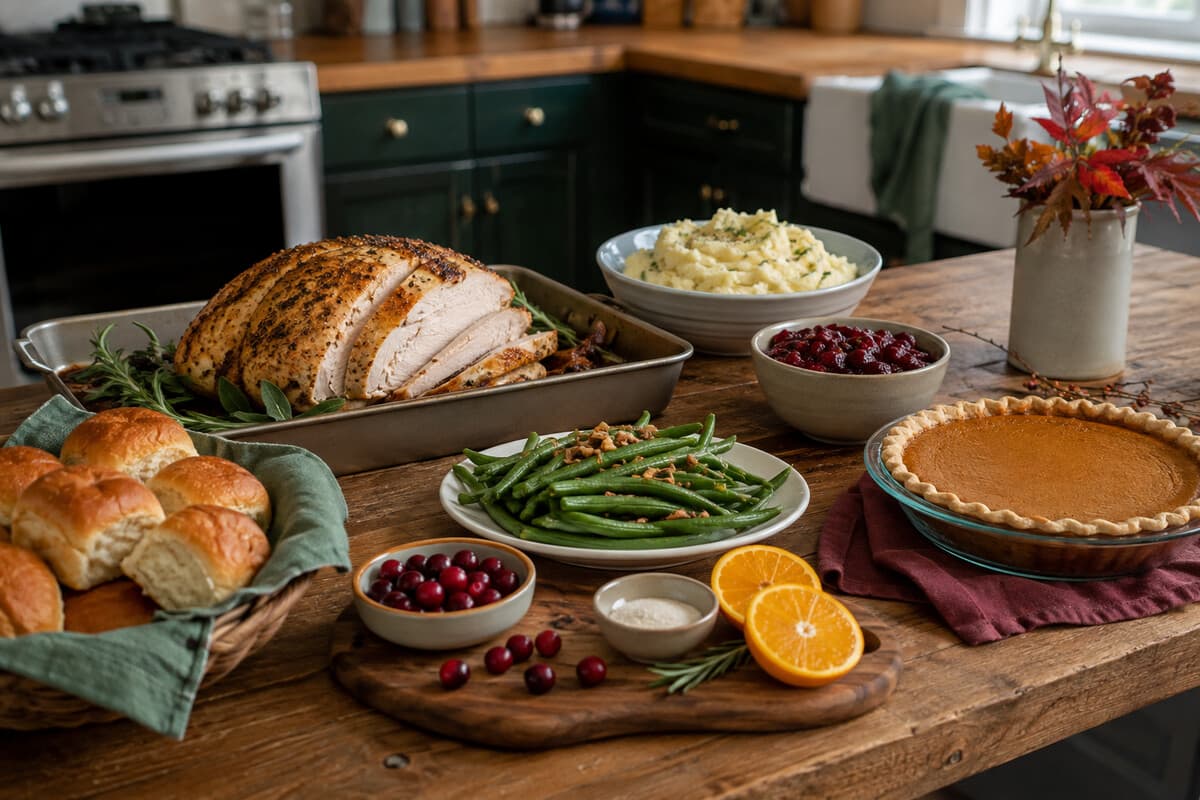
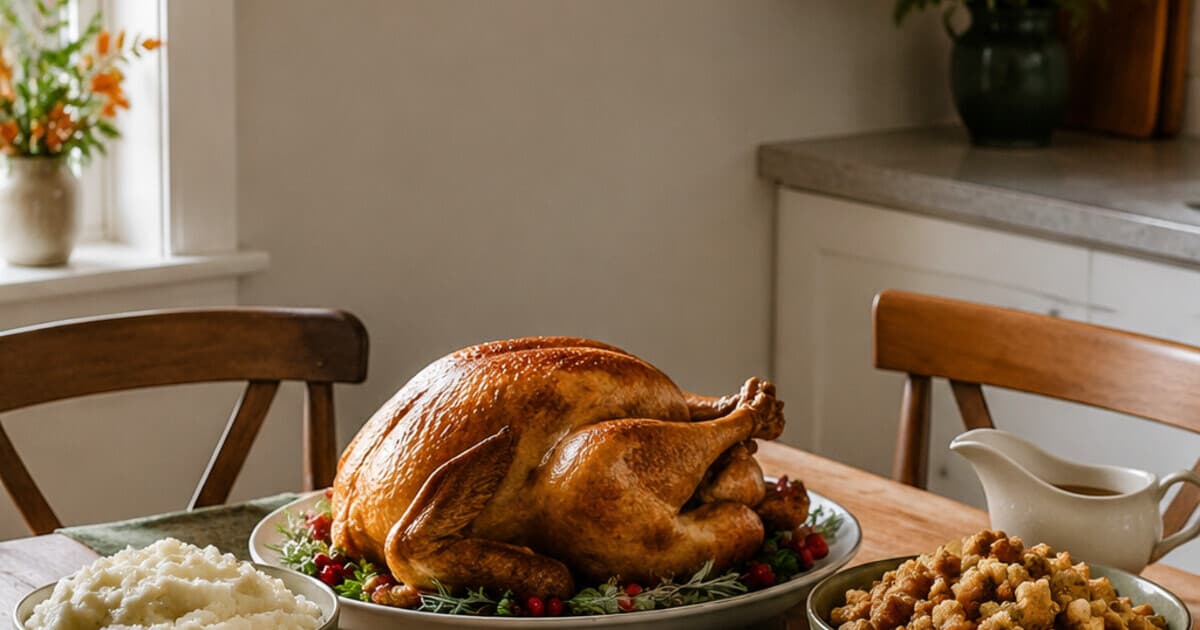
Start with seven jobs, not twenty recipes: turkey, gravy, stuffing or dressing, one potato, one green or fresh vegetable, cranberry sauce or another bright acidic element, and dessert. Add rolls if your people expect them. That is already a full plate. If a relative cannot imagine Thanksgiving without sweet potatoes, trade them for another side rather than quietly adding a second potato category.
Choose only one or two dishes that need the oven near serving time. Everything else should be stovetop, slow-cooker friendly, reheatable, or specifically intended for cold or room-temperature service. The oven is the scarce resource on Thanksgiving, not your collection of recipes.
- Turkey + gravy
- Stuffing or dressing
- One potato side
- One green or fresh vegetable
- Cranberry sauce or another tart element
- Rolls if they matter to your group
- One or two desserts
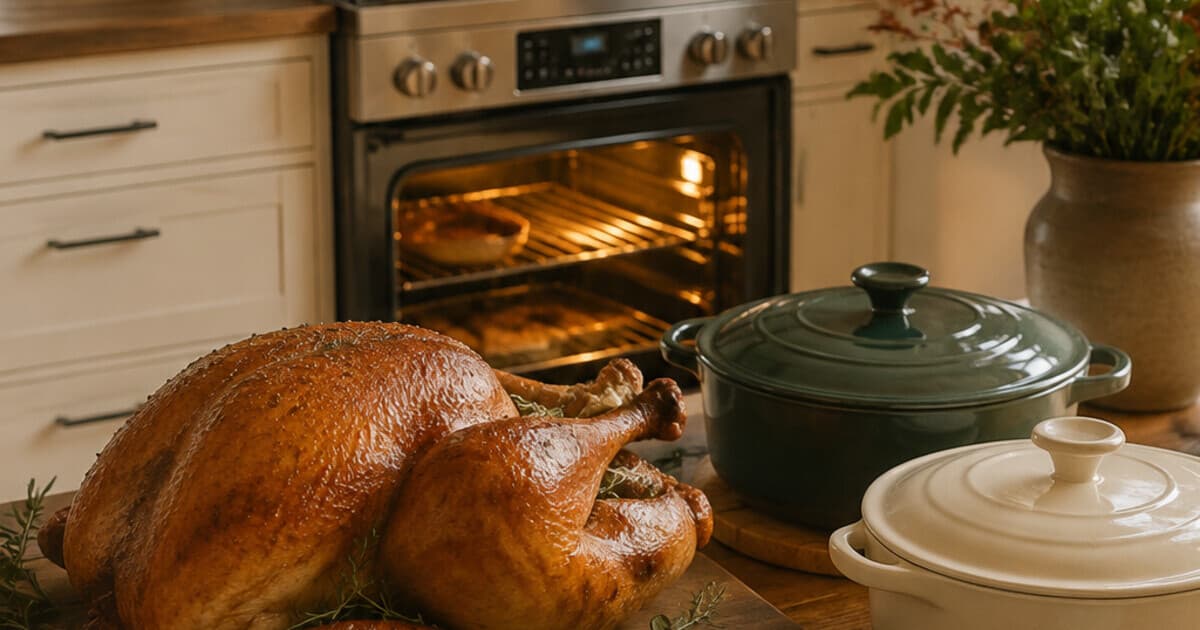
Treat the turkey as one project, not the whole holiday
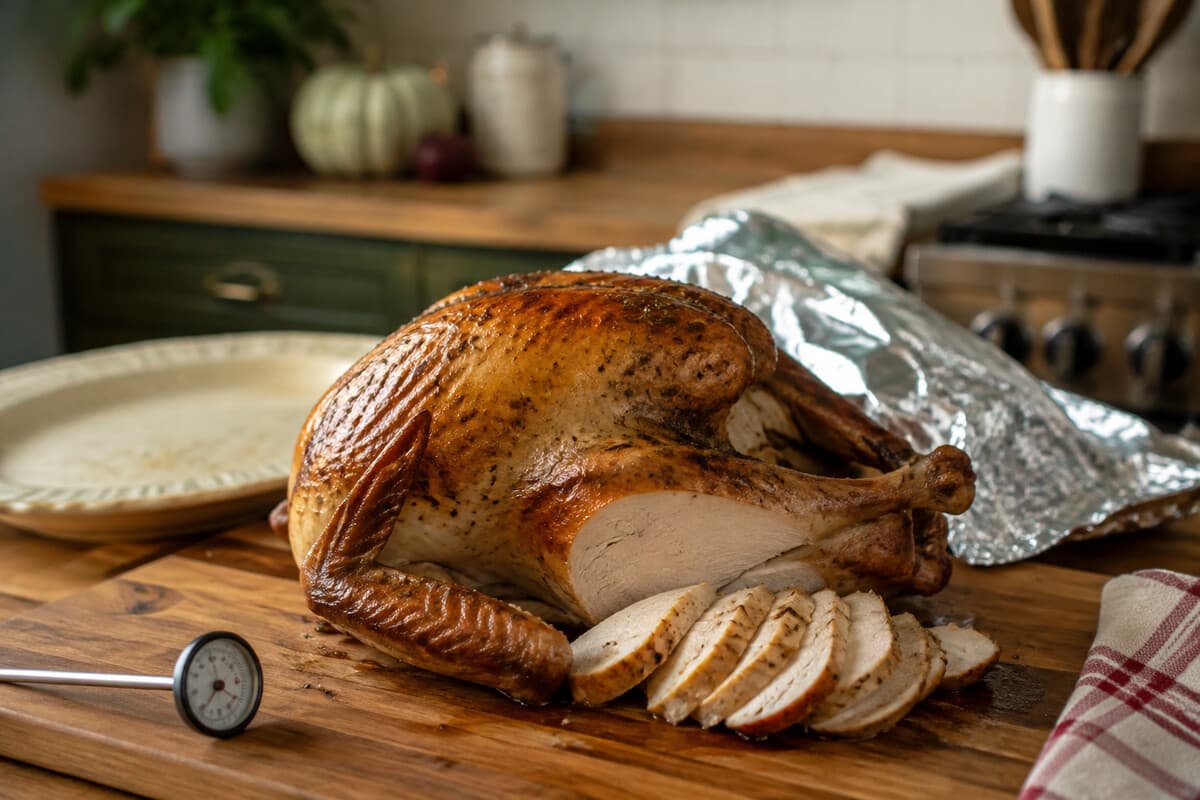
Buy a turkey size that fits your oven, roasting pan, and refrigerator. If it is frozen, give yourself enough refrigerator-thawing time according to the package and current USDA guidance. Do not build your schedule around a viral “minutes per pound” shortcut alone. A turkey is done when the thermometer says it is done.
USDA advises roasting a whole turkey at an oven temperature no lower than 325°F and cooking it to a minimum internal temperature of 165°F, checked in the innermost thigh and wing and the thickest part of the breast. Their published cooking times are approximate. That distinction matters: the clock helps you plan, but the thermometer decides when dinner can proceed.
Decide what guests are allowed to bring
“Bring anything” sounds easy and often produces three desserts, no vegetable, and a text at noon asking whether you have oven space. Give people categories instead: “Could you bring a pie?” “Can you handle the salad?” “Would you bring wine and sparkling water?” Specific delegation reduces duplicate food and protects your oven.
If the guest has a famous family dish, let that be their assignment and remove the competing dish from your own list. The point of potluck help is subtraction. If you still make everything you planned, you did not delegate; you just increased the buffet.
Reverse timeline: one week out
Confirm the headcount, eating time, allergies, and what guests are bringing. Write the final menu and assign every dish a cooking method: oven, stovetop, slow cooker, cold, or specifically intended room-temperature service. If three dishes require the oven at three different temperatures in the last hour, redesign now.
Check equipment: roasting pan, rack, instant-read or probe thermometer, potato pot, serving bowls, carving board, gravy vessel, and enough chairs. Clear freezer and refrigerator space. Do not wait until Wednesday night to learn that the turkey does not fit beside everything else.
Reverse timeline: two days out
Make cranberry sauce, pie or make-ahead dessert, salad dressing, and any casserole components that hold well. Toast bread for stuffing if your recipe calls for it. Chop durable vegetables. Set the table if that helps you feel finished, but do not spend an hour polishing things nobody will notice.
Move serving dishes out of storage and pair each one with a menu item. Put a removable note inside each bowl or platter. This sounds fussy until you are holding hot potatoes and realizing the potato bowl is currently full of decorative gourds.
Reverse timeline: the day before
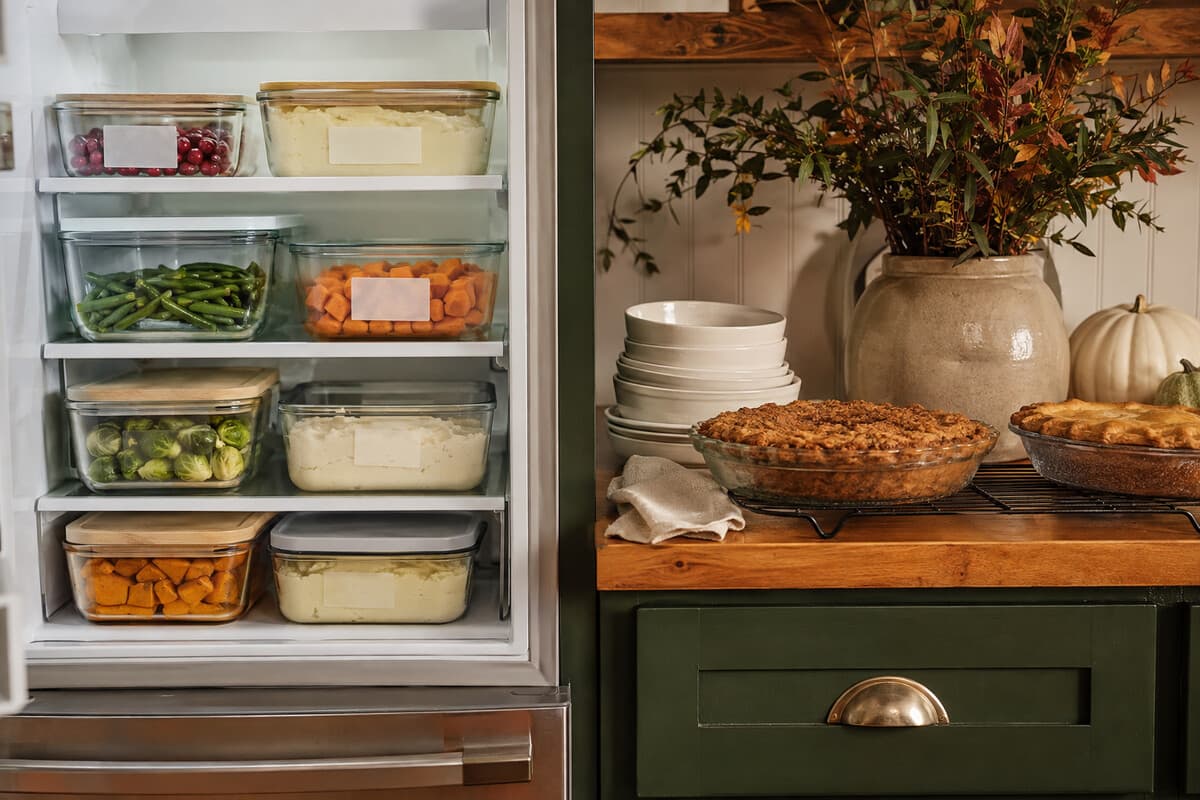
Finish make-ahead sides, assemble only casseroles whose recipes explicitly support overnight refrigeration, prep aromatics, and make a gravy base if your method allows. Keep wet and dry stuffing or dressing components separate until just before cooking rather than refrigerating mixed uncooked stuffing overnight. Chill drinks. Empty the dishwasher. Put foil, storage containers, serving utensils, trivets, and the carving board where you can reach them.
Go to bed with a written Thursday sequence. Do not rely on memory. Note when the turkey should go in, when you will start checking temperature, which sides reheat while it rests, and when you want people seated. A five-line schedule is enough.
Reverse timeline: Thanksgiving Day
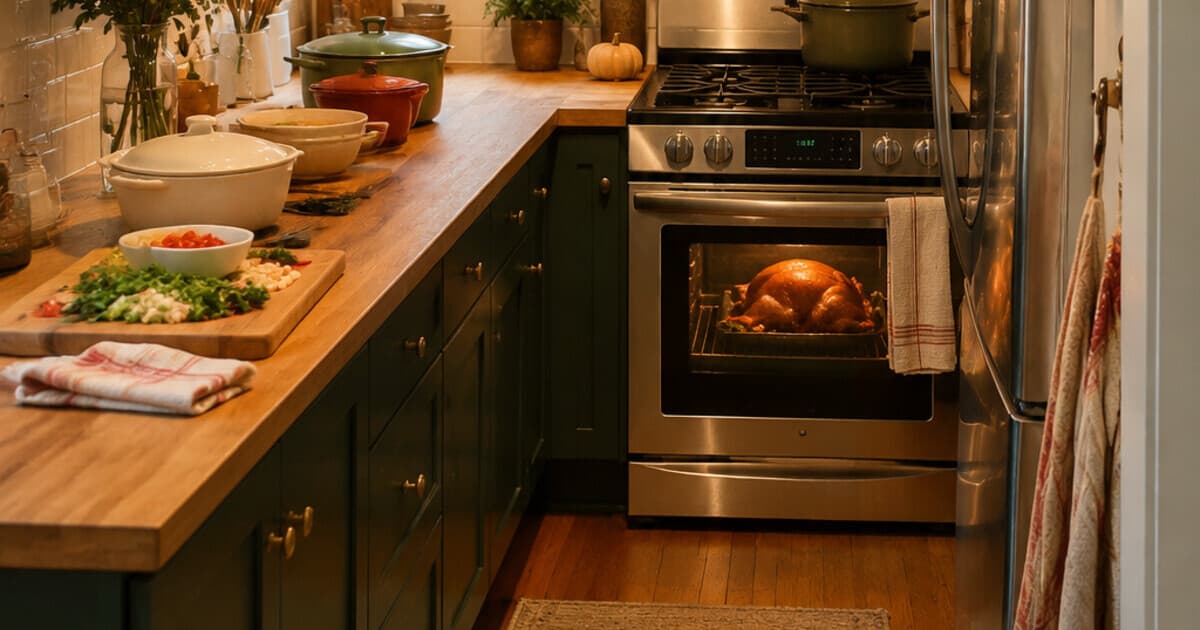
Work backward from dinner. Give the turkey a realistic cooking window plus rest time, and start checking temperature before your best-case finish time. While it roasts, handle stovetop work and set out the first cold appetizer only when you actually want people to start eating.
When the turkey comes out, that resting window becomes your oven handoff: raise or adjust the oven as needed and reheat sides. Make or finish gravy. Put rolls in last if they need warming. Carve away from the crowded serving table if possible. Dinner does not need to land at the exact minute printed in a text message.
First-time host checklist
Run this list before you add any extra dish.
- Guest count and dietary needs confirmed.
- Final menu has no more than two last-hour oven jobs.
- Turkey fits the roasting pan, oven, and refrigerator.
- Food thermometer is working.
- Guests have specific assignments, not vague 'bring something' requests.
- Serving dish assigned to every menu item.
- Drinks and water can be self-served away from the cooking zone.
- Dishwasher and sink are clear before cooking peaks.
- Storage containers are ready for leftovers.
- Thursday sequence is written down.
- At least one part of the meal came from a store without apology.
Handle leftovers before everyone gets sleepy
Do not leave the full feast on the table for the rest of the evening. USDA guidance says perishable leftovers should be refrigerated within two hours—or within one hour when the ambient temperature is above 90°F—divided into shallow containers for faster cooling, and used refrigerated within three to four days or frozen for longer storage.
Set out containers before dessert if you know guests are taking food home. Once the table is cleared, the hosting job is mostly over. You can deal with the roasting pan tomorrow.
TAKE IT TO PAPER
Useful printables for this plan
SOURCES
Sources & references
These links support factual rules, quantities, safety guidance, or planning context. The final prioritization and sequencing in this guide are editorial decisions. See how sources are chosen.
- Public guidanceUSDA FSIS — Roasting a Turkey in a Conventional Ovenask.fsis.usda.gov
- Public guidanceUSDA FSIS — Leftovers and Food Safetyfsis.usda.gov
- Public guidanceUSDA FSIS — Stuffing and Food Safetyfsis.usda.gov
FAQ
Questions people ask before guests arrive
What should a first-time Thanksgiving host make?
Make one turkey, gravy, stuffing or dressing, one potato, one green or fresh vegetable, cranberry sauce or another tart side, rolls if your group cares about them, and one or two desserts. Add only dishes that replace something, not endless extras.
How far ahead should I start preparing Thanksgiving dinner?
Start planning about a week ahead. Two days before, make sauces, desserts, dressings, and prep components. The day before, finish make-ahead sides and assemble only casseroles whose recipes support overnight storage; keep mixed uncooked stuffing or dressing out of that lane. Thanksgiving Day should focus on turkey, reheating, gravy, and a small amount of fresh finishing work.
How do I know when the Thanksgiving turkey is done?
Use a food thermometer. USDA says a whole turkey should reach at least 165°F in the innermost thigh and wing and the thickest part of the breast. Published roasting times are estimates, not a substitute for checking temperature.
What should I ask Thanksgiving guests to bring?
Give specific categories that remove work from your plan: one dessert, salad, bread, wine, sparkling water, or a family specialty. Avoid 'bring anything' because it creates duplicates and last-minute oven requests.