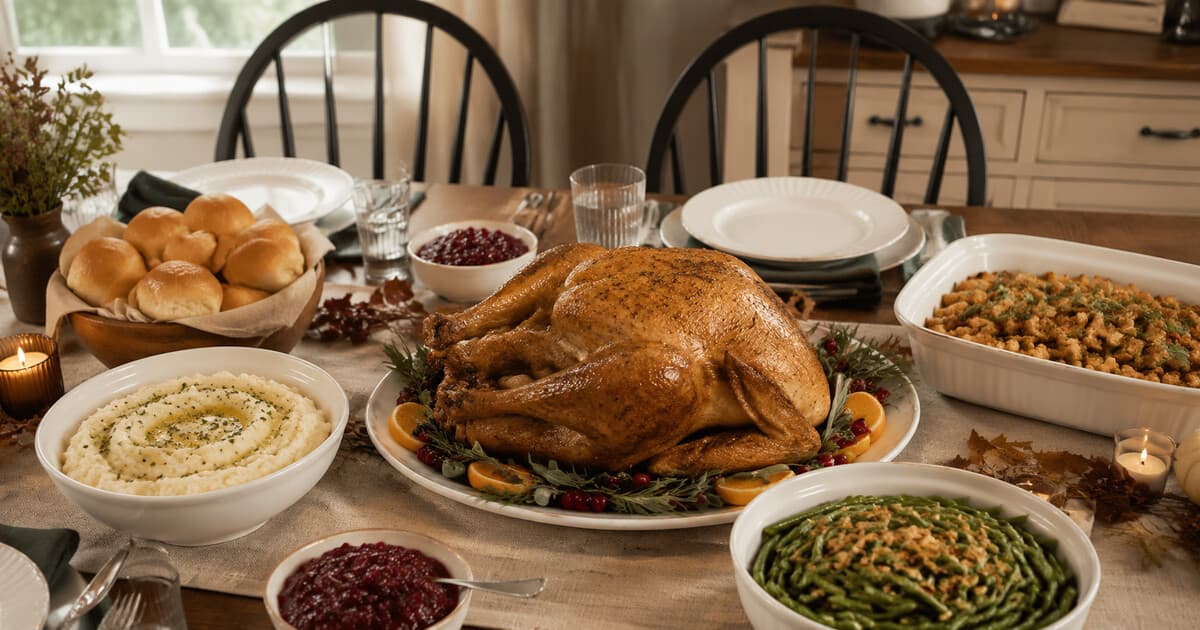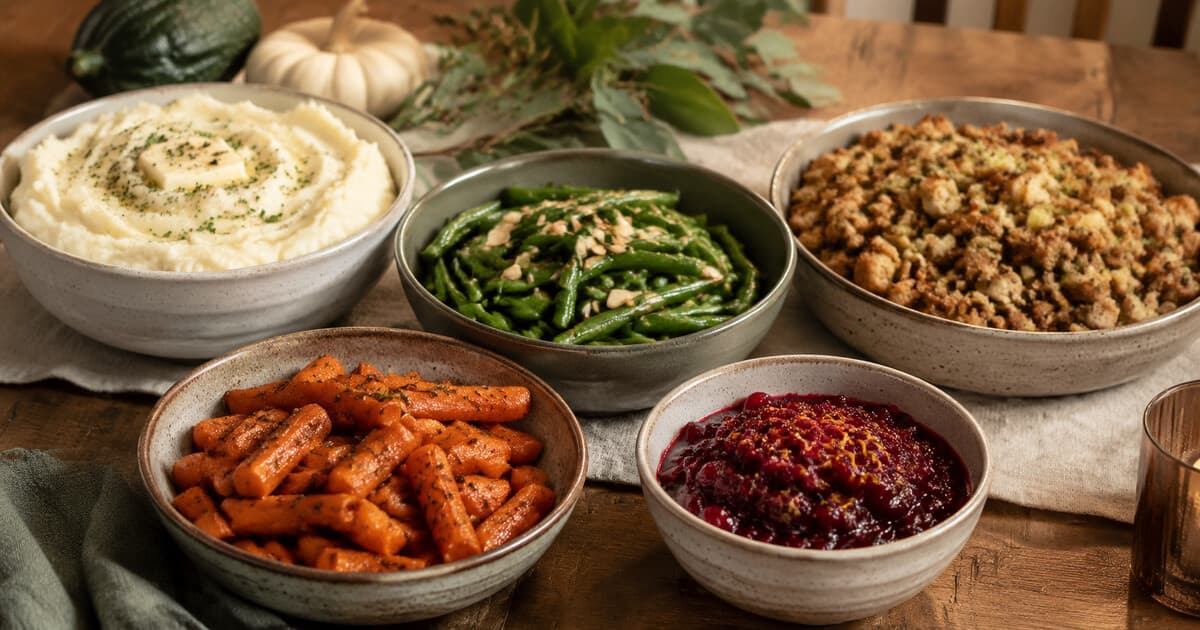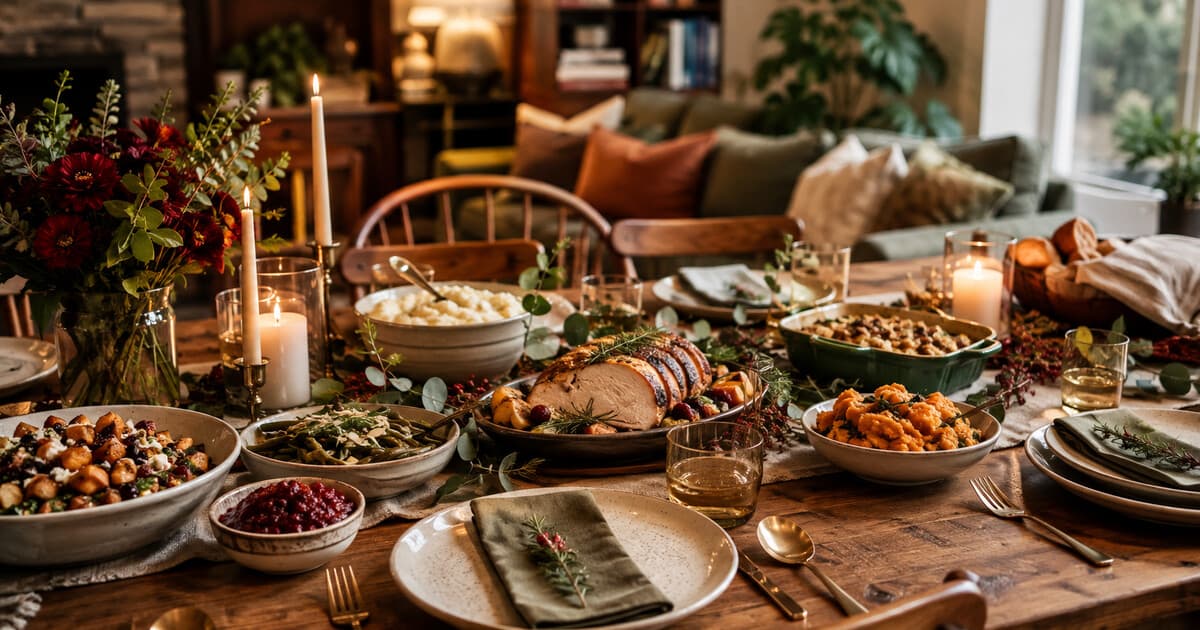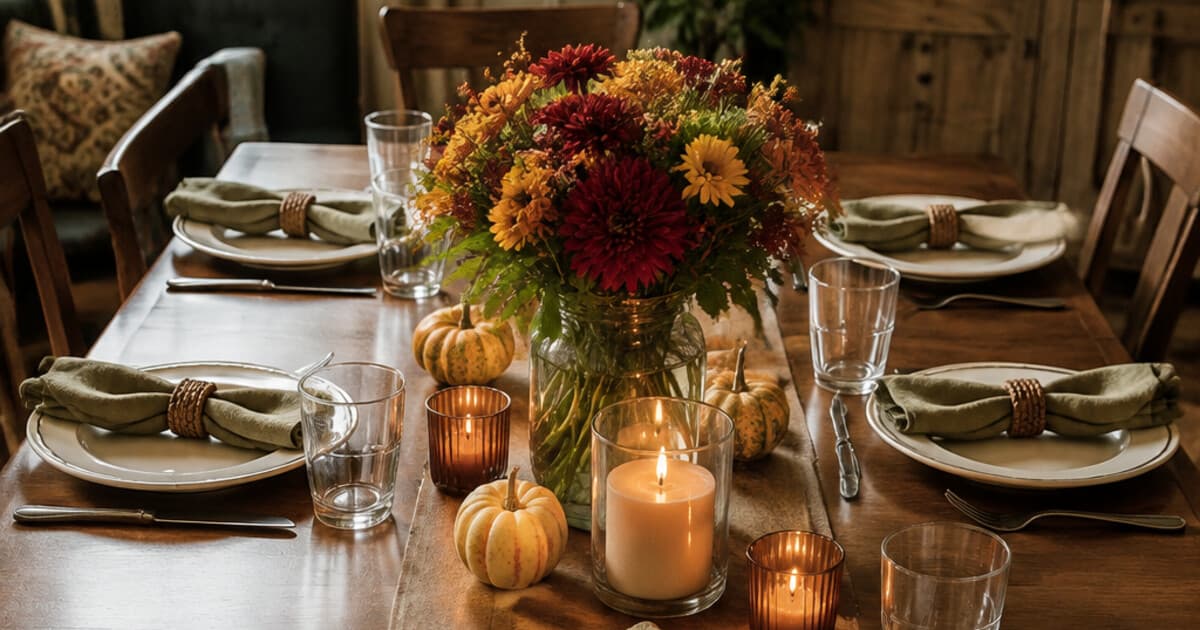
Thanksgiving tables get overcomplicated because we see them photographed before anyone has tried to fit a turkey platter on them. A real table needs room for water, elbows, serving bowls, dropped forks, and somebody's phone even if you would prefer otherwise. The easiest way to make it feel special is not buying a second set of dishes. It is removing visual noise, repeating a few materials, and making the center of the table useful.
Start with the meal, not the centerpiece
Decide first whether food will be served family-style, from a buffet, or mostly plated in the kitchen. Family-style needs the most open tabletop. If a turkey platter, potatoes, stuffing, vegetables, gravy, and bread are all coming to the table, your centerpiece should be narrow, low, and easy to lift away.
If the food will stay on a sideboard, you have more room for decor—but still keep sightlines open. Guests should be able to talk across the table without leaning around a tower of dried leaves.
Use the dishes you already eat from
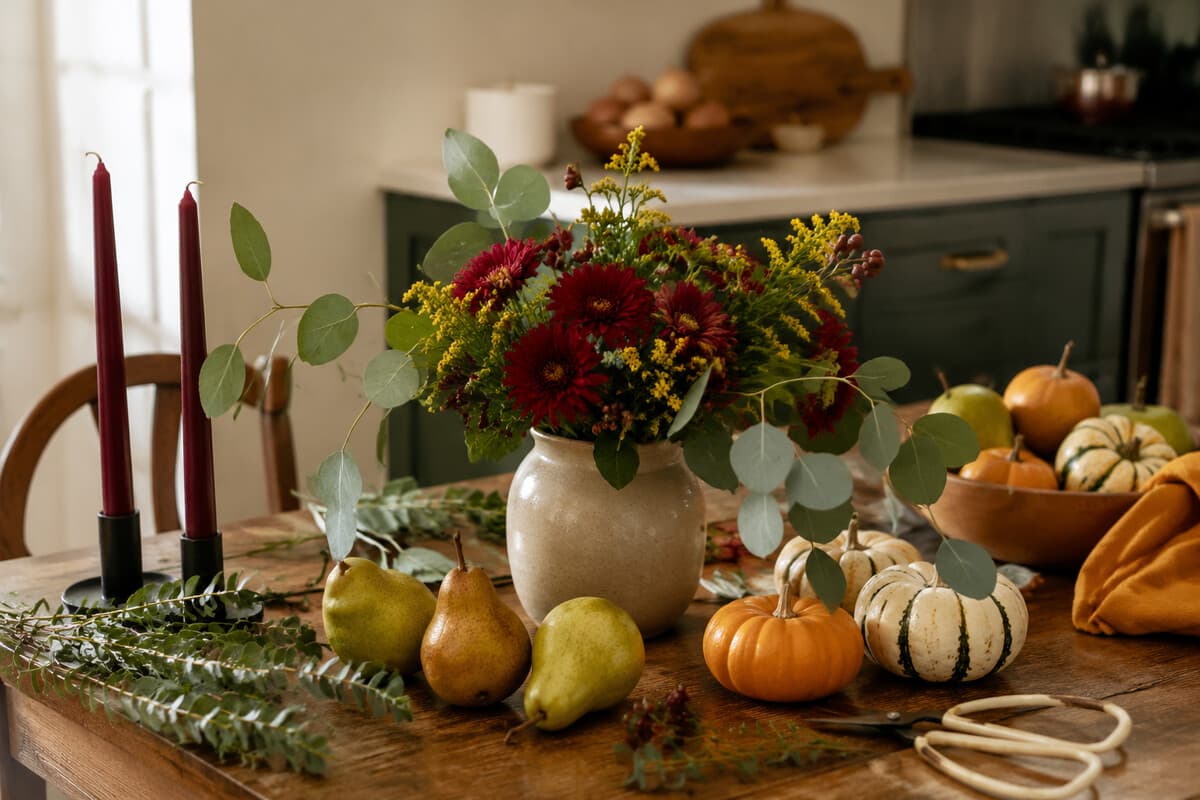
White, cream, gray, blue, patterned, or mixed everyday plates can all work. The trick is repetition. If the plates vary, use the same napkin color. If the glasses are mixed, keep the centerpiece quiet. One consistent element makes mismatched things look collected rather than accidental.
Set only what will be used. A dinner fork, knife, water glass, napkin, and plate are enough for many Thanksgiving meals. Add a spoon if soup or a spooned dessert needs one. Extra flatware does not make the table more formal; it mostly makes it narrower.
Pick one color family and let food provide the rest
Choose one anchor color from something you already own: rust napkins, dark green glasses, cream plates, brown placemats, navy runner. Repeat that tone two or three times and let the food bring orange, red, green, and gold naturally.
You do not need Thanksgiving-print fabric. Solid colors usually age better and work for dinner parties the rest of the year. A cream tablecloth with green napkins and pears can look seasonal in November and completely normal in January.
Make a centerpiece from grocery-store things
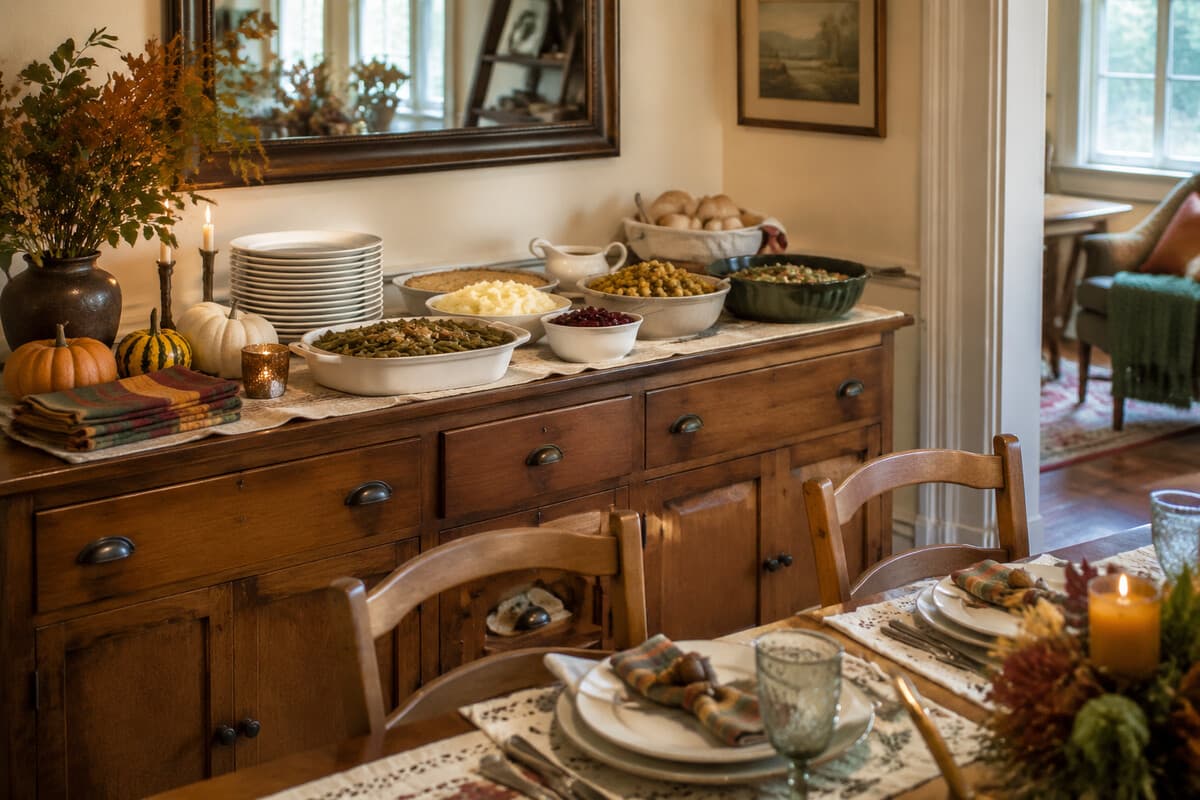
Use a shallow bowl, cutting board, tray, or a line of small jars as the base. Add pears, apples, mini pumpkins, pomegranates, nuts in shells, herbs, or a few clipped branches. Choose ingredients or natural materials that already look good in a group.
For the easiest version, put five to seven pieces of produce down the center with short candles or battery lights between them. Do not scatter dozens of tiny objects. A few larger shapes read better and are easier to move when the gravy arrives.
Choose lighting that makes dinner look better
Turn down harsh overhead lighting if the room allows it and use lamps around the perimeter. On the table, keep flames low and stable, away from dried leaves, loose paper, sleeves, children, and serving traffic. Battery candles are the lower-maintenance option if the table will be crowded.
Warm side lighting does more for the mood than another decorative object. It also lets ordinary plates and grocery-store flowers look intentional without requiring a themed color explosion.
Fold napkins in ten seconds
Fold each napkin into a simple rectangle and place it under or beside the fork, or roll it loosely and set it on the plate. If you want one decorative detail, tuck in a small rosemary sprig or write names on plain card stock. Stop there.
Complicated napkin folds are not wrong; they are simply a low-return project when you are also making Thanksgiving dinner. Save your concentration for gravy.
Set up the buffet to match the table
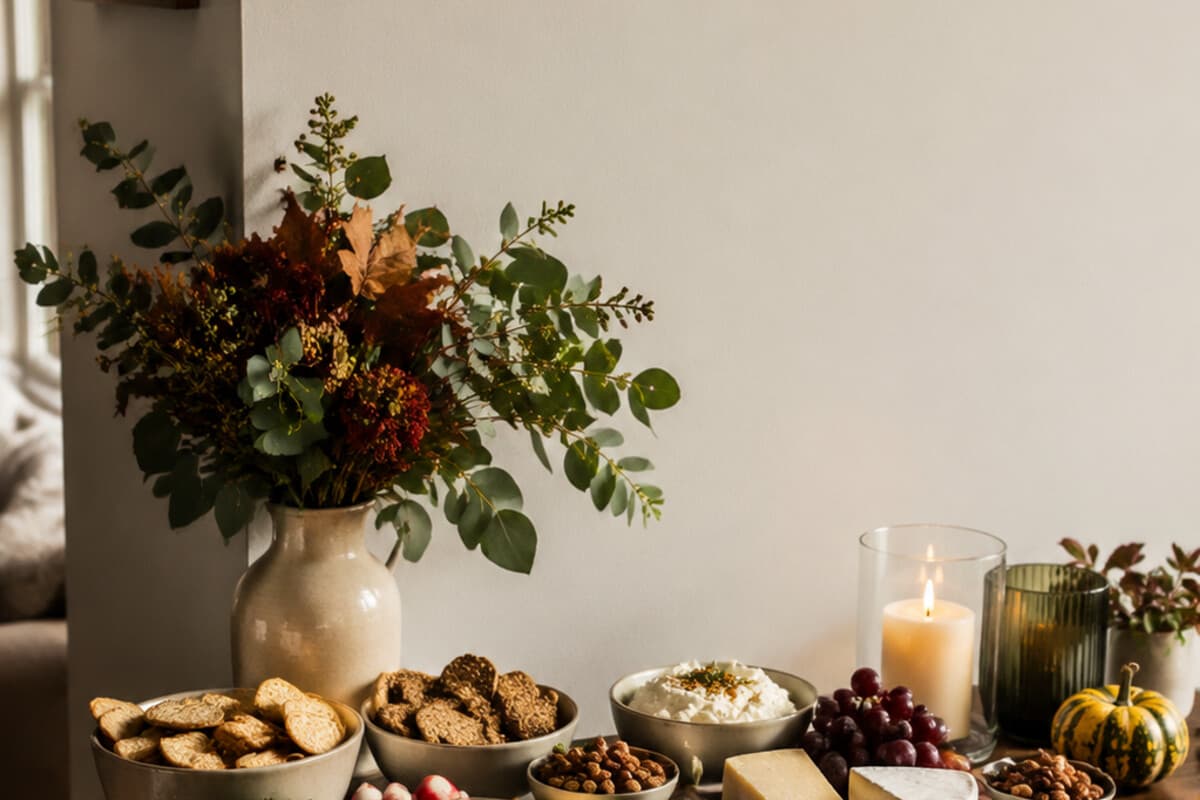
If the meal is buffet-style, repeat one or two table elements there: the same napkins, a small bowl of pears, or the same warm light. Put plates at the beginning, then mains and sides, then gravy and condiments, with flatware and napkins at the end or already on the dining table.
Keep drinks somewhere else if possible. A drink station beside the buffet creates two different traffic patterns in the same square foot. Even a small side table can reduce the bottleneck.
A five-minute place-setting check
Sit in one chair before guests arrive. Can you pull it out comfortably? Is there space for your knees? Can you reach the water? Can you see the person across from you? Is the centerpiece blocking where a serving bowl needs to land?
Then remove one thing. Most Thanksgiving tables improve after one subtraction. The table does not need to prove that you planned it; it needs to help dinner happen.
- One plate per person, plus a bread or salad plate only if actually useful.
- Only the flatware required by the menu.
- One water glass within easy reach.
- Napkin placed simply and consistently.
- Centerpiece below eye level or easy to remove.
- Open landing space for hot serving dishes.
- Trivets ready before hot pans arrive.
- Extra chairs do not pinch the walking path.
Three complete looks without buying a tablescape
For warm and traditional: cream dishes, rust or burgundy napkins, pears, wood boards, and brass-toned or warm lights. For quieter modern: white or gray dishes, dark green napkins, branches, and black or clear candleholders. For casual family-style: bare wood table, mixed everyday dishes, folded neutral napkins, apples, and serving bowls as the visual center.
None of these require matching chargers, specialty Thanksgiving plates, or a one-day-only centerpiece. The food already makes the table seasonal. Your job is to give it a calm place to land.
SOURCES
Sources & references
These links support factual rules, quantities, safety guidance, or planning context. The final prioritization and sequencing in this guide are editorial decisions. See how sources are chosen.
- Public guidanceU.S. Fire Administration — Candle Fire Safetyusfa.fema.gov
FAQ
Questions people ask before guests arrive
What do I need for a basic Thanksgiving place setting?
For many meals, use a dinner plate, fork, knife, water glass, and napkin. Add a spoon, extra fork, or bread plate only if your actual menu needs it. A simpler setting leaves more room for serving dishes and elbows.
What can I use for a cheap Thanksgiving centerpiece?
Use grocery-store produce such as pears, apples, pomegranates, mini pumpkins, or herbs arranged in a shallow bowl or along a board. Add a few short battery candles or safe candles if appropriate. Keep it low and easy to move.
Do Thanksgiving dishes need to match?
No. Mixed dishes look intentional when you repeat another element such as napkin color, glass style, or centerpiece material. Keep the rest of the table restrained so the variation reads as collected rather than cluttered.
How do I fit Thanksgiving food on a small table?
Use a buffet or sideboard for most serving dishes, keep the centerpiece very narrow, and remove unnecessary place-setting pieces. Drinks can live on a separate surface so pitchers and bottles do not consume dining space.