Thanksgiving shopping lists get absurd when every recipe says it “serves eight” and you are feeding twelve. The useful question is not how much of each food a person could eat; it is how much they are likely to eat when the plate also contains turkey, potatoes, stuffing, vegetables, gravy, cranberry sauce, bread, and pie. Start with practical ranges, then adjust for your crowd and how many leftovers you actually want.
QUICK REFERENCE
Scale by menu role before multiplying everything
| Guest pattern | Bias the plan toward | Reason |
|---|---|---|
| Many children | Smaller mains, familiar sides | Adult portion math usually overstates demand |
| Big eaters / long gathering | More main + starch + bread | Guests return for substantial foods |
| Many appetizers | Slightly less dinner volume | Arrival food absorbs part of the meal |
| Leftovers are a goal | Increase selected favorites, not every dish | Prevents five half-used containers |
Use this base Thanksgiving quantity guide
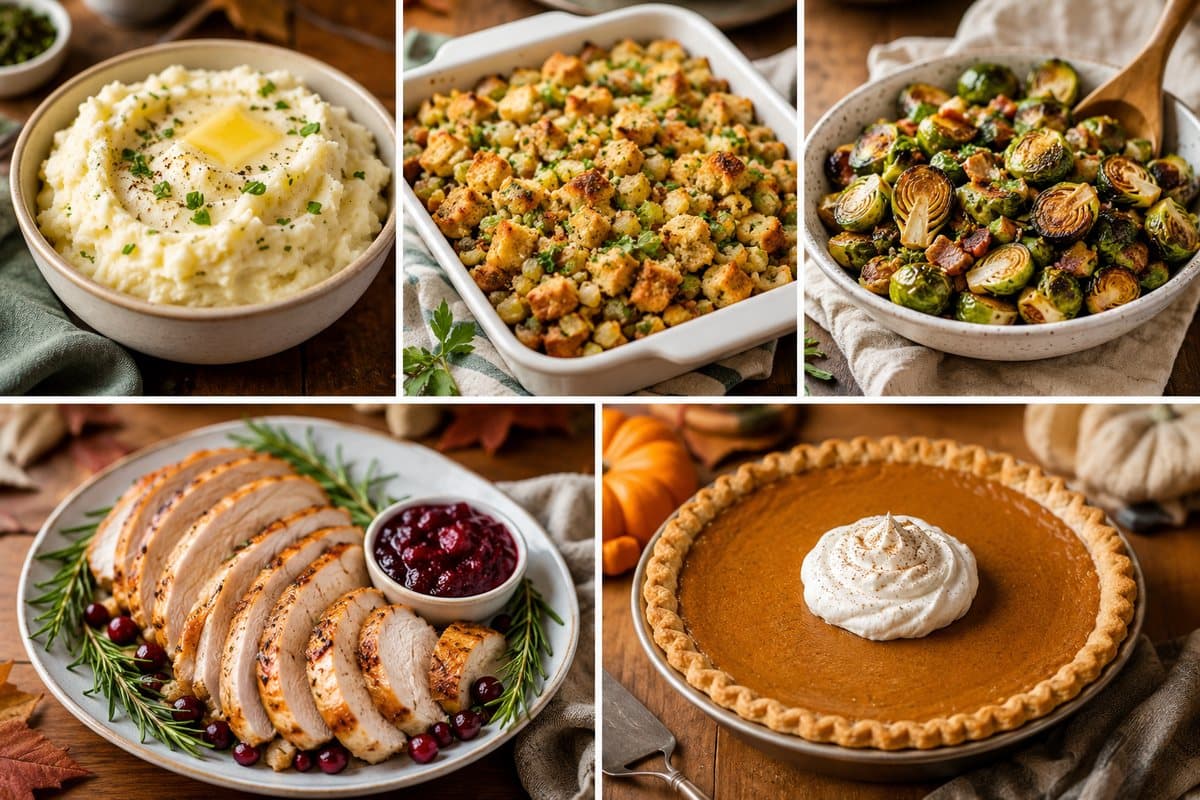
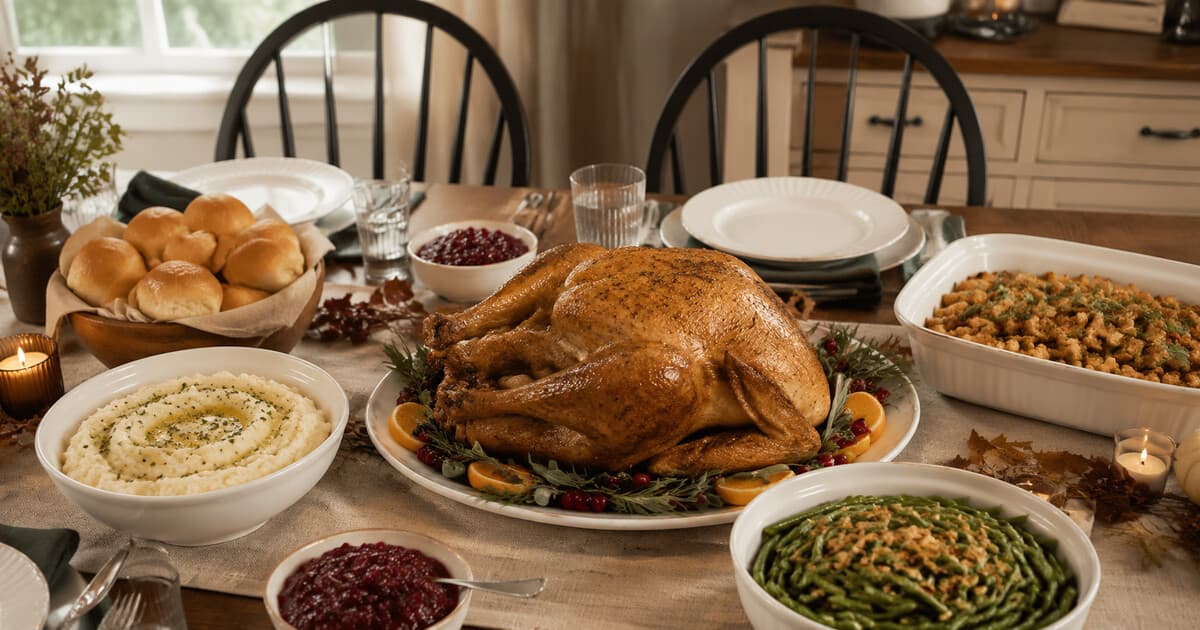
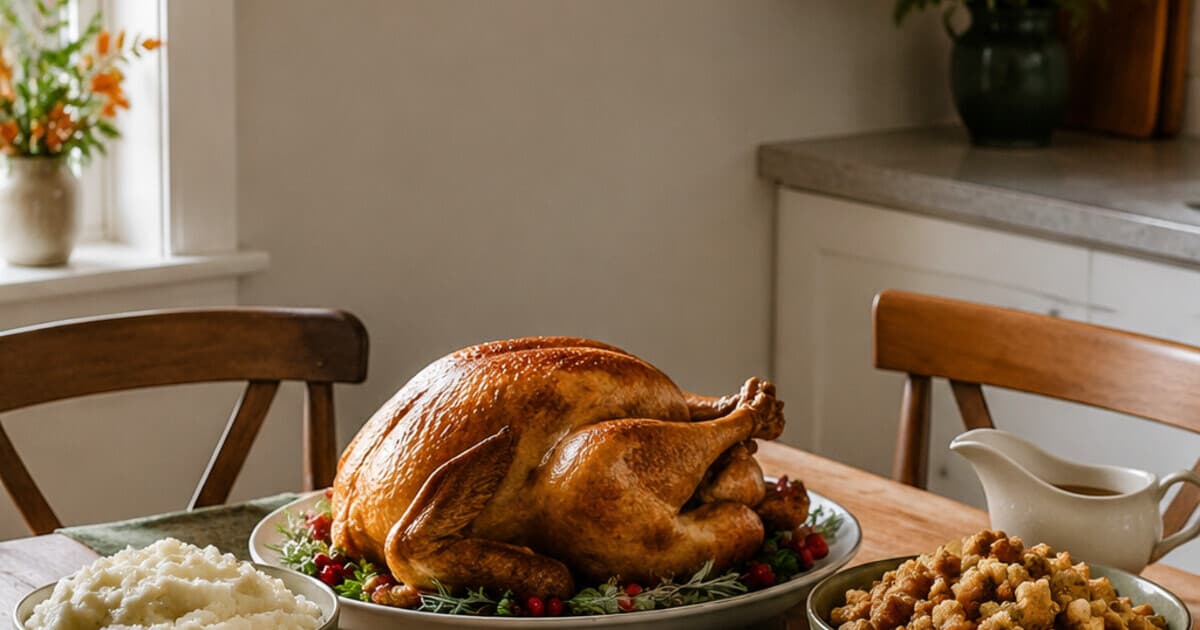
These are planning ranges, not laws. They assume a traditional mixed menu where guests take some of several dishes rather than a giant portion of every item. For a whole turkey, about 1 to 1½ pounds per person is a practical starting range because purchased weight includes bone and other parts that do not become sliced meat. Move toward the high end when you want generous leftovers or when the bird is relatively small for the group.
For sides, start from a published serving target, then taper individual dishes when the menu has several alternatives. Food Network’s Thanksgiving portion planner uses about 3/4 cup each for cooked stuffing and mashed potatoes, and about 4 ounces of cooked vegetables total per guest. The more side dishes you serve, the less useful it is to multiply every full target by every dish.
- Whole turkey: about 1 to 1½ lb per person as a practical starting range; use the high end for leftovers.
- Mashed potatoes: Food Network uses about 3/4 cup cooked per person; taper toward 1/2 cup when several other starches compete for plate space.
- Stuffing or dressing: about 3/4 cup cooked per person as a starting target; scale down if the menu has many other substantial sides.
- Cooked vegetables: about 4 oz total per person across the vegetable sides, then divide that total among the choices.
- Gravy: about 1/3 cup per person as a starting point, plus extra for a gravy-heavy crowd or planned leftovers.
- Cranberry sauce: about 1/3 to 1/2 cup per person in Food Network’s planner; scale toward the lower end if it is treated mostly as a condiment.
- Rolls: 1 to 2 per person depending on size and your crowd.
- Pie: one 9-inch pie commonly yields about 6–8 servings; size the total dessert table across all sweets rather than giving everyone a full slice of every pie.
Convert the planning range into packages only after you choose the product
A quantity range is not yet a shopping cart. Once you know the tray, bag, box, or recipe batch you actually plan to buy or make, enter that real yield in the Quantity Planner and round the range to whole purchase units. If you add a real price, the tool can show the cost range; if you do not, it leaves cost blank instead of inventing a supermarket price.
Adjust turkey for leftovers, children, and the size of the bird
A small group does not always scale neatly to a tiny whole turkey because smaller birds may have a different meat-to-bone ratio and may not be available in the exact weight you calculated. For four to six people, a turkey breast or another smaller main can make more sense if nobody wants days of leftovers.
If leftovers are part of the plan—sandwiches, soup, take-home containers—choose the upper end of the turkey range. If you are serving ham or another substantial main as well, you can reduce the turkey quantity instead of buying two full-size centerpieces.
Do not multiply every side by a restaurant-size serving
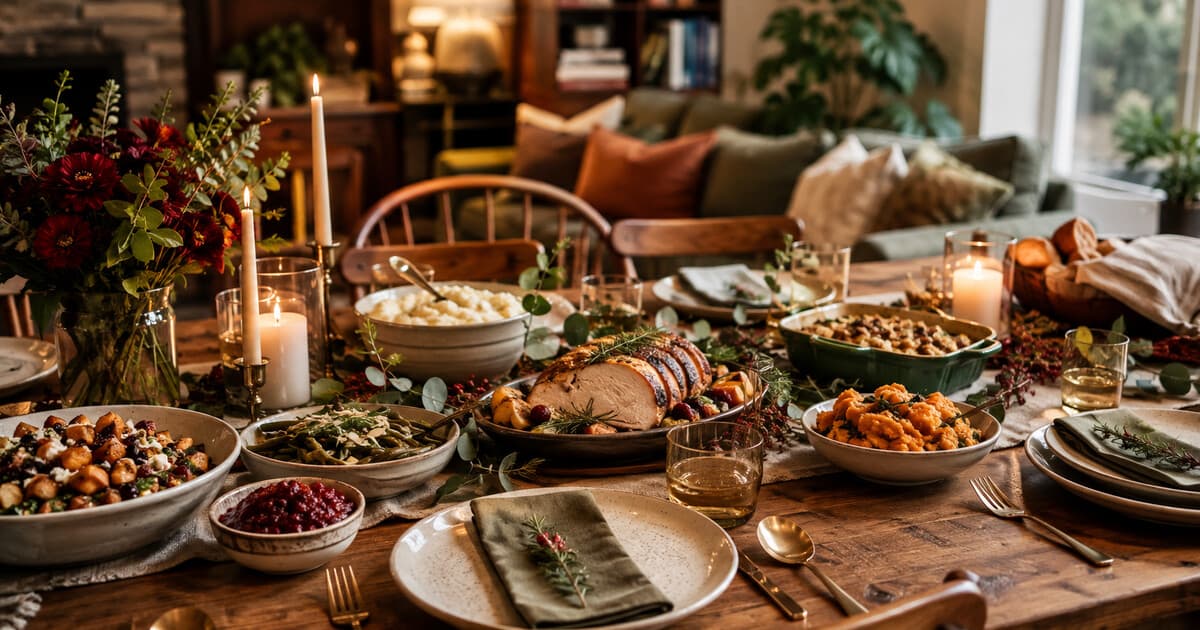
The plate has limited space. If you offer mashed potatoes, stuffing, sweet potatoes, green beans, Brussels sprouts, salad, cranberry sauce, and rolls, guests are not likely to eat a full large serving of all eight. This is where hosts accidentally create three days of side-dish leftovers.
Pick four or five core sides and give those normal portions. If you insist on eight or nine sides because tradition requires them, scale some recipes down. A half recipe of the “extra” family dish is often enough to make it present without feeding twenty people.
Appetizers should take the edge off, not replace dinner
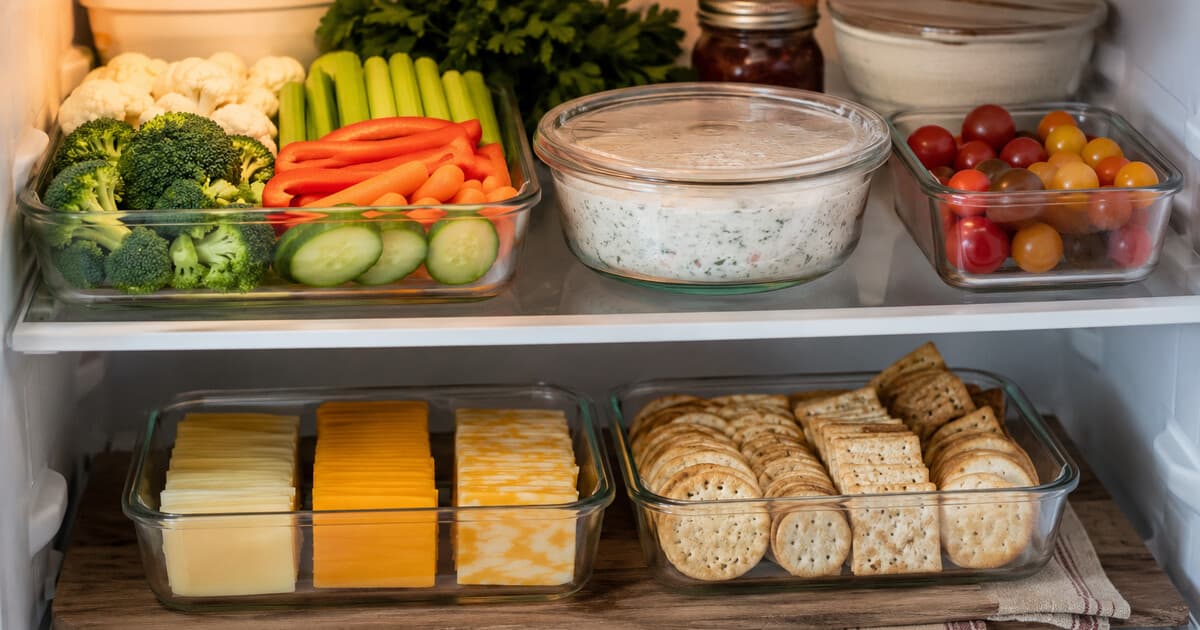
When the main meal is substantial and starts within an hour or so of arrival, plan a small appetizer amount. One dip with vegetables or crackers plus one bite-size item can be enough. If you set out a giant charcuterie board, three hot appetizers, nuts, and a cheese ball, people will still eat Thanksgiving dinner—but your quantity math for the main meal becomes much less predictable.
If dinner may be delayed or guests arrive several hours before eating, increase appetizer food intentionally. The timeline determines appetizer quantity more than the holiday label does.
Dessert math is easier when you count servings, not pies
A 9-inch pie commonly yields about six to eight servings, but Thanksgiving guests often want to taste two desserts. That does not mean two full slices each. Cut smaller slices when you have multiple pies and let people come back. For ten to twelve guests, two pies can be plenty when other sweets are present; add a third if dessert is a major event or you want leftovers.
Whipped cream, ice cream, coffee, and a second dessert can make the table feel abundant without requiring an entire pie per four people.
Reverse timeline: one week before shopping
Get the real headcount. Separate adults, older kids who eat like adults, small children, and anyone who may not eat the main dish. Ask whether people are bringing food before you calculate quantities. A guest-provided 9-by-13 pan of mac and cheese should reduce what you make, not become an accidental bonus.
Decide whether leftovers are a goal. “Enough food” and “enough for everyone to take two containers home” are different shopping lists.
Reverse timeline: before the grocery run
Write the menu in categories: main, starches, vegetables, bright/cold side, bread, gravy, dessert, appetizers, drinks. Put a target quantity beside every item. Then look for redundancy. If you have potatoes, stuffing, mac and cheese, sweet potatoes, and rolls, that is five starch-heavy choices before vegetables appear.
Scale the least important dish down rather than scaling everything up. This is also the moment to check refrigerator capacity. Buying twice as much food creates a storage problem before it creates a generous dinner.
Thanksgiving quantity checklist
Use this before checkout if the cart feels suspiciously full.
- Guest count distinguishes adults, small children, and non-turkey eaters.
- Turkey quantity reflects whether you want leftovers.
- Guest-contributed dishes are subtracted from your own plan.
- You have four or five core sides, not eight full-size core sides.
- Appetizer quantity matches the wait before dinner.
- Dessert is counted by servings across all sweets, not by a full slice of every pie for everyone.
- Drink quantities include water and a non-alcoholic option.
- There is refrigerator space for both ingredients and leftovers.
- Take-home containers are ready if sending leftovers away is intentional.
Plan leftovers safely, not just generously
If you intentionally cook extra, have shallow storage containers ready before dinner. USDA recommends refrigerating perishable leftovers within two hours—or within one hour when the ambient temperature is above 90°F—and using shallow containers to cool food more quickly. Refrigerated Thanksgiving leftovers are generally recommended for use within three to four days.
Cooking extra can be useful. Cooking extra with no refrigerator space and no plan for cooling it is not generosity; it is a logistical problem waiting until after dessert.
TAKE IT TO PAPER
Useful printables for this plan
SOURCES
Sources & references
These links support factual rules, quantities, safety guidance, or planning context. The final prioritization and sequencing in this guide are editorial decisions. See how sources are chosen.
- Editorial referenceFood Network — How Many Pounds of Turkey Should You Order Per Person?foodnetwork.com
- Editorial referenceFood Network — Thanksgiving Dinner Portion Plannerfoodnetwork.com
- Public guidanceUSDA FSIS — Leftovers and Food Safetyfsis.usda.gov
FAQ
Questions people ask before guests arrive
How much turkey do I need per person for Thanksgiving?
A practical starting range for a whole turkey is about 1 to 1½ pounds per guest because the purchased weight includes bone and other non-serving weight. Use the higher end if you want substantial leftovers, or reduce it if another main dish is also being served.
How much mashed potato should I make per person?
Food Network’s Thanksgiving portion planner uses about 3/4 cup of cooked mashed potatoes per person. If you are serving several other starches, tapering toward about 1/2 cup per person can be a practical menu-level adjustment rather than multiplying a full serving by every side.
How many pies do I need for 10 to 12 people?
Two standard pies can often cover 10 to 12 guests when there are other sweets or when slices are modest. Add another dessert if your crowd strongly prioritizes dessert or if you want leftovers.
How do I avoid too many Thanksgiving leftovers?
Limit the number of full-size sides, count dishes guests are bringing, use moderate portions for each side, and decide in advance which leftovers you actually want. Scale optional dishes down instead of making every recipe at full size.