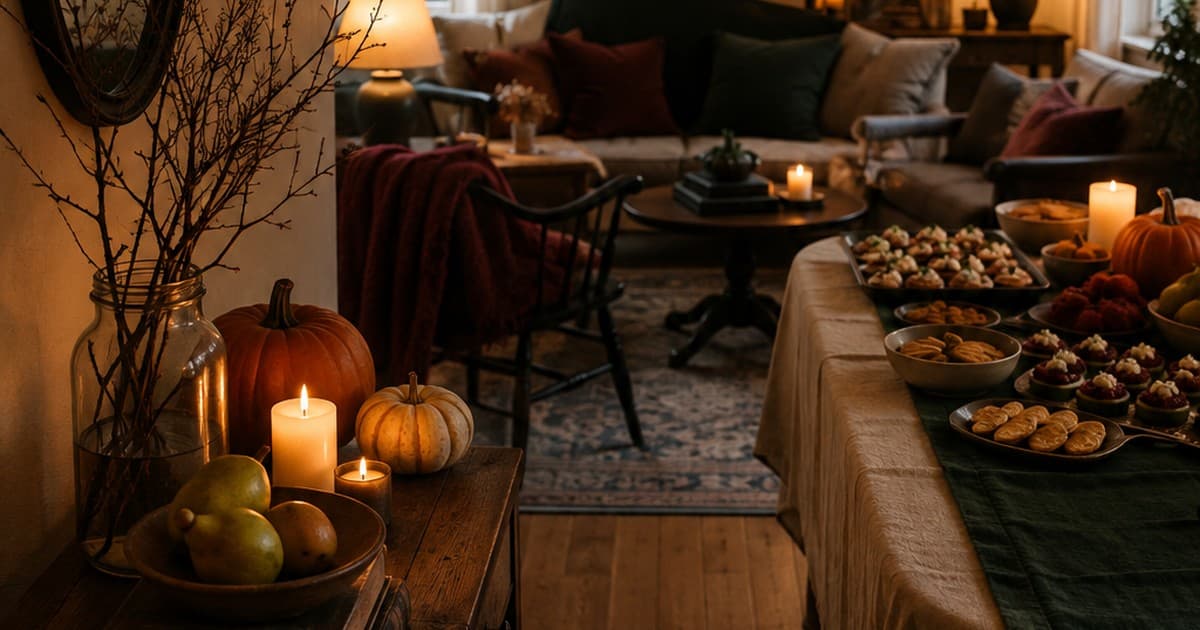
The fastest way to make budget Halloween decor look expensive is to buy less of it. Not more. A room covered in fifteen unrelated plastic objects reads as fifteen purchases. A room with dim light, one strong paper installation, a dark table covering, and a bowl of pumpkins reads as a point of view. This guide is about controlling where the eye lands, not winning a coupon Olympics.
Pick one mood and three colors
Choose a mood that matches what you already own: cozy harvest, moody candlelit, black-and-white graphic, old-house spooky, or playful orange. Then choose three dominant colors. Black, cream, and rust is easy. Burgundy, dark green, and brass works if your home already leans warm. Orange, black, and white is classic and cheap to source.
You do not need every object to match. The palette simply prevents random purchases. When you are standing in a store holding purple tinsel and your plan is black, cream, and rust, the decision has been made for you.
Decorate three focal zones
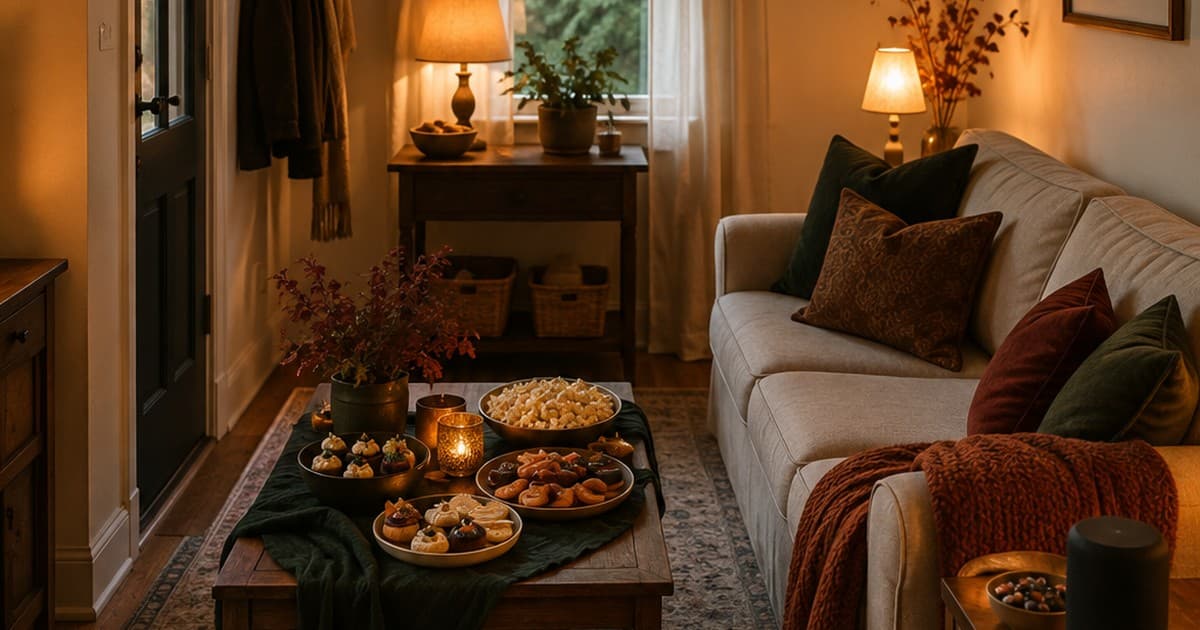
Zone one is the entry because it sets the expectation before guests see the rest of the room. Zone two is the food or drink table because everyone will look at it. Zone three is the main seating or conversation area because that is where the party spends time. Put most of your effort there and leave hallways, side tables, and forgotten corners mostly alone.
A concentrated cluster photographs better, feels more deliberate, and costs less than trying to Halloween-ify every shelf. It also means less cleanup at midnight.
Use lighting before buying objects
Turn off harsh overhead lights and work with lamps, dimmable bulbs, string lights, lanterns, or battery-operated candles where open flame is not appropriate. Light changes the whole room, while one decorative object changes about twelve inches of shelf.
If you buy anything, reusable warm string lights or battery candles are more useful across holidays than a single-purpose prop. Hide cords, keep walkways clear, and do not put fabric or paper against hot bulbs.
Paper is the best low-cost scale trick
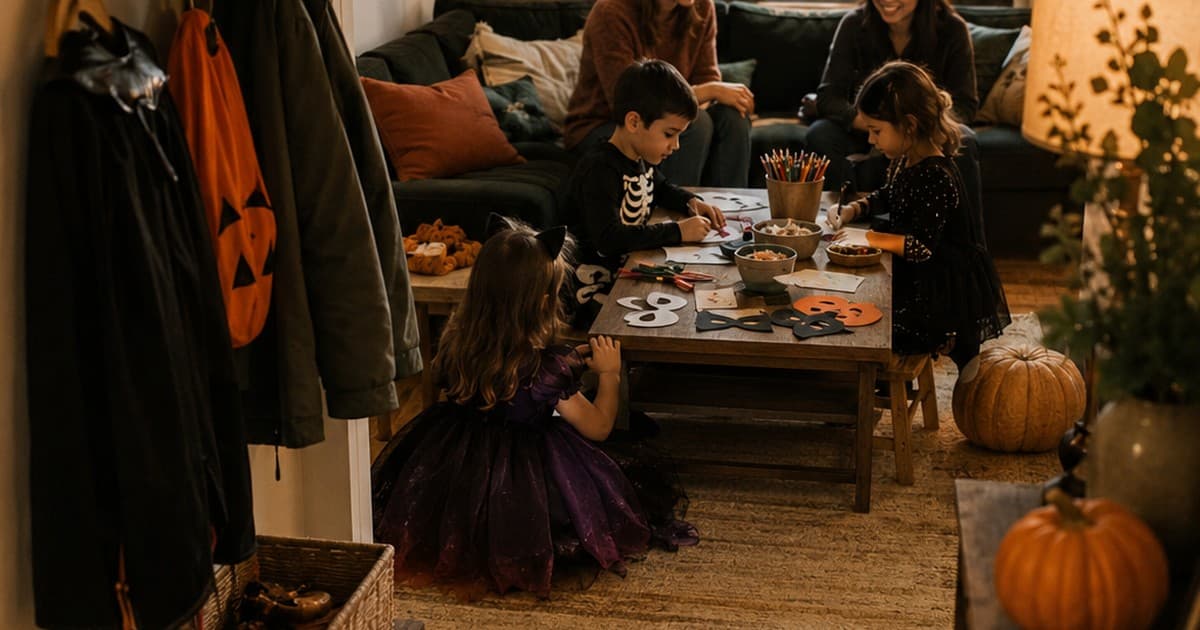
Cut paper bats, moons, leaves, or abstract torn shapes and group them on one wall. Make a large garland rather than six tiny ones. Use removable methods appropriate for your wall finish and test first. The reason paper works is scale: a few sheets can cover a large visual area for very little money.
Do not worry about perfect cutting. Repeated imperfect shapes look intentional when they share a color and direction. One flock of black paper bats moving up a wall is stronger than twenty different Halloween motifs.
Borrow from the house
Dark books, wooden boards, old frames, glass jars, candlesticks, baskets, neutral blankets, cake stands, trays, and vases can become part of the display. Turn book spines inward if bright titles fight the palette. Put a serving bowl on a stack of sturdy books to create height. Fill a vase with bare branches instead of buying a themed centerpiece.
Fabric is especially useful. A dark scarf, remnant, tablecloth, or washed flat sheet can transform a food table. Let it drape loosely rather than trying to tailor it into a formal tablescape.
Let food and produce be decoration
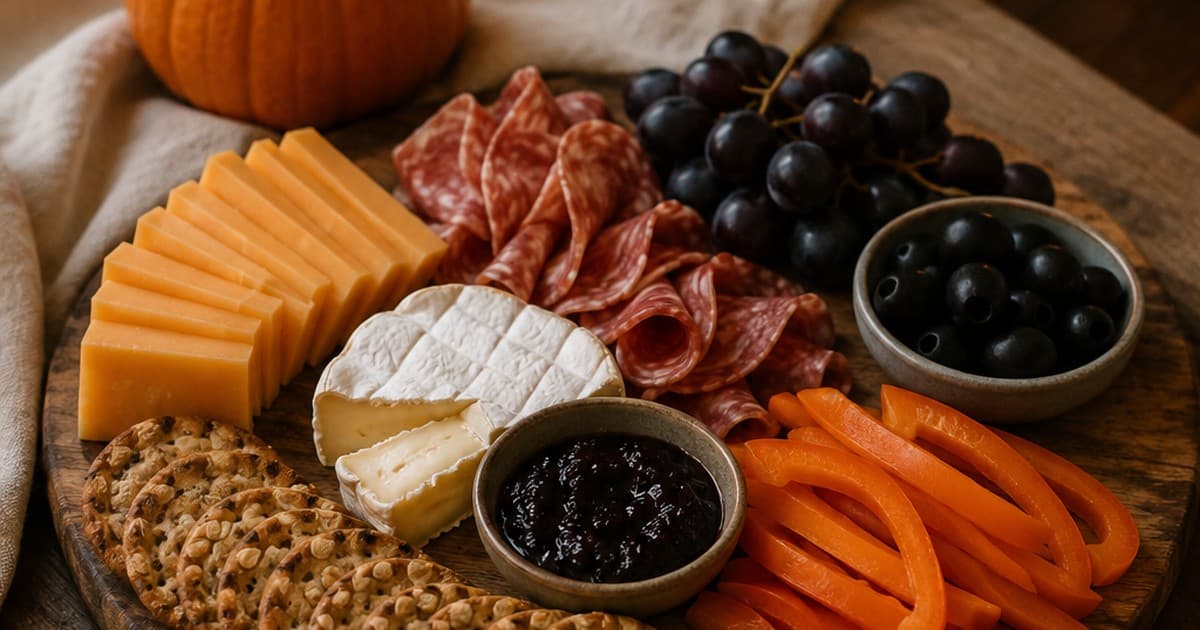
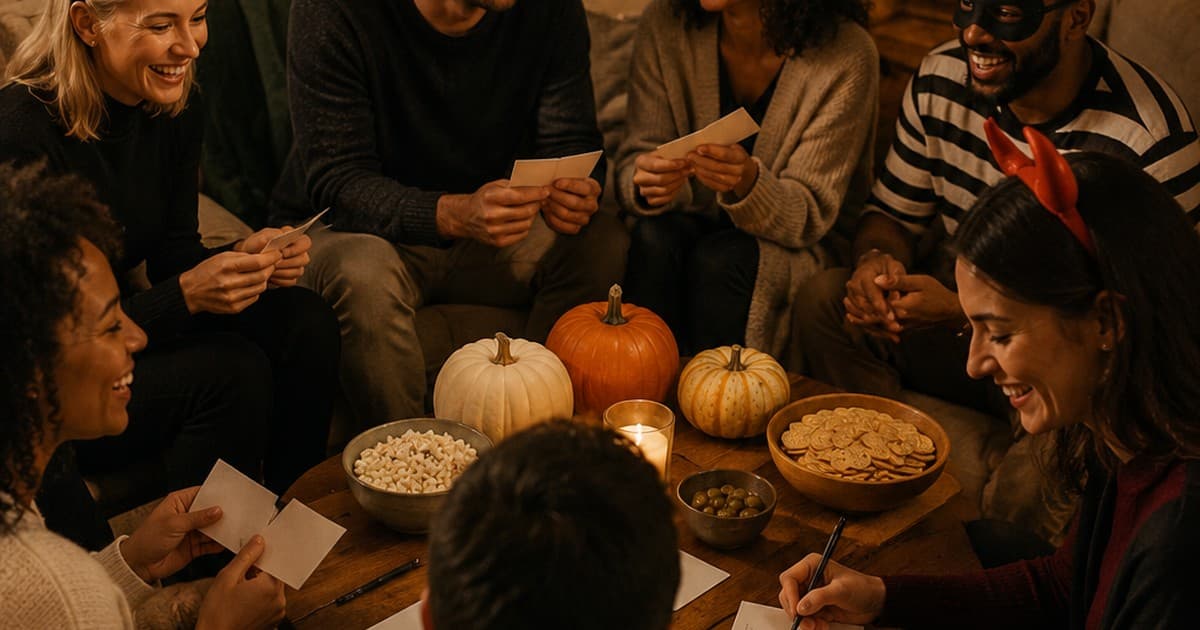
Small pumpkins, apples, pears, dark grapes, pomegranates, squash, herbs, and even a loaf of rustic bread bring autumn color to the table and can be eaten later. This is more useful than buying a decorative bowl filler you have to store for eleven months.
Group produce in odd-numbered clusters or one big bowl. Do not scatter tiny pumpkins over every horizontal surface unless you enjoy collecting tiny pumpkins after people leave.
A $30-ish priority list
Prices vary by store and region, so treat this as a spending order rather than a promise that every item will land under an exact total. First use what you own. Then spend on one reusable lighting item if you need it, paper or removable wall material, a few real pumpkins or seasonal produce, and one table-covering element if your existing surface fights the mood.
If you already own lighting, spend almost nothing. Branches from your yard where appropriate, grocery-store produce, black paper, jars, books, and a playlist can carry the room. The budget is protected by refusing the aisle of tiny theme-specific accessories.
- Reuse: lamps, jars, trays, books, boards, fabric, baskets.
- Buy if needed: one lighting solution you can use again.
- Low-cost scale: black or cream paper for one wall moment.
- Edible decor: pumpkins, apples, pears, herbs, dark fruit.
- Skip: small plastic filler pieces with no job after the party.
The 45-minute setup order
Start by clearing surfaces, because decor cannot rescue clutter. Next set lighting. Then hang the largest paper or wall element. Cover or style the food table. Finally add the small objects you already own. Stop when the three focal zones read clearly from across the room.
Do not finish by sprinkling leftovers everywhere. Put unused decor back in the closet. Restraint is part of the design, and it is free.
What to skip
Skip decor that blocks serving space, narrows walkways, sheds glitter near food, or requires constant fixing. Skip floor props in a crowded room and dangling items where tall guests will walk into them. Skip open flames if the setup, costumes, children, pets, or crowd make them a poor fit.
And skip buying storage problems. If an object is cheap but you will need a bin to keep it until next October, include the bin and the closet space in the real price.
SOURCES
Sources & references
These links support factual rules, quantities, safety guidance, or planning context. The final prioritization and sequencing in this guide are editorial decisions. See how sources are chosen.
- Public guidanceU.S. Fire Administration — Candle Fire Safetyusfa.fema.gov
FAQ
Questions people ask before guests arrive
How can I decorate for a Halloween party cheaply?
Concentrate your decor in three focal zones, use lighting to change the room, create one large paper wall feature, and reuse household items such as jars, books, trays, fabric, and branches. Seasonal produce can add color and be used afterward.
What makes inexpensive Halloween decorations look better?
Repeat a limited color palette, group items instead of scattering them, vary height, and leave empty space. A few coordinated large-scale elements usually look more intentional than many small unrelated decorations.
What should I spend money on first?
If you need to buy something, prioritize reusable lighting or another item that works for multiple holidays. After that, use low-cost paper, seasonal produce, and fabric. Avoid single-use decorative filler unless it creates a major focal point.
How do I decorate a small apartment for Halloween?
Use walls and lighting instead of floor props. Focus on the entry, one wall near the gathering area, and the food table. Keep pathways and seating clear so the room still functions once guests arrive.