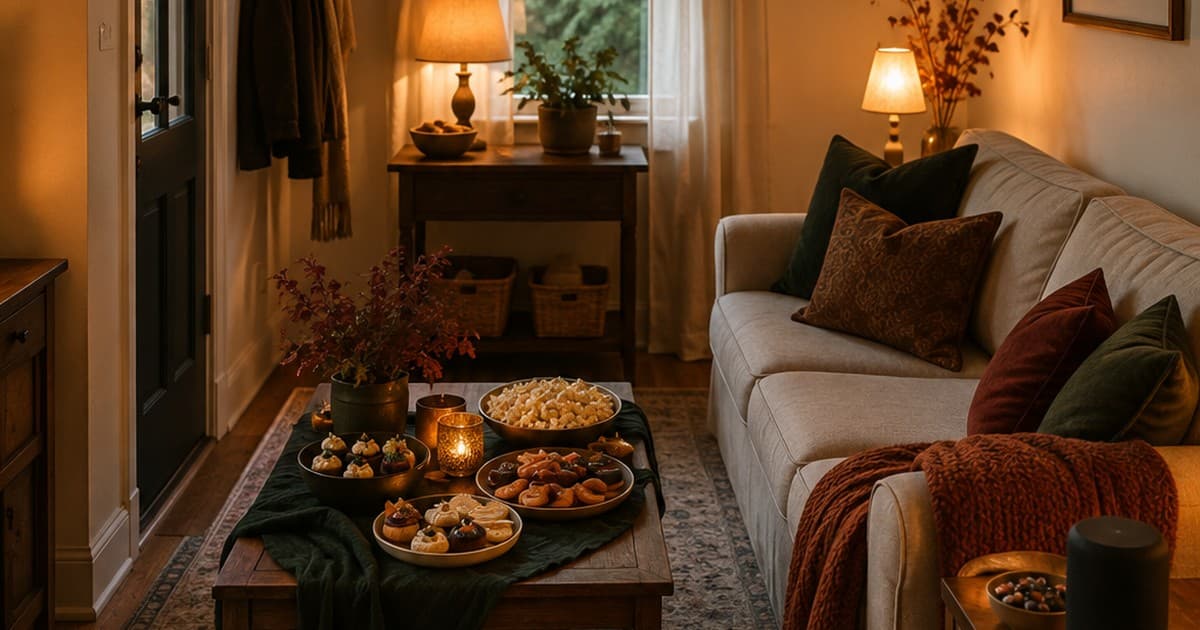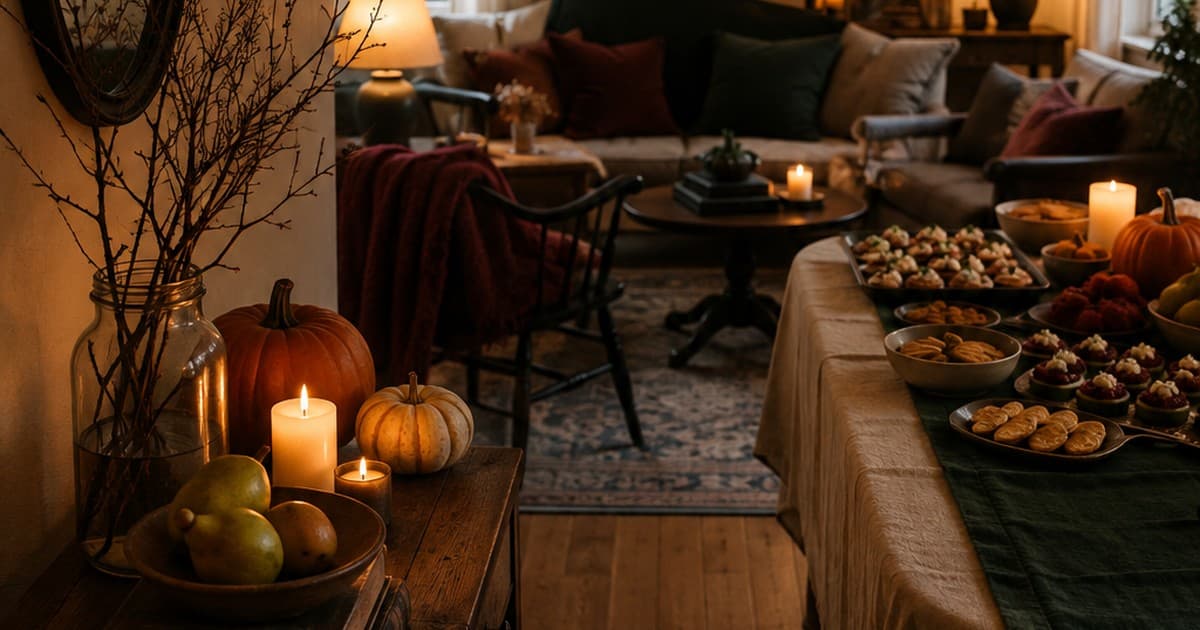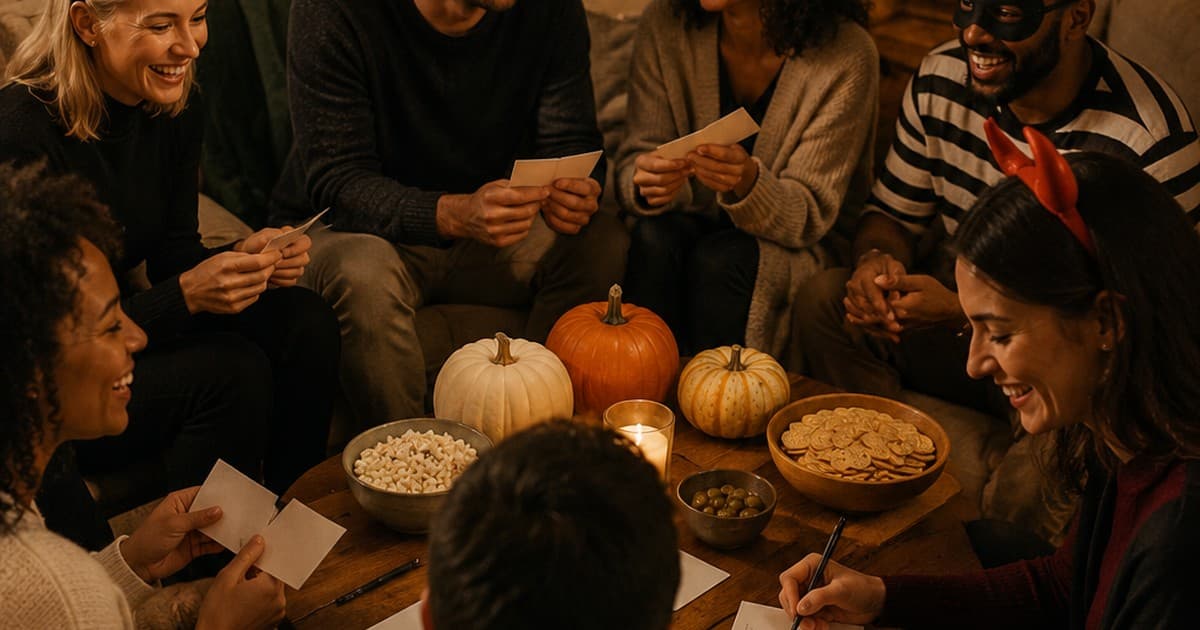
Adult party games fail for one predictable reason: the host announces that everyone must stop having a perfectly good conversation and participate in Organized Fun. The fix is not finding a more elaborate game. It is choosing activities with low social risk, short instructions, and an easy way to watch before joining. These eighteen ideas range from almost-background entertainment to genuinely competitive, so you can match the room instead of fighting it.
18 Halloween games adults will actually play
You do not need eighteen games. For most parties, choose two: one passive or drop-in activity available from the start and one scheduled game after the room has warmed up. Add a third only if your group already likes games and tends to stay late.
The strongest adult Halloween activities use the holiday as a prompt rather than requiring athletic ability or a willingness to embarrass yourself. Give people something to notice, guess, rank, solve, or vote on, then let the energy build naturally.
Halloween two truths and a lie
Each person shares three Halloween-related statements: two true, one false. Keep the prompt narrow—costumes, scary movies, childhood Halloween, weird candy opinions—so nobody feels pushed into revealing personal history.
Costume superlatives
Instead of one ‘best costume’ winner, let guests vote on categories such as most committed, funniest detail, best closet-built costume, or best last-minute save. Multiple categories reduce the pageant feeling.
Horror movie one-line plot guesses
Write extremely short, non-quoted plot descriptions of well-known scary movies and have teams name the film. Mix obvious classics with a few harder titles so casual movie watchers still get wins.
Mystery object touch box
Place harmless textured household or food items in covered containers and let adults guess by touch. Keep it clean, dry, and optional; the fun is the overreaction, not actually making anyone miserable.
Halloween ‘would you rather’ cards
Put cards in a bowl so people can grab one when conversation slows. Make questions silly rather than intimate: live in a haunted mansion or a cabin with a mysterious basement, give up candy or scary movies, and so on.
Spooky trivia in three short rounds
Run three rounds of five questions instead of a forty-question marathon. Try folklore, movies, and Halloween history or pop culture. Short rounds let late arrivals join without needing the full score sheet.
Candy blind taste test
Cut familiar candies into small pieces, number them, and have players guess the candy. Check allergens carefully and keep ingredient packaging available instead of making the contents mysterious to anyone with dietary restrictions.
The cursed object story
Put one odd thrifted or ordinary object in the middle of the group. Each person adds one sentence to the story of why the object is cursed. The best version moves quickly and ends before the premise gets tired.
Mini scavenger hunt
Hide six to ten small, non-messy objects in guest areas only. Give teams a short list and a time limit. This works especially well when people need a reason to move around rather than staying clustered in the kitchen.
Halloween photo prompt board
Post six simple photo prompts such as ‘dramatic staircase pose,’ ‘villain team meeting,’ or ‘album cover in costume.’ Guests complete them whenever they want. It creates activity without requiring the whole room to participate together.
Name that spooky sound
Play short, non-copyrighted or self-recorded sounds—wind, creaking door, cat, footsteps, rattling ice—and let teams identify them. The DIY version is funnier because household sounds are often unexpectedly difficult.
Pumpkin estimation jar
Fill a clear jar with individually wrapped candy or small orange objects and let guests guess the count. It is almost effortless, runs all night, and gives you a reason to award a tiny prize near the end.
Murder-free mystery clue wall
If a full murder mystery sounds exhausting, create a five-clue puzzle about a missing dessert, stolen trophy, or vanished party prop. Guests can solve it casually over the course of the evening without staying in character.
Halloween song title scramble
Scramble words from familiar spooky-season song titles and let teams solve a short list. Avoid obscure picks; the satisfaction comes from speed, not proving who has the strangest playlist.
Monster drawing relay
Fold paper into sections so each person draws one part of a creature without seeing the rest. Unfolding the final monsters is reliably funny and does not require artistic talent because bad drawing improves the result.
Guess the host’s Halloween ranking
Before the party, rank ten candies, scary movies, costumes, or fall foods. Guests try to predict your order. It is personal enough to spark conversation without asking anyone else to disclose something awkward.
One-minute pumpkin stack
Use lightweight mini pumpkins or pumpkin-shaped objects and give pairs one minute to build the tallest stable stack. Put a towel or mat underneath and keep the objects small enough that falling pieces are not a hazard.
Late-night spooky charades
Charades works best after the party is already lively. Use broad categories—monsters, supernatural creatures, Halloween actions—not niche movie titles. Let pairs perform together if your group dislikes solo spotlight.
What you can make ahead
Print or write every prompt, answer key, and score sheet before party day. Put each game in a labeled envelope or folder with the pens, tape, bowl, or props it needs. That prevents the classic host move of explaining half a game while searching three drawers for a marker.
If you are offering a prize, use one or two small prizes for the whole evening rather than prizes for every activity. A funny trophy, seasonal snack, or first pick of leftover dessert is enough.
What to skip
Skip games that rely on heavy drinking, physical contact, humiliation, or personal secrets unless you know every guest would genuinely enjoy that format. Also skip a ninety-minute mystery with assigned characters when half the group believes they are coming over to chat and eat. The mismatch is the problem, not the game itself.
Do not schedule a game for the exact arrival time. People are taking off coats, greeting each other, finding drinks, and arriving late. A drop-in activity can start immediately; a whole-group game usually works better after thirty to sixty minutes.
A party-friendly game timeline
At arrival, have one passive activity ready: estimation jar, photo prompts, clue wall, or would-you-rather cards. About forty-five minutes in, read the room. If conversations are flowing, leave them alone. If energy is flattening, run one ten-to-fifteen-minute game such as trivia or a taste test.
Save charades, relays, or more performative games for later, when the group has already relaxed. End while people are still laughing. A good party game should create more conversation afterward, not make everyone feel relieved that organized recreation has finally concluded.
SOURCES
Sources & references
These links support factual rules, quantities, safety guidance, or planning context. The final prioritization and sequencing in this guide are editorial decisions. See how sources are chosen.
- Editorial referenceGood Housekeeping — Adult Halloween Games and Activitiesgoodhousekeeping.com
FAQ
Questions people ask before guests arrive
How many games should I plan for an adult Halloween party?
Usually two is enough: one optional drop-in activity and one short group game. Prepare a third as backup if your friends are enthusiastic game players, but do not feel obligated to use it if the party is already going well.
What Halloween games work for adults who do not know each other?
Low-pressure team trivia, estimation games, photo prompts, a short scavenger hunt, and silly would-you-rather cards work well because guests can participate without revealing much about themselves or performing alone.
When should I start party games?
Avoid forcing a whole-group game during the arrival window. Give people roughly thirty to sixty minutes to settle in, then use a short game if the room needs an energy shift. Passive activities can be available from the beginning.
How do I make adult party games less awkward?
Keep instructions under a minute, make participation optional, use pairs or teams, and avoid prompts built around secrets, physical contact, or embarrassment. Games are easier when watching first is socially acceptable.