You do not need a basement, backyard, or open-plan kitchen the size of a school cafeteria to host Halloween for kids. You need fewer moving parts. In a small apartment or compact house, the room itself can do some of the organizing for you: one place for coats, one place for active play, one place for food, and one quiet reset option. The goal is not to make the space feel bigger. It is to make the traffic predictable.
Start with the guest count, not the decorations
Your realistic capacity depends on age, adult supervision, furniture layout, and whether children need floor space for games. A seated craft takes less roaming space than a balloon relay. Younger children also need closer supervision and more help with food, bathrooms, costumes, and transitions.
Invite the number you can supervise comfortably, not the number that technically fits if everyone stands still. If several caregivers will stay, count them too. Adults take up space, need somewhere to set drinks and bags, and can accidentally block the same narrow pathway the kids are using.
Create three zones with furniture you already own
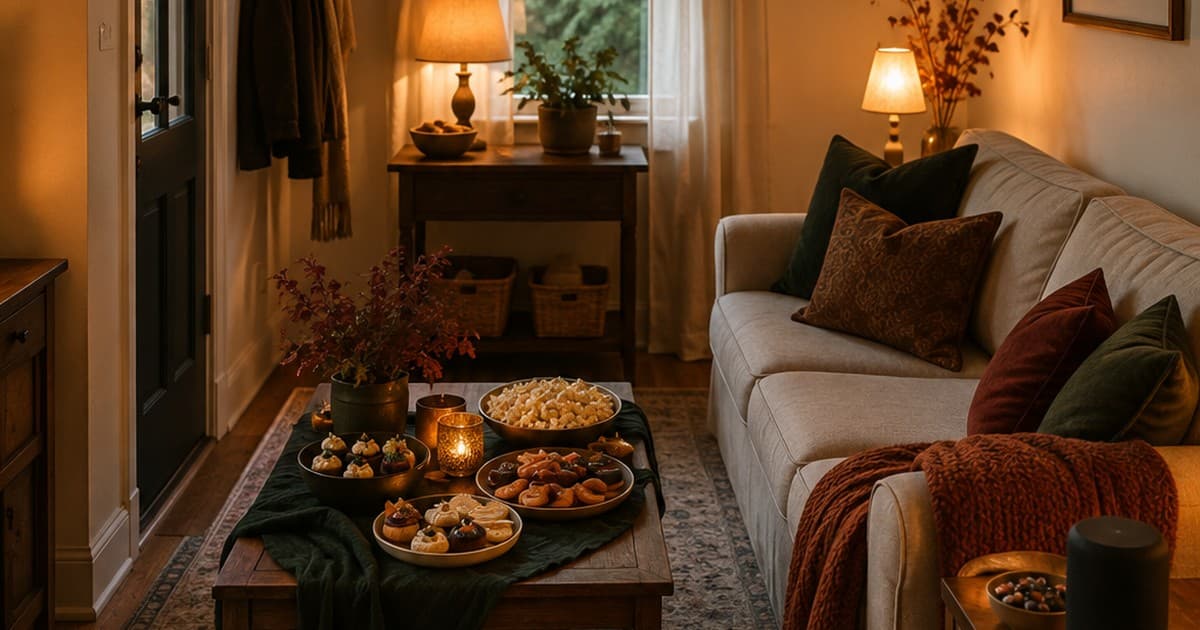
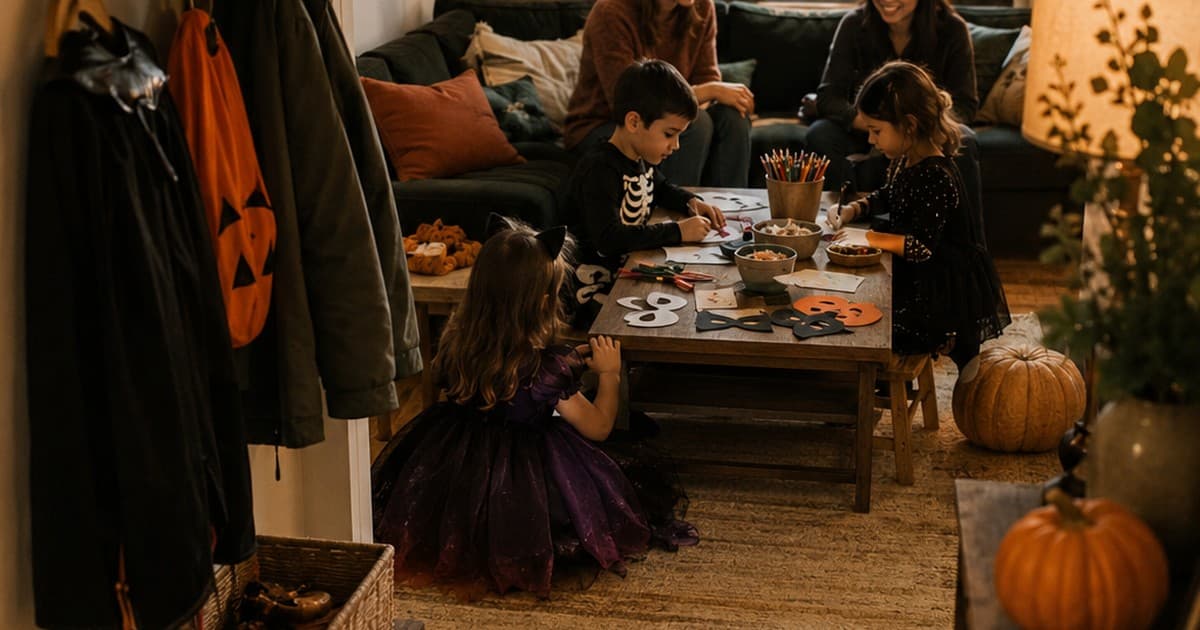
Zone one is arrival and costumes: a chair, hooks, basket, or section of bed for coats and costume pieces. Zone two is the main activity area: clear one rug or patch of floor and move only fragile or sharp-edged clutter, not every piece of furniture. Zone three is snacks and calm activities: a dining table, kitchen counter with stools, or coffee table used while seated.
The point of zones is not Pinterest labels. It is preventing every child from needing the same patch of floor at once. If the craft is at the table, the scavenger hunt should use the floor. If food is being served, pause the game that sends children running past it.
Choose activities that fit the room
Good small-space activities have clear boundaries and short reset times. Try decorate-a-paper-mask, Halloween bingo, monster drawing, sticker scenes, a seated mystery bag, a short clue hunt, freeze dance with a marked dance zone, or a story circle with flashlights. Rotate between active and quiet activities so the energy does not climb continuously for two hours.
Avoid games built around throwing objects across the room, running blindfolded, or chasing through doorways. Costumes already change how children see and move. A game that is fine in gym clothes may be clumsy with capes, masks, long hems, or bulky accessories.
Set up snacks for sitting, not wandering
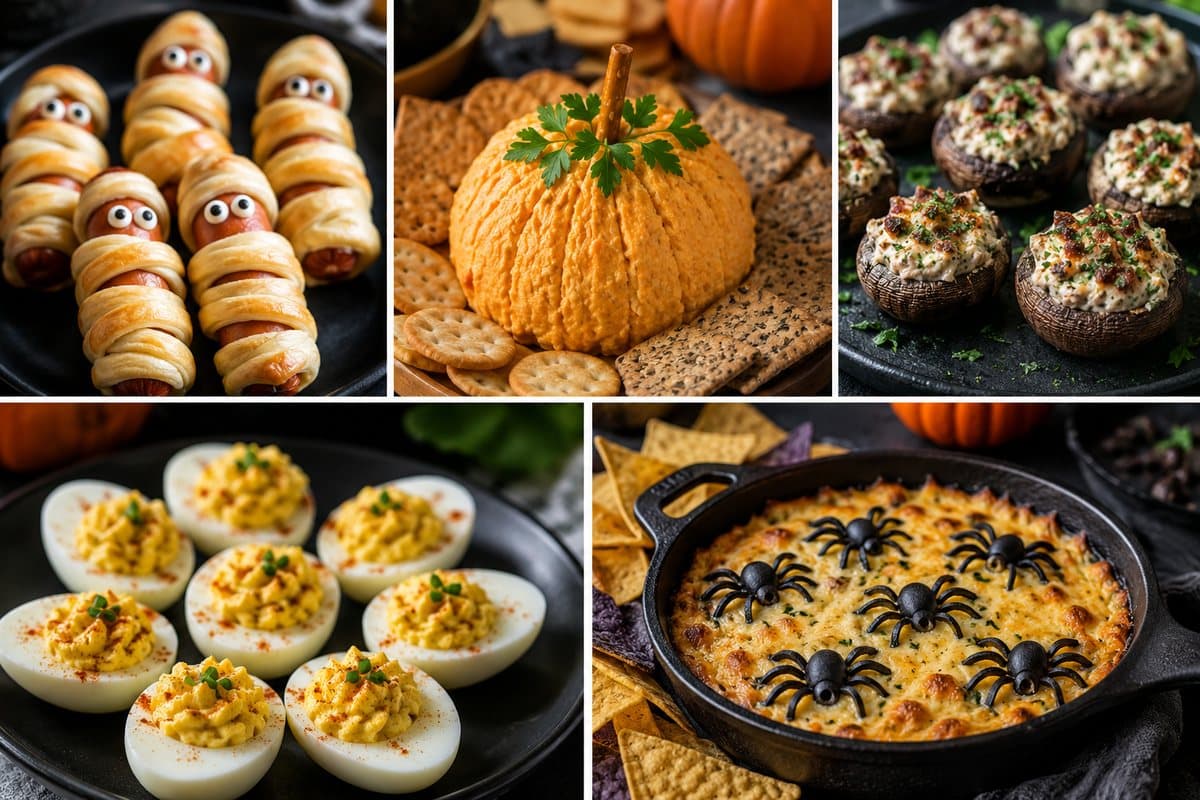
For younger children, make snack time a defined pause and have them sit while eating. CDC guidance emphasizes age- and developmentally appropriate food shapes and textures, seated eating, and close supervision. Whole grapes, popcorn, nuts, hard candy, gummy candy, marshmallows, and several other foods can be choking hazards for young children.
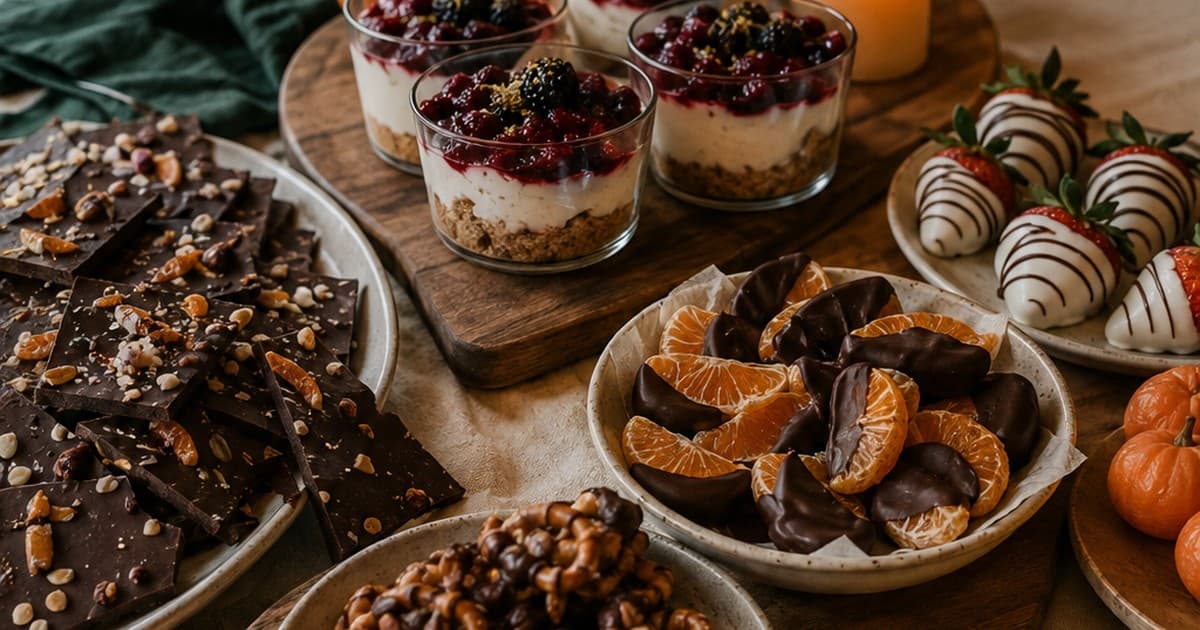
That does not mean your party needs a medical-looking menu. It means you choose simple foods the children can handle safely for their age, prepare them appropriately, and do not scatter open bowls of risky snacks through a room where everyone is running in costume. Ask caregivers about allergies before the party and keep original packaging for packaged foods so ingredients can be checked.
Reverse timeline for a two-hour kids’ party
One week out, confirm the guest count, caregiver expectations, allergies, and whether children will arrive in costume. Pick three activities and one backup quiet option. Do not buy decor until you know which surfaces and floor areas must stay clear.
Two days out, prepare craft supplies in individual or shared trays, write the activity sequence on one sheet of paper, and make any food components that hold well. Remove fragile decor and anything tempting to climb. Charge a speaker if you are using music.
The morning of, set up zones, put coats/bags storage near the entrance, prepare the bathroom, and place food supplies out of reach until snack time. Tape down any cords and check that walkways are clear at child height, not just adult eye level.
Thirty minutes before, set out the first calm activity, fill water, put wipes or towels where you can reach them, and get yourself ready. When guests arrive, begin with something that does not punish latecomers. Around the forty-five-minute mark, serve snacks. Use the second hour for one active game, one quiet finish, then a clear goodbye ritual or take-home item.
Small-space checklist
Run this list once before the doorbell. It is designed to prevent traffic and supervision problems rather than make the room photogenic.
- Guest count includes staying caregivers.
- Coats, bags, and costume accessories have one landing spot.
- Fragile, sharp, breakable, or climbable temptations are moved or blocked.
- Activity supplies are portioned and reachable by adults.
- Snack seating is clear and food is appropriate for the children’s ages.
- Allergy information has been requested and package labels are available.
- Bathroom has soap, hand towel, toilet paper, and a clear route.
- One quiet backup activity is ready if the room gets overstimulating.
- Party has a planned end time and a simple final activity.
What not to overfill
Do not overfill the room with floor decor, balloon clusters, extra chairs, or a separate station for every activity. In a small space, empty floor and clear surfaces are part of the party design. One paper garland above eye level can do more than five baskets of decorative objects children have to navigate around.
Also resist scheduling every ten minutes. Kids need transition time, bathroom time, costume-fixing time, and moments when they simply play. A loose plan with three anchors is easier to manage than a minute-by-minute agenda.
TAKE IT TO PAPER
Useful printables for this plan
SOURCES
Sources & references
These links support factual rules, quantities, safety guidance, or planning context. The final prioritization and sequencing in this guide are editorial decisions. See how sources are chosen.
- Public guidanceCDC — Choking Hazardscdc.gov
- Public guidanceFDA — Food Allergiesfda.gov
FAQ
Questions people ask before guests arrive
How long should a kids’ Halloween party be in a small space?
About two hours is a useful target for many young-child parties because it is long enough for arrival, two or three activities, snacks, and a calm finish without requiring a large number of transitions. Adjust for the age group and your guests.
What are good Halloween games for a small apartment?
Choose contained activities such as bingo, monster drawing, mask decorating, sticker crafts, freeze dance in one marked area, mystery bags, and a short clue hunt. Avoid games that require running through doorways or throwing objects across the room.
How can I make a small room feel festive without crowding it?
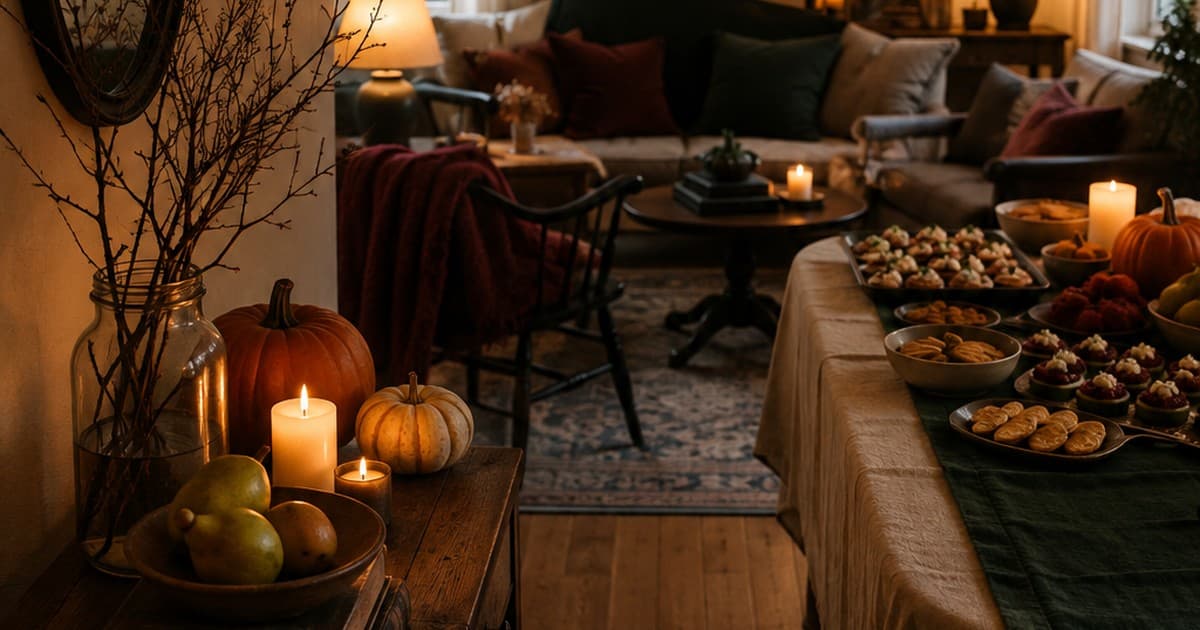
Decorate vertically and concentrate the theme in a few places: the entry, one wall, and the food table. Use paper garlands, removable wall shapes, lights, or a table covering instead of floor decorations and extra furniture.
What snacks should I serve young children at Halloween?
Use foods appropriate to each child’s age and development, prepared in safe shapes and textures, and supervise children while they eat seated. Ask caregivers about allergies and follow current pediatric or public-health guidance for choking hazards.