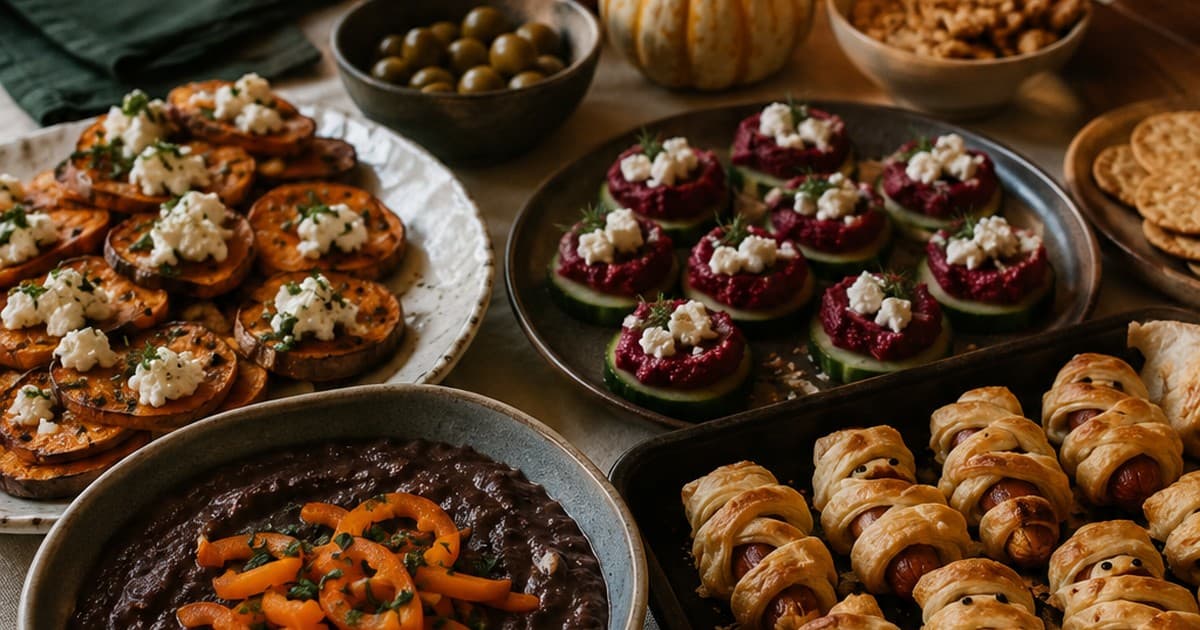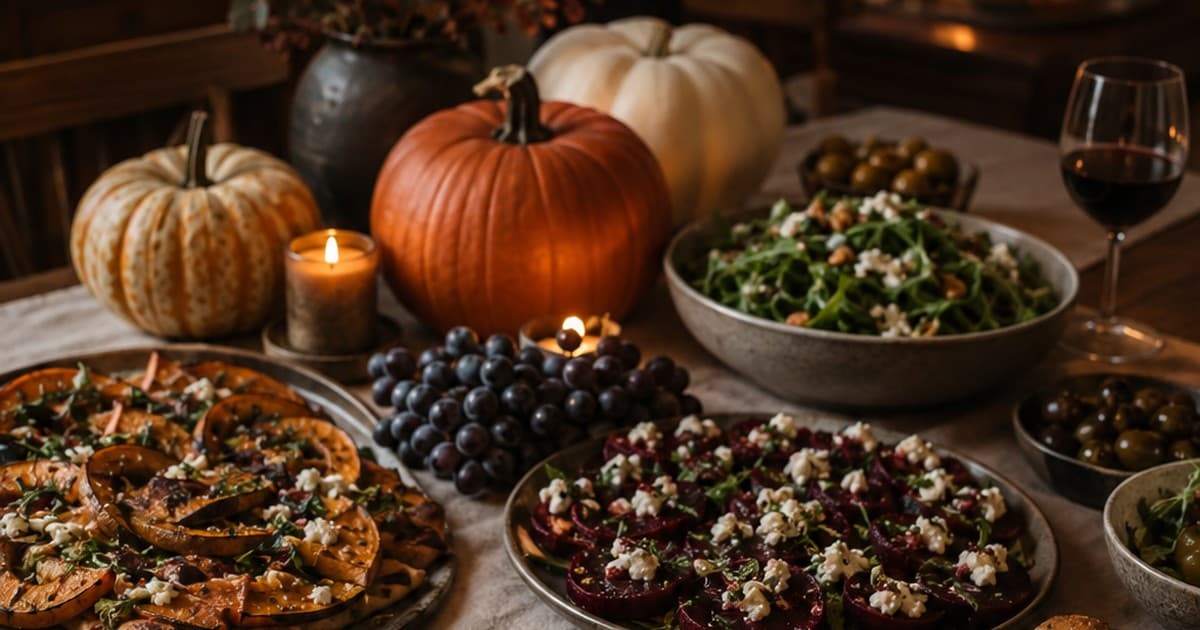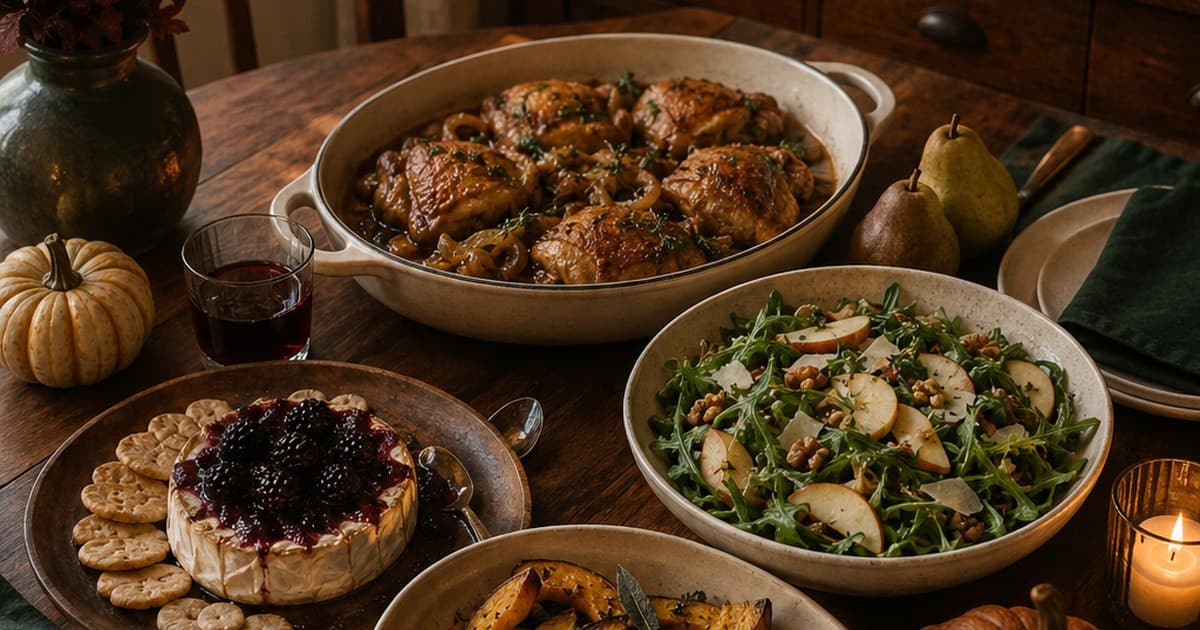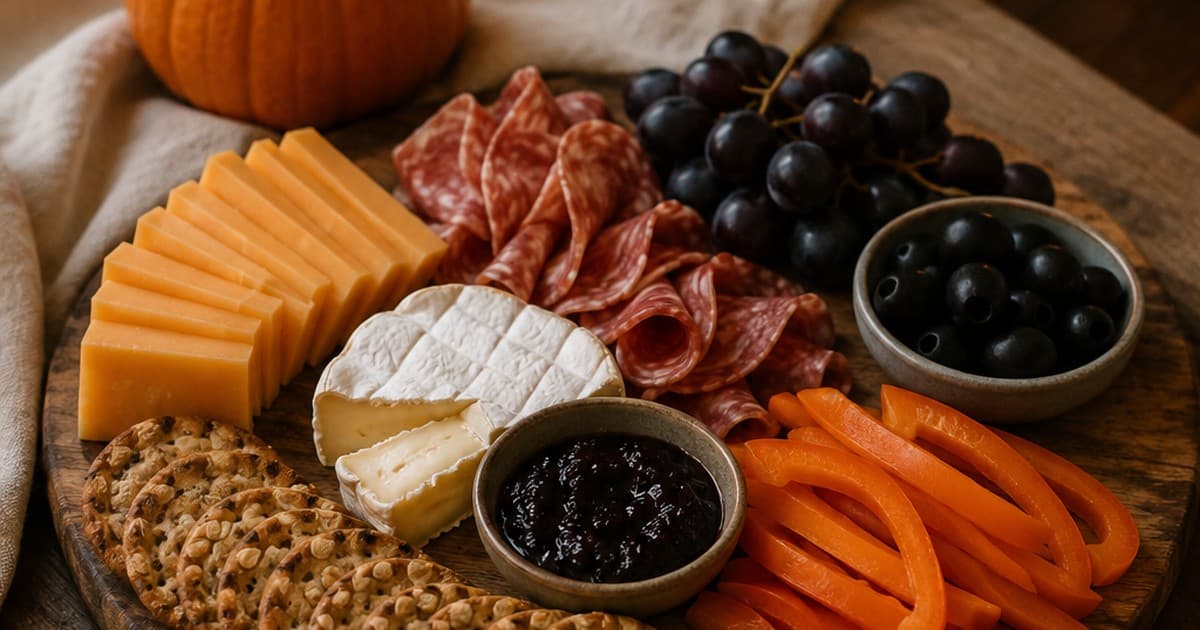
A Halloween charcuterie board can become a $90 shopping list faster than you can say ‘tiny decorative skeleton hand.’ You do not need four cheeses, three meats, five crackers, specialty jam, honeycomb, edible flowers, and produce nobody normally buys. A useful board is a serving system first and a photo second. This version starts with six core foods, then uses color and arrangement to make them feel Halloween-ready.
Use the 2-2-2 formula
Start with two cheeses, two savory items, and two fruits or vegetables. Add one or two crackers or breads and one wet extra such as mustard, jam, olives, or pickles. That is enough contrast for a small-to-medium party and keeps the board from becoming a supermarket inventory project.
For example: sharp cheddar + soft cheese; salami + olives; dark grapes + orange pepper; seeded crackers + plain crackers; blackberry jam. Or build a vegetarian version with two cheeses, olives, sliced pears, crackers, a pepper spread, and nuts or fruit prepared in a form appropriate for the guests who will eat them. The formula is more important than any specific ingredient.
Create Halloween color without gimmick food
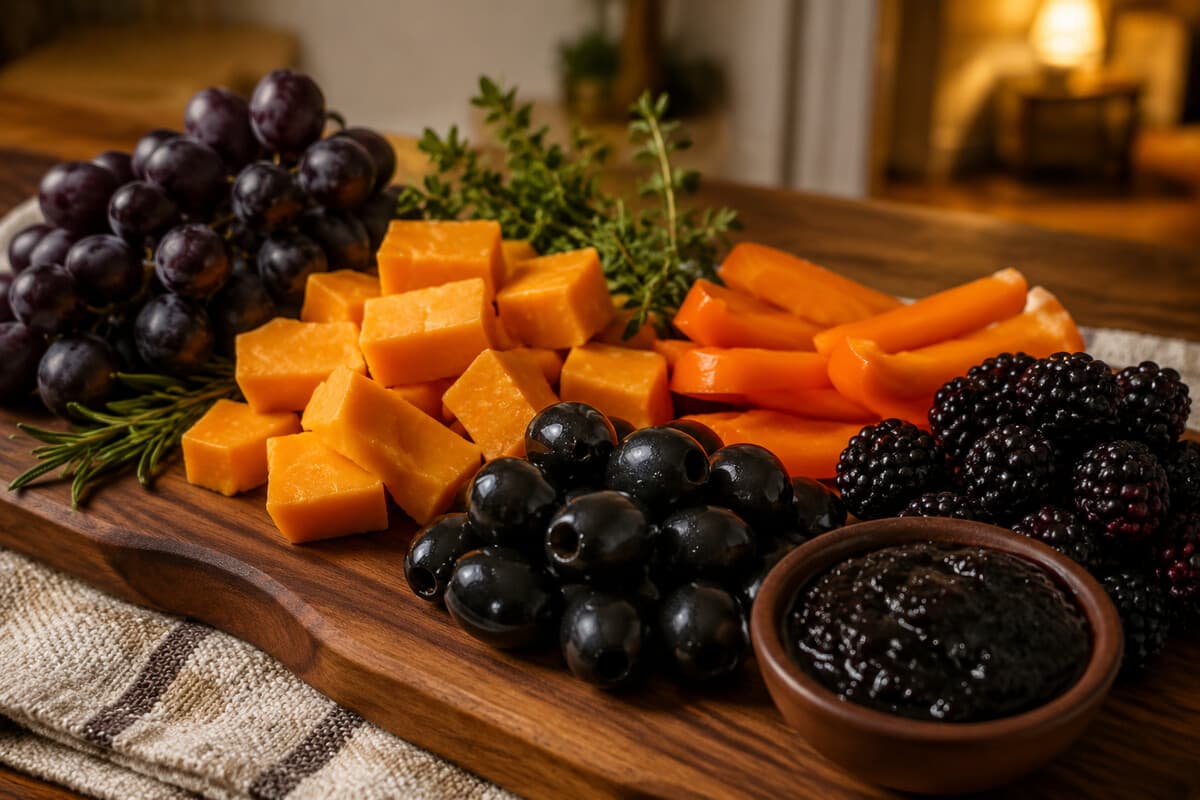
Dark ingredients do most of the work: black olives, dark grapes, blackberries, dried figs, dark chocolate, seeded dark crackers, or a deep berry preserve. Orange can come from cheddar, dried apricots, persimmon, clementines, roasted squash, orange peppers, or crackers with a warm golden color. Green herbs or pickles add contrast.
You can add one obvious Halloween detail—a small food-safe pumpkin bowl, a ghost-shaped cheese cutout, or a label card—but stop at one. The board will look more polished if the ingredients remain recognizable and easy to eat.
How much to put on the board
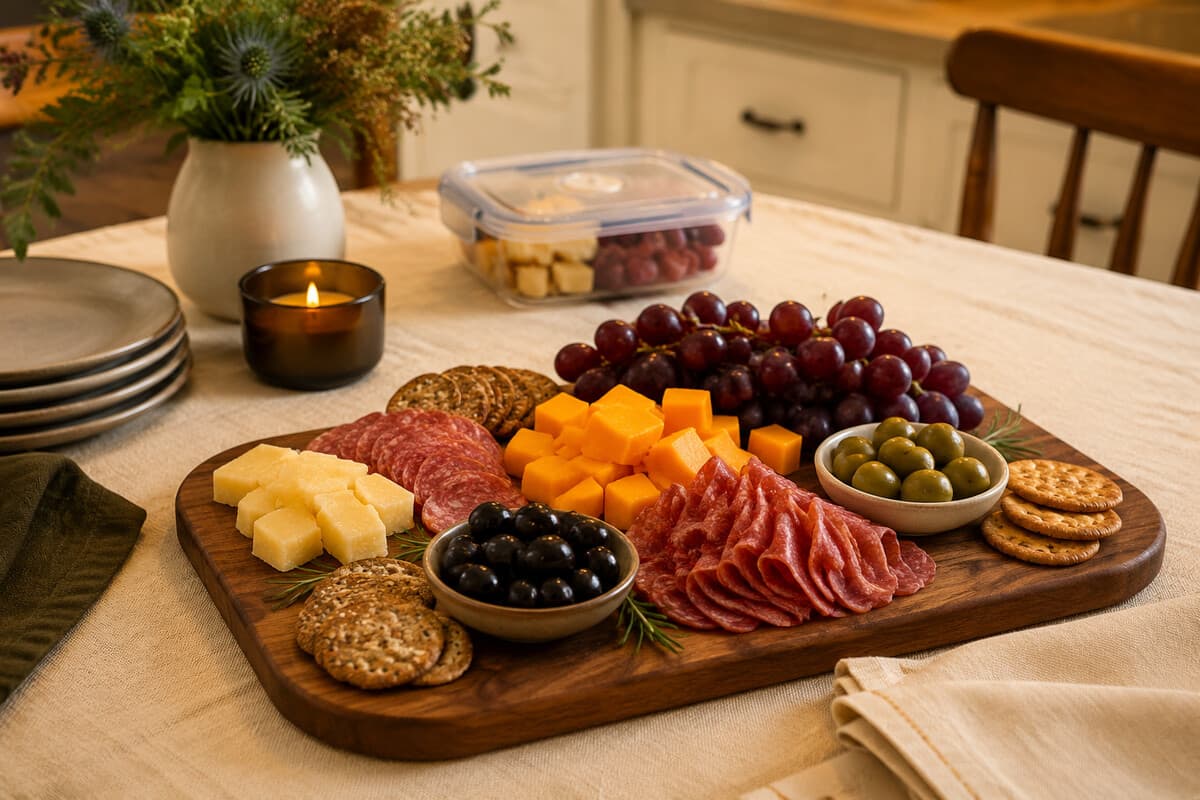
Think about whether the board is a pre-dinner appetizer or the main grazing food. For an appetizer, modest portions are enough because other food is coming. A practical reference is roughly 2–3 ounces of meat and about 3 ounces of cheese per person, then adjust downward or upward based on the rest of the menu, the size of the board, and how long guests will graze.
Do not put every purchased ounce on the board at once. A board for six can look abundant with smaller piles, and backup ingredients can stay cold until you need a refill. This is especially useful for cheese and cured meats at a long party.
Assemble it in the easiest order
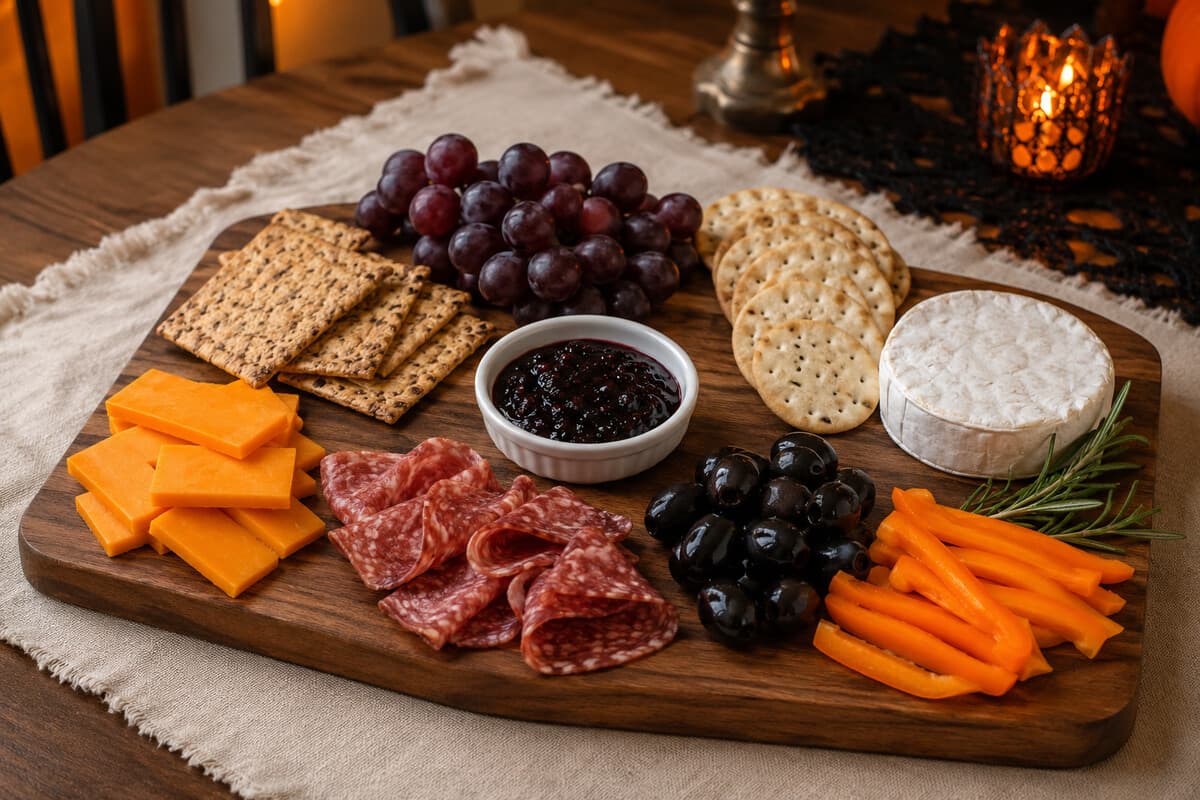
Place small bowls first because they are hardest to fit later. Add the cheeses with space for knives. Fold or loosely pile meat rather than laying it in flat store-package rows. Add fruit and vegetables in two or three small clusters so color travels across the board. Then fill some—not all—gaps with crackers.
Keep extra crackers off the main board in a bowl. They take up huge amounts of space and are usually what guests need more of first. Leaving a little open board also gives people somewhere to set a cheese knife or retrieve a grape without dismantling your composition.
- 1. Bowls for jam, mustard, pickles, or olives.
- 2. Cheeses, with a few slices started for guests.
- 3. Meats or savory alternatives in loose folds or clusters.
- 4. Dark and orange produce in several small groups.
- 5. Crackers in short rows, with backup crackers nearby.
- 6. One Halloween accent, if you want it.
The budget version
Spend money on one ingredient you truly care about, then make the rest ordinary. One good cheese beside supermarket cheddar still creates contrast. Use apples instead of figs, a jar of pickles instead of marinated specialty vegetables, crackers already in your pantry, and a cutting board you own instead of buying a ‘charcuterie board.’
A small board also looks better when you have a small group. Do not buy food to fill an oversized surface. If your only platter is huge, place the food on a smaller cutting board or cluster it on one half and put crackers in separate bowls.
Make-ahead and food-safety plan
Wash and dry fruit, portion crackers, prepare dips, and choose bowls the day before. A few hours before the party, cut firm cheese and vegetables and keep them covered and refrigerated. Assemble the cold board closer to guest arrival, then add crackers at the end so they stay crisp.
Assemble the cold board close to guest arrival or keep it refrigerated until service. Perishable foods should generally not sit at room temperature for more than two hours, or more than one hour when the ambient temperature is above 90°F. For a long party, make a smaller first board and refill from chilled backups. If young children will eat from the board, avoid whole grapes, whole or chopped nuts, and other small or hard choking hazards unless they are prepared in an age-appropriate form.
Reverse timeline checklist
The night before, choose the board, bowls, knives, and six core foods; wash and dry sturdy produce; and make any dip or spread that stores safely. About two hours before guests arrive, cut firm cheese and vegetables, portion backup ingredients, and return perishables to the refrigerator. Thirty minutes before serving, arrange bowls, cheeses, savory items, and produce. Add crackers and bread last, then put only the first serving quantity on the board. Keep chilled backups covered until you need a refill.
- Night before: choose the board, serving tools, and six core foods.
- Two hours before: prep sturdy components and refrigerate perishables again.
- Thirty minutes before: assemble the first cold board.
- Just before serving: add crackers and bread; keep backup food chilled.
What to skip
Skip ingredients purchased only because they are trendy but nobody at your party likes them. Skip three visually identical cheeses. Skip wet fruit sitting directly against crackers for hours. Skip giant rosemary forests that guests must excavate before reaching the food.
Most of all, skip filling every centimeter. Negative space is not evidence that you failed to shop. It makes the board easier to serve from and easier to refill.
SOURCES
Sources & references
These links support factual rules, quantities, safety guidance, or planning context. The final prioritization and sequencing in this guide are editorial decisions. See how sources are chosen.
- Editorial referenceFood Network — How to Build a Perfect Charcuterie Boardfoodnetwork.com
- Public guidanceUSDA FSIS — How do I keep foods safe at a buffet?ask.fsis.usda.gov
- Public guidanceCDC — Choking Hazardscdc.gov
FAQ
Questions people ask before guests arrive
What goes on a simple Halloween charcuterie board?
Use two cheeses, two savory items, two fruits or vegetables, crackers or bread, and one spread or pickle. Choose naturally dark and orange foods for the Halloween look rather than buying many novelty ingredients.
Can I make a Halloween charcuterie board the night before?
Prep components the night before, but for best texture assemble the board closer to serving. Keep meats, cheeses, cut produce, and other perishables refrigerated, and add crackers late so they stay crisp.
How do I make a charcuterie board cheaper?
Use a smaller board, choose one splurge ingredient, use supermarket cheese and seasonal fruit for the rest, serve crackers in a separate bowl, and avoid buying specialty containers or a new serving board.
How do I make the board look Halloween-themed?
Repeat dark, orange, and green foods across the board and add one seasonal accent. Dark grapes, olives, blackberries, cheddar, orange peppers, dried apricots, herbs, and dark chocolate can create the palette naturally.