A Christmas open house sounds easier than a dinner party because everyone does not arrive at once. That flexibility creates a different hosting problem: you do not know exactly who will be in the room at 4:20, how long early guests will stay, or how much food will disappear before late guests arrive. The answer is not a larger buffet. It is a party designed for turnover, replenishment, self-service, and graceful overlap.
Define the event as an open house on the invitation
Use language that tells guests this is a drop-in window rather than a meal with one start time. Include the opening and closing time, whether children are welcome, the general food format, and any parking or entry detail that could create confusion. “Drop by between 3 and 6 for drinks and holiday bites” communicates a different expectation than “Christmas party at 3.”
Do not promise yourself that guests will stay only thirty minutes; some will stay much longer. Plan the room, seating, and food for overlap rather than assuming perfect turnover. If many guests stay for the entire window, a plan built around constant turnover can run short even when the invitation was clear.
Use an arrival window that fits the way people actually move through December
An afternoon-to-early-evening window can work well because guests can stop by before dinner, after errands, or between other plans. Flexibility is the appeal of the format. The exact hours matter less than making the window obvious and giving yourself a firm ending time.
If your guest list is large for the house, a shorter three-hour window is often easier to supply than an all-day event. If you expect older relatives, small children, or guests who need to sit, keep real chairs available even if much of the room is designed for mingling.
Build the room around three stations
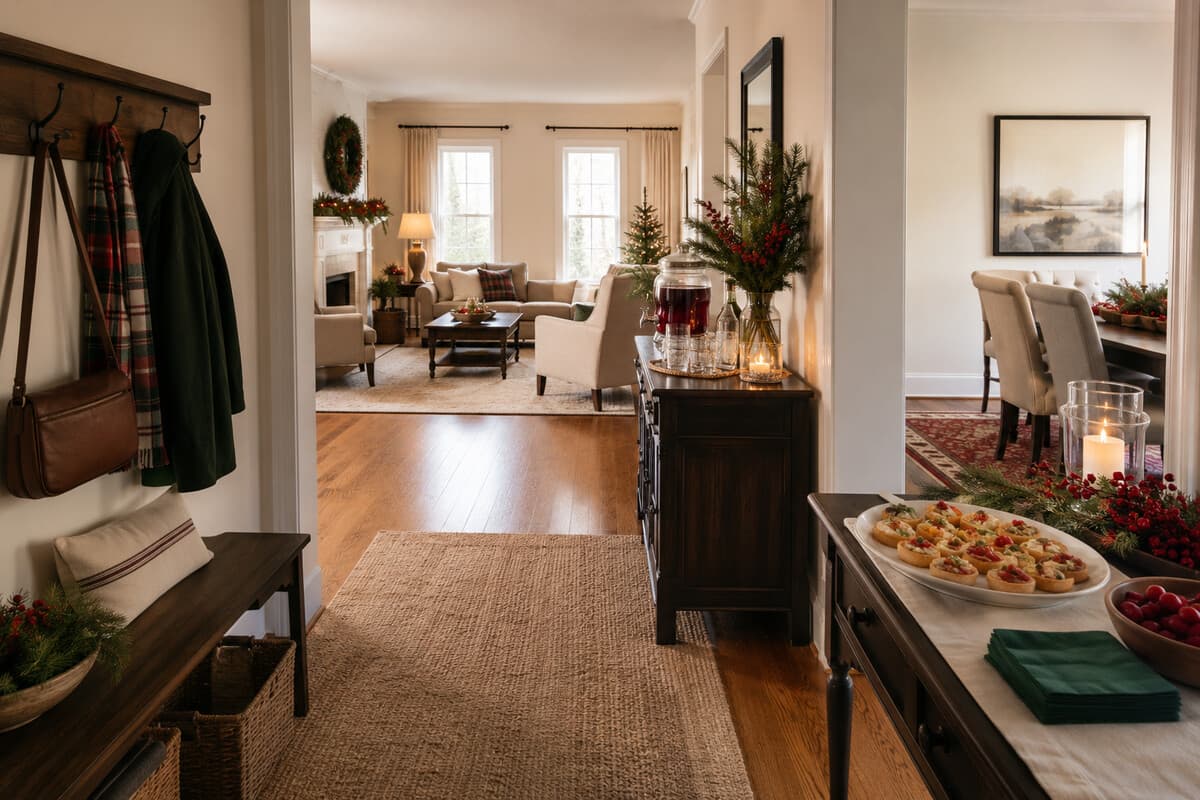
Give coats and bags a destination near the entry but outside the main traffic path. Put drinks somewhere guests can reach without entering the kitchen. Put the main food on another surface so a person pouring sparkling water is not blocking someone trying to get a plate. This simple separation prevents one crowd from forming around the host's work area and makes repeated drink refills less likely to collide with the food line.
A third small destination can be dessert, coffee, or a later snack. It does not need to be active when the doors open. Saving one station for hour two gives the party a natural refresh without adding another activity.
Choose food for standing, grazing, and replenishment
Open-house food should be easy to pick up, easy to understand, and not dependent on a single serving moment. Think sturdy crostini, small sandwiches or sliders, cheese and fruit, dips with simple dippers, bite-size pastry, cookies, and one more substantial warm item if the event overlaps a meal. Avoid a menu where half the dishes require a knife and a place at a table.
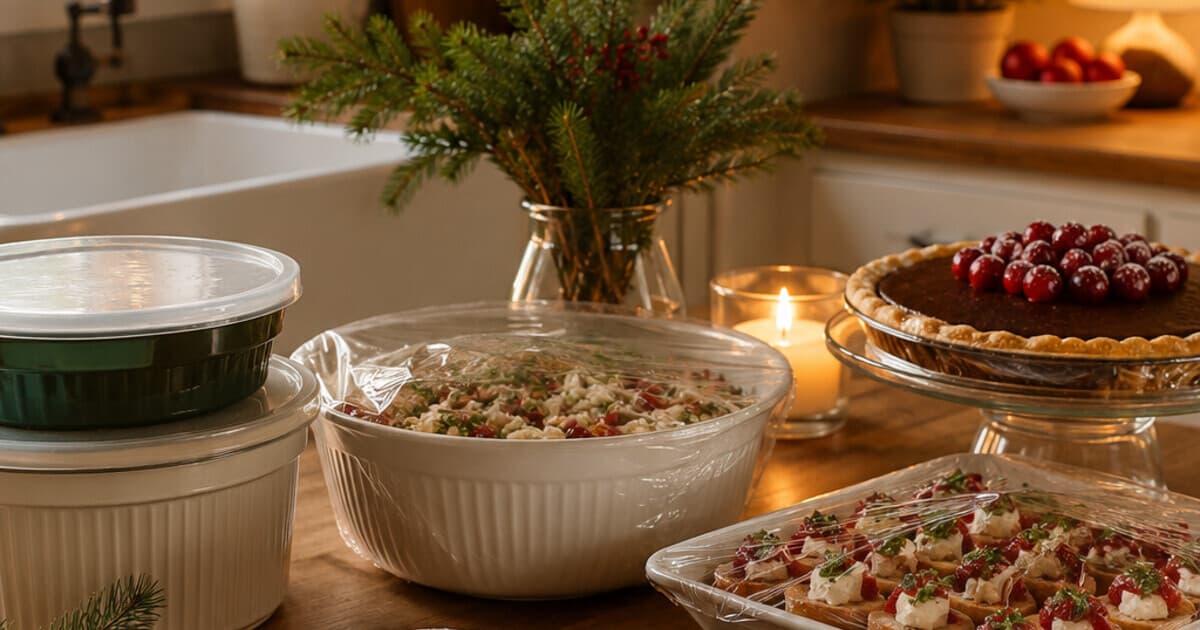
Do not put the entire quantity of perishable food out at the start. FDA buffet guidance recommends using smaller platters, keeping backup food properly hot or cold, and replacing nearly empty dishes instead of topping them with fresh food. That is especially useful for an open house because the guest count changes every half hour.
Plan food in three waves instead of one giant spread
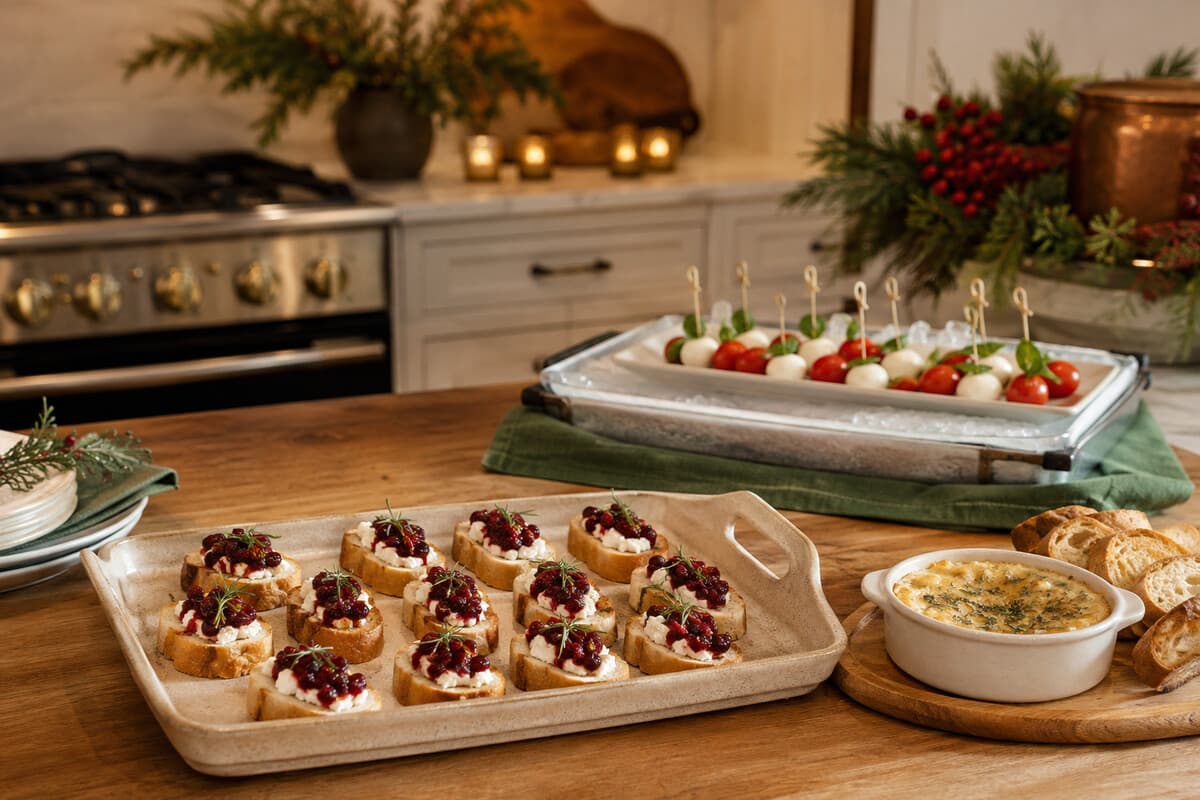
For a three-hour open house, think in waves. At opening, put out the first cold platter, a shelf-stable nibble, and the first warm item. Around the middle of the event, replace rather than merely refill the busiest perishable platter and introduce one fresh savory item. In the last hour, reduce savory replenishment and bring dessert or coffee forward.
The objective is not to manipulate guests into leaving. It is to make sure someone arriving late sees a welcoming table. Hold part of the food back and refresh it later instead of allowing the first arrivals to consume the full supply.
Size each refill wave before you shop
For a long open house, calculate the total food need first, then decide how much one platter or warming vessel can safely hold. That capacity tells you whether the first display represents one-third, one-half, or nearly all of the food and how many refill rounds remain. Keep backup perishables under proper hot or cold control. FDA specifically recommends smaller buffet platters that are replaced with fresh ones, which also keeps late arrivals from seeing food that has been sitting out since the door opened.
Make drinks self-serve but deliberately limited
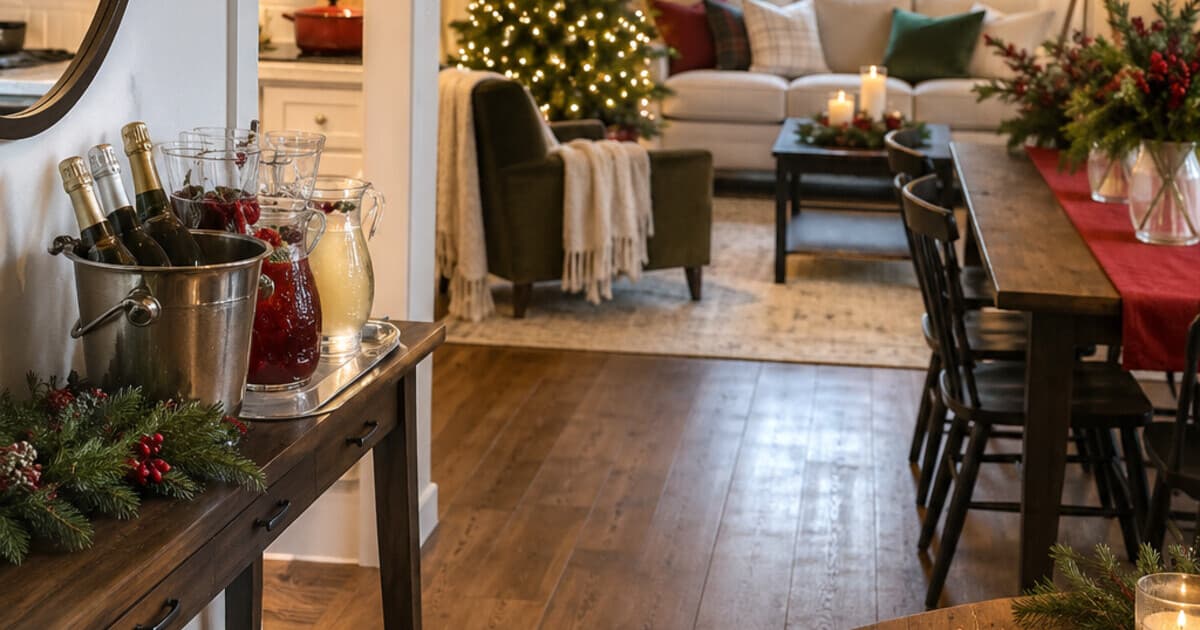
A self-serve station removes one of the host's most repetitive jobs. Put water, cups or glasses, ice if needed, openers, napkins, and a small set of beverage choices together. Include a festive non-alcoholic option so not drinking does not feel like choosing the backup beverage.
Keep cold backup bottles in the refrigerator or a cooler and restock as necessary. Too many open bottles create clutter and make a small party look depleted faster. If you serve a punch, mix the still base ahead and add sparkling ingredients closer to service so the first bowl is not flat before most guests arrive.
Reverse timeline: one week to two days before
One week out, follow up on RSVPs if you asked for them, confirm the event window, choose the coat, drink, food, dessert, and bathroom flow, and write one consolidated shopping list. Buy shelf-stable beverages, crackers, nuts, paper goods if you use them, and any decor that solves a functional need.
Two days before, clear refrigerator space, chill beverages that need it, prepare recipe-approved make-ahead food, reset the guest bathroom, and remove furniture that creates a narrow choke point. Set empty serving pieces where they will be used so party-day decisions are reduced.
Reverse timeline: party day and the final 45 minutes
Earlier in the day, finish cold prep, portion backup food into refrigerator containers, and create a simple replenishment map so another household member can help without asking what goes where. Thirty to forty-five minutes before opening, activate the drink station, set out shelf-stable food, plate the first refrigerated items, and finish the first hot item.
Ten minutes before the stated start time, stop decorating and clear the sink. Put your own coat away, turn on music, check the bathroom, take out trash if needed, and make sure the front door path is obvious. Do not open early unless you are genuinely ready; early arrivals can collapse the only buffer you built into the day.
Christmas open house checklist
The event is ready when a guest can arrive, understand the format, put down a coat, get a drink, find food, sit if needed, and leave without requiring a host escort through every step.
- Invitation states a clear drop-in window and who is invited.
- Entry and coat storage do not block the main room.
- Drinks are self-serve and outside the cooking path.
- Food can be eaten mostly while standing or with a small plate.
- Perishable food is served in smaller replenishable batches.
- Late-arrival food is held back rather than displayed from the start.
- There are safe seats for guests who need them.
- Bathroom is stocked and easy to find.
- Dirty glasses and plates have a return point.
- The host has a defined closing time and a low-effort final food wave.
TAKE IT TO PAPER
Useful printables for this plan
SOURCES
Sources & references
These links support factual rules, quantities, safety guidance, or planning context. The final prioritization and sequencing in this guide are editorial decisions. See how sources are chosen.
- Editorial referenceMartha Stewart — How to Plan a Holiday Open House Partymarthastewart.com
- Editorial referenceThe Scout Guide — How to Host a Holiday Open Housethescoutguide.com
- Public guidanceFDA — Serving Up Safe Buffetsfda.gov
- Community contextReddit r/partyplanning — Holiday Open House Guests Staying All Eventreddit.com
FAQ
Questions people ask before guests arrive
How long should a Christmas open house last?
A three- to four-hour drop-in window is practical for many home gatherings, but there is no required length. Choose a window you can comfortably staff and supply, make the ending time clear, and expect some guests to overlap much longer than others.
Do guests need to RSVP to a Christmas open house?
An RSVP is useful even when arrival time is flexible because it gives the host a planning range. The invitation can say that guests may drop in anytime during the window while still asking them to reply if they expect to come.
How much seating do I need for an open house?
You do not need formal dining seats for every guest if the event is designed for standing and mingling, but provide meaningful seating for older guests, people with disabilities, pregnant guests, and anyone who needs to sit. Do not rely on unsafe improvised seating.
How do I stop an open-house buffet from running out early?
Do not display the full supply at opening. Use smaller serving platters, keep safe backup food hot or cold, and replace dishes in waves. Reserve a portion specifically for the middle and final part of the event so late arrivals see fresh food.