“Make ahead” is only useful when it tells you what your future self will actually have to do. A casserole assembled yesterday can still create a problem if it needs the oven at the same time as three appetizers. A beautiful platter can still be unsafe or soggy if it sits out too early. This plan treats Christmas party food as a schedule: what can be finished, what should stay in components, what needs hot holding, and what deserves one last-minute cooking slot.
QUICK REFERENCE
Sort dishes by what 'make ahead' actually means
| Make-ahead level | What is finished early | Party-day work |
|---|---|---|
| Fully finished | Desserts, dips, chilled items | Plate or uncover |
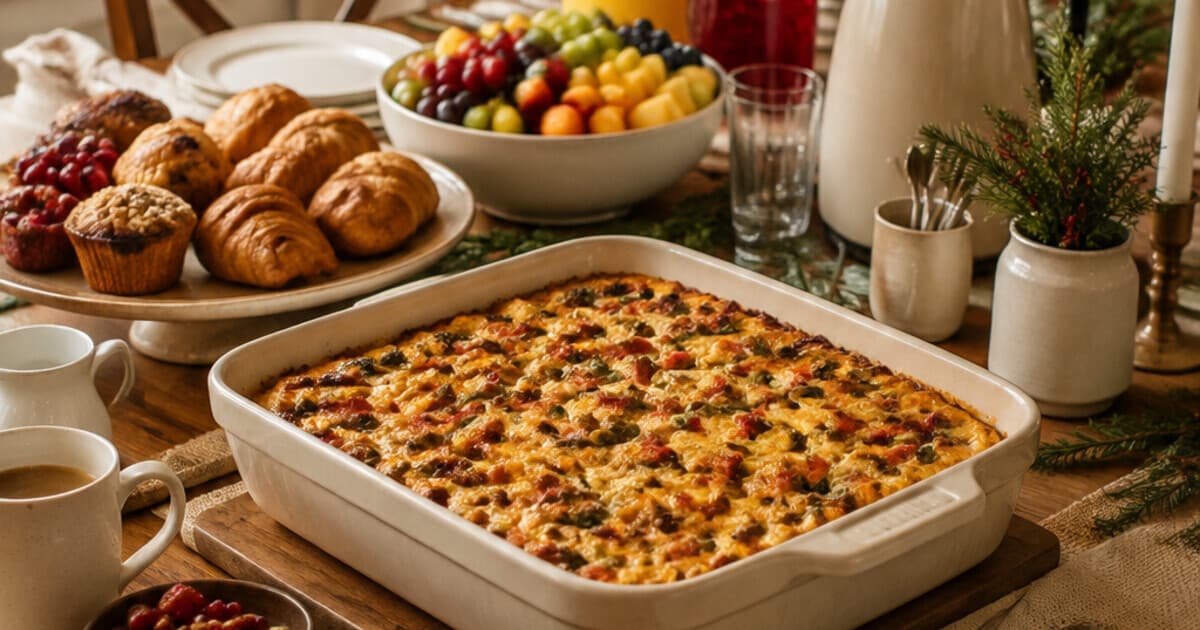
| Reheat only | Casseroles, meatballs, some savory bakes | Warm safely and serve |
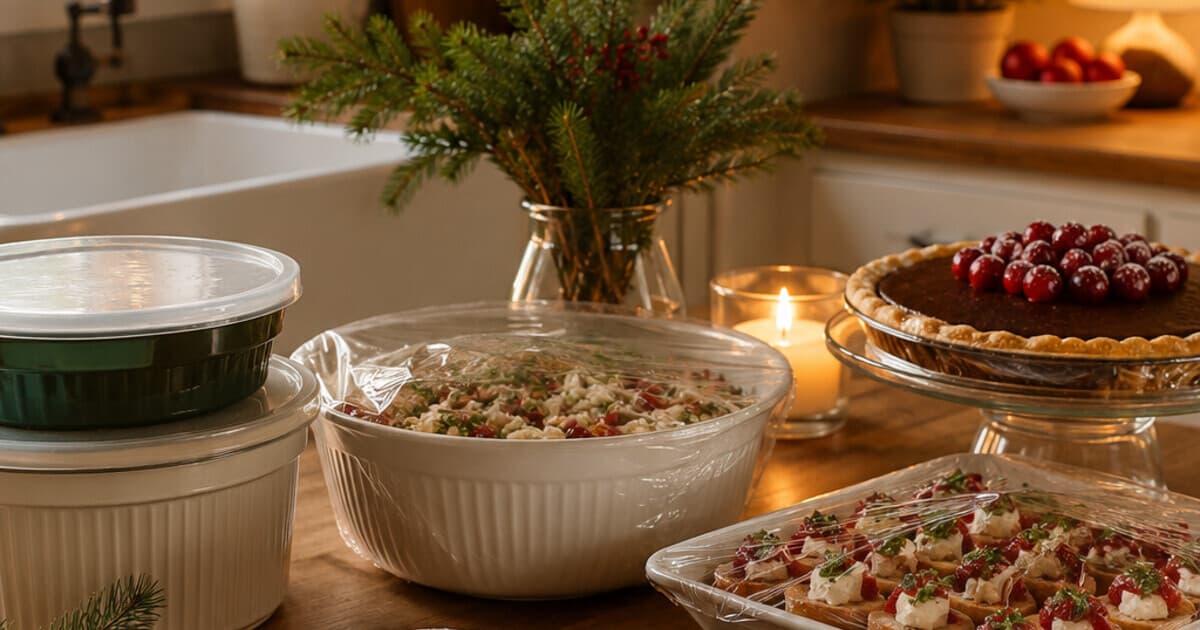
| Assemble late | Crostini, salads, crisp toppings | Combine prepared components |
| Cook last | One hero hot item | Reserve this as the final-hour task |
Start by assigning every dish a party-time job
Before shopping, label every menu item as one of four types: finished cold, component-prepped, safely hot-held, or last-minute cooked. If the menu has four last-minute cooked items, it is not a make-ahead menu yet. Replace or redesign until the final hour contains only a small number of active jobs.
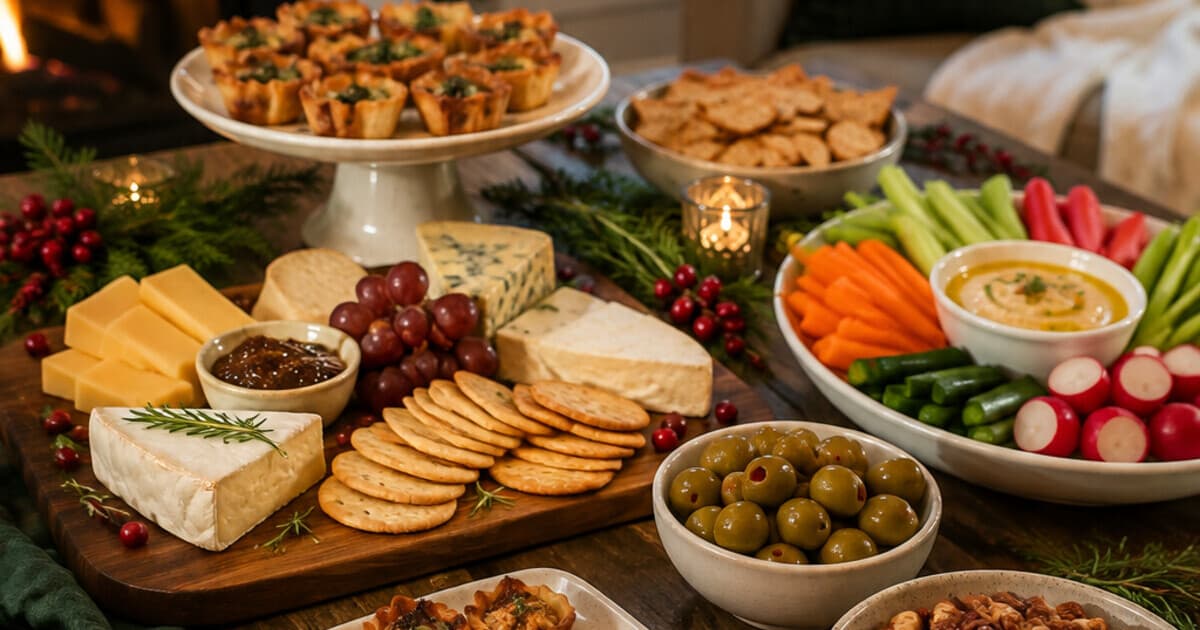
A practical example might be a chilled shrimp platter, a dip made the day before, slow-cooker meatballs, a cheese board assembled in stages, vegetables already cut, and one tray of pastry baked just before arrival. Dessert is already finished. That gives the table temperature and texture contrast without six timers going off.
What is usually worth finishing the day before
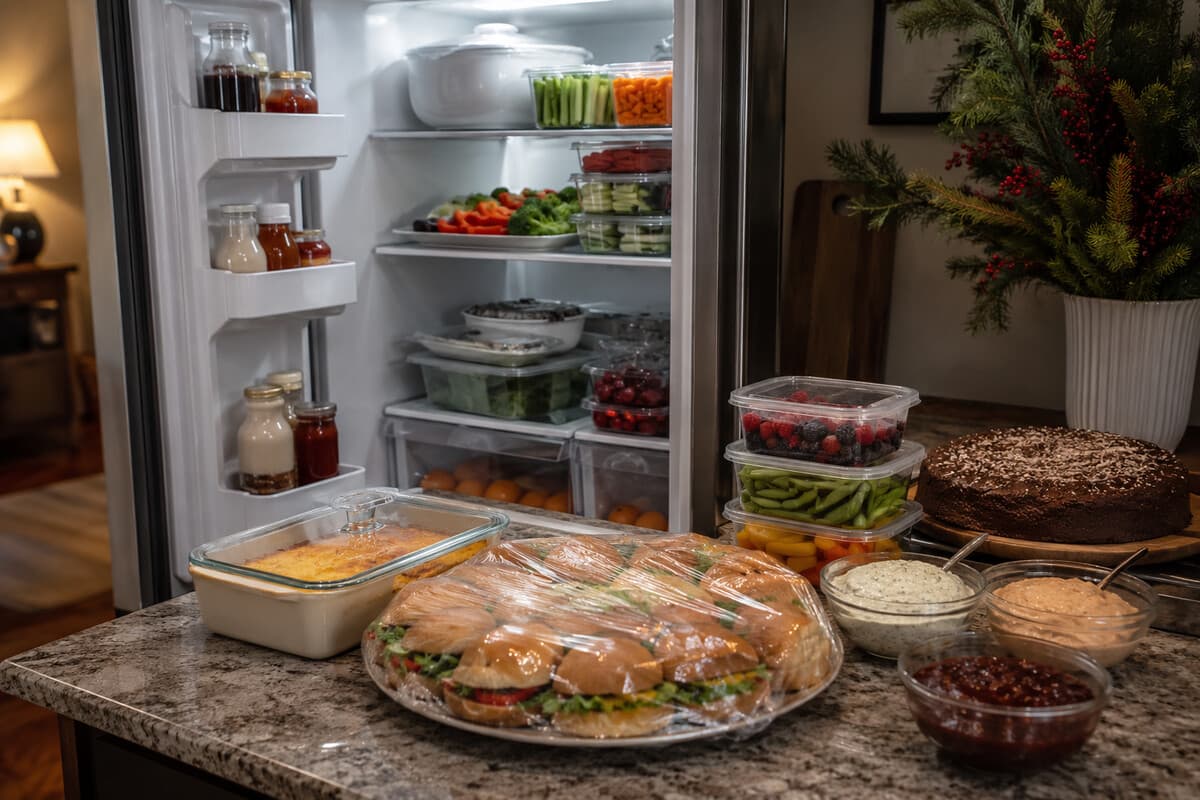
Dessert is the first category to move out of party day. Bar cookies, many cakes, cookies, and recipe-specific chilled desserts can be completed according to their storage directions. Dips, spreads, sauces, seasoned nuts, and some marinated foods also reward advance work.
Do not assume every recipe improves overnight. Fresh herbs can darken, cut fruit can weep or oxidize, bread can soften, and crisp toppings can lose texture. The safest rule is to follow the tested storage instructions for the exact recipe and keep components separate when texture matters.
Use component prep for foods that should still look fresh
Component prep means you do the messy work without finishing the final assembly. Wash and cut sturdy vegetables, portion cheese, mix a crostini topping, toast nuts, make a dressing, wash serving boards, and put the correct utensil beside each dish.
The next day, assembly becomes a five-minute job instead of a twenty-minute job that begins with hunting for a clean knife. This is especially useful for boards, salads, skewers, crostini, fruit, and any appetizer where moisture would ruin a crisp base.
Build one hot-holding lane instead of a hot-food traffic jam
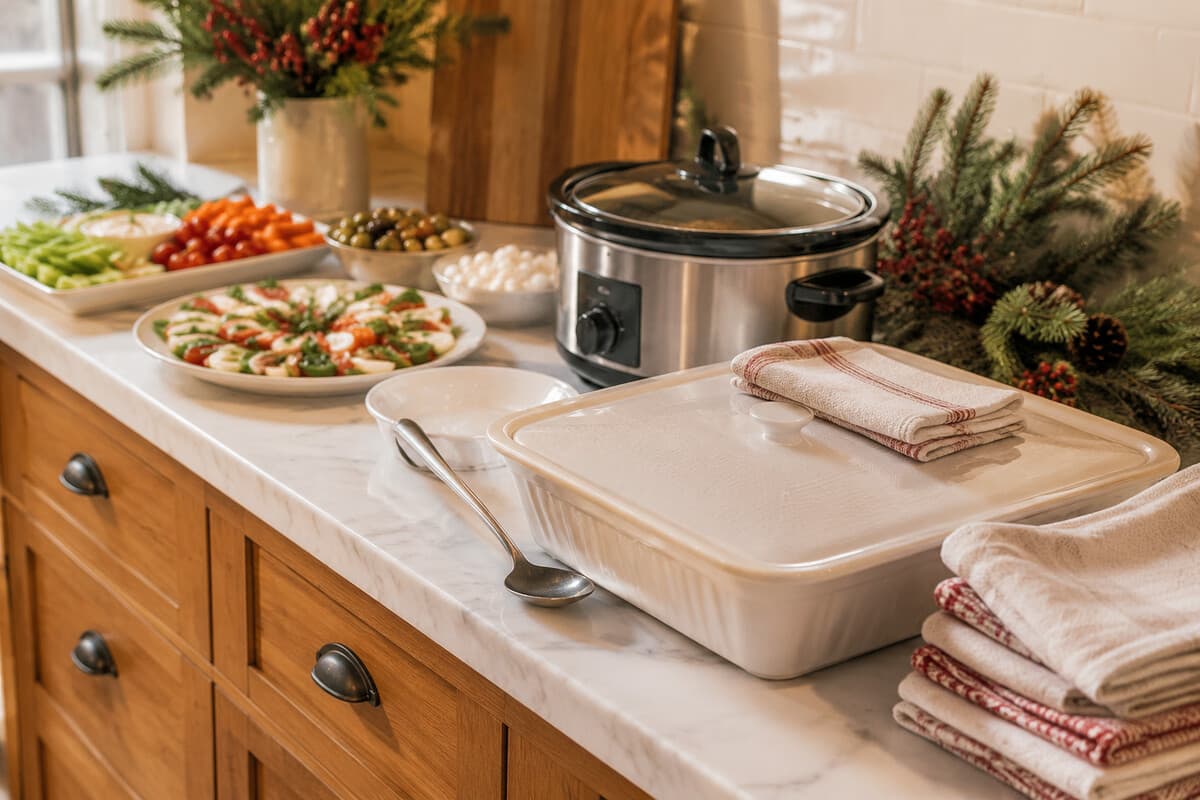
A slow cooker, chafing dish, or warming appliance can remove a dish from the oven schedule, but only when it is appropriate for the recipe and capable of holding food safely. Guidance from FDA and USDA says hot food being held for service should remain at 140°F or warmer. Some consumer warmers do not hold that temperature, so check the appliance instructions rather than assuming “warm” means safe hot holding.
Choose one dish that genuinely benefits from this lane: meatballs, a suitable soup, chili, or another recipe designed to be held. Do not fill every electrical outlet with an appliance just because it exists.
Keep cold backup food cold and refresh the buffet in smaller batches
For cold perishable foods, FDA guidance is 40°F or colder. Instead of putting every deviled egg, shrimp, cheese portion, or creamy dip on the table at once, use a smaller serving dish and keep the backup refrigerated. Replace or refresh according to safe handling guidance rather than topping off an old platter indefinitely.
This also improves the food. The second platter looks cleaner, crackers stay crisper, and late guests do not meet a tray that has been picked over for two hours.
Reverse timeline: 48 hours before the Christmas party
Confirm the guest count as closely as you realistically can and freeze the menu. Buy shelf-stable drinks and ingredients first. Check refrigerator space before bringing home bulky trays. If you are using a slow cooker, warming tray, or insulated carrier, take it out and verify that it works.
Write a one-page production list in serving order, not recipe order. For each dish, note where it will be stored, what vessel it will be served in, whether it needs an outlet or oven, and the last action before it can go to guests.
Reverse timeline: the day before
Complete dessert and any recipe that explicitly holds well overnight. Make dips, sauces, dressings, and fillings. Toast nuts and bread components if your recipe allows. Wash and cut sturdy vegetables. Chill drinks. Clear the sink before you stop for the night.
Set out shelf-stable serving pieces and label them with a scrap of paper: meatballs, salad, crackers, dessert. This prevents the classic party-day mistake of discovering that the only platter large enough for dessert is currently holding uncooked pastry.
Reverse timeline: party morning
Finish component prep, assemble items that can safely and texturally hold, and load the refrigerator in the order you will remove things. Put backup beverages somewhere guests will not block the kitchen to reach. Set up the drink station away from the main cooking path if possible.
Do a full kitchen reset before the final cooking block: empty dishwasher, clear counters, take out trash, and put away ingredients you no longer need. A make-ahead plan has failed if the food is ready but every counter is covered with yesterday's prep.
Reverse timeline: 60 minutes before guests arrive
Start the one hot-holding dish or transfer it according to the recipe and appliance instructions. Preheat for the single planned oven item. Assemble fresh cold items in small first batches and return them to refrigeration until close to serving. Put out shelf-stable snacks and water.
Do not set every perishable item on the buffet just because you want the table photographed before guests arrive. Food safety and food quality both improve when cold food stays cold until it is actually needed.
Reverse timeline: the final 20 minutes
Bake or reheat the one item assigned to the final oven slot. Put out the first cold platter, fill the ice bucket, turn on music, change clothes if needed, and stop inventing new garnish projects.
When guests arrive, you should have only simple service jobs: open a bottle, move the hot tray to a trivet, replenish a platter later, or toss a salad. If you are still chopping six ingredients, revise the menu next time.
Make-ahead Christmas party checklist
A successful plan can be read by another person and still make sense. If a helper asks what to do, hand them one job with a clear finish line.
- Every dish has a storage location and serving vessel.
- No more than one or two items need last-minute oven time.
- Dessert is finished before party day when practical.
- Fresh assemblies are stored as separate components until needed.
- Hot-held food has an appropriate appliance and temperature plan.
- Cold backups stay refrigerated until they replace the first platter.
- Serving utensils are assigned before guests arrive.
- The sink, dishwasher, counters, and trash are reset before the final hour.
- The drink station does not force guests into the cooking lane.
- The host has a stopping point and does not add surprise recipes.
TAKE IT TO PAPER
Useful printables for this plan
SOURCES
Sources & references
These links support factual rules, quantities, safety guidance, or planning context. The final prioritization and sequencing in this guide are editorial decisions. See how sources are chosen.
- Public guidanceFDA — Serving Up Safe Buffetsfda.gov
- Public guidanceUSDA FSIS — Keep Food Safe! Food Safety Basicsfsis.usda.gov
- Editorial referenceMartha Stewart — Make-Ahead Holiday Dishesmarthastewart.com
FAQ
Questions people ask before guests arrive
What Christmas party foods can I make 48 hours ahead?
That depends on the tested recipe. Desserts, dips, spreads, sauces, seasoned nuts, and some cooked or assembled dishes commonly have make-ahead options, but storage times vary. Use the recipe's explicit refrigeration or freezing instructions and keep delicate fresh components separate until closer to serving.
How many hot appetizers should I make for a Christmas party?
For a low-stress home party, one substantial hot-held dish plus one oven-finished appetizer is often enough when you also serve cold options and foods specifically intended for room-temperature service. The exact menu depends on whether a full meal follows, but reducing simultaneous hot dishes is one of the biggest workload improvements.
Can I leave Christmas party food out all evening?
Not if it is perishable and not being safely held. FDA guidance says cold food should be kept at 40°F or colder and hot food at 140°F or warmer; perishables left at room temperature for more than two hours—or more than one hour when the ambient temperature is above 90°F—should be discarded. Use smaller serving platters and keep backups refrigerated or properly held.
How do I keep make-ahead party food from getting soggy?
Store wet and crisp components separately. Toasted bread, crackers, fried or crisp toppings, fresh herbs, cut fruit, and dressed greens often benefit from later assembly. Prepare the spread, filling, dressing, or garnish ahead, then combine only the amount you plan to serve first.