Small-house parties usually fail because of traffic, not square footage. Twenty people can fit into a modest home surprisingly well until every coat lands on the sofa, the drinks live in the refrigerator, the chips block the kitchen doorway, and everyone assumes they need a dining chair. A workable Christmas party gives people several reasons to spread out, keeps the kitchen from becoming the only destination, and accepts that some guests will sit while others stand and move.
Start with the path people need to walk, not the furniture you want to display
Walk from the front door to the main gathering space, bathroom, drinks, and food. Those paths are the party infrastructure. Remove a side table, plant, floor basket, or decorative stool if it turns a two-person passage into a single-file bottleneck.
Do not automatically remove the largest sofa. A sofa is valuable seating. First try removing smaller pieces, shifting a coffee table to the wall, and opening standing room around the edges. The goal is not an empty room; it is a room with a clear route through it.
Give coats and bags a destination before the first guest arrives
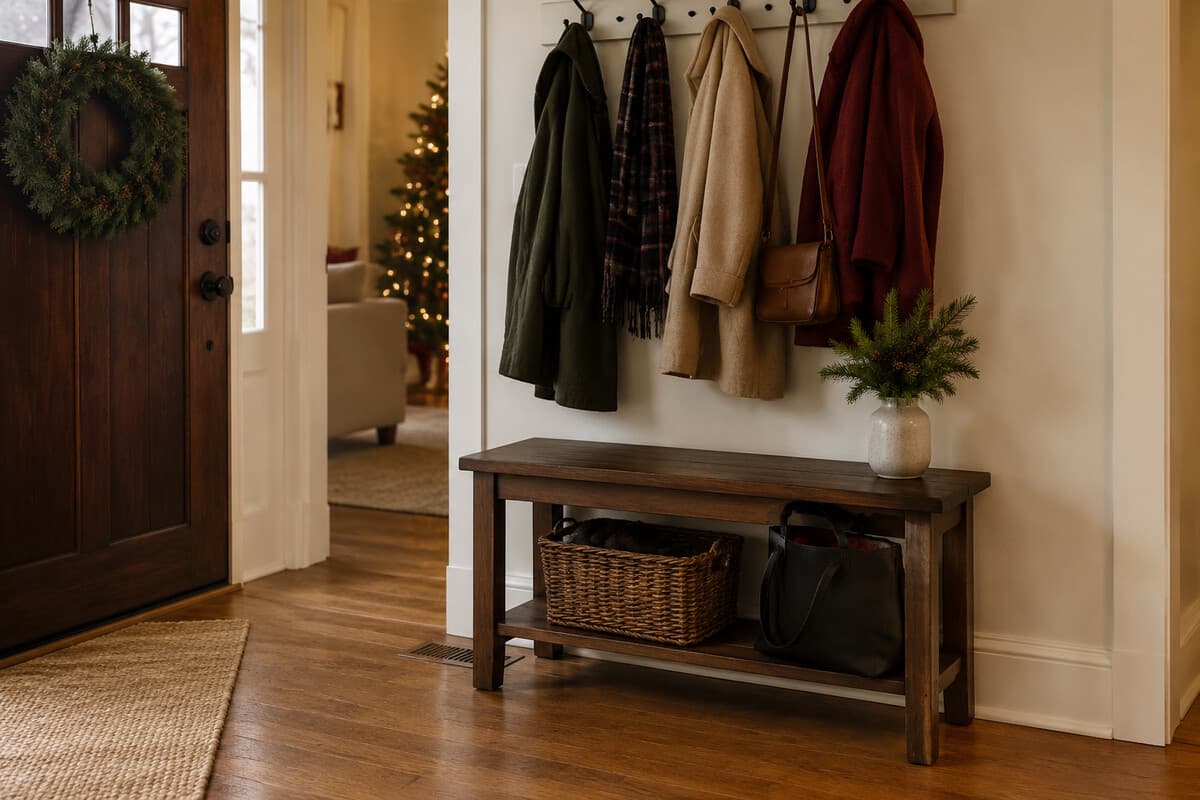
A pile of winter coats can consume the only useful chair in a small house within ten minutes. Use a bedroom, sturdy garment rack, entry hooks, or another defined coat zone that does not sit in the middle of the party. Clear the bed or rack in advance and put your own belongings somewhere else.
If shoes are normally removed in your home, make the expectation easy to understand and provide a spot that does not block the door. A mountain of shoes in the entry is another traffic problem disguised as etiquette.
Move the drink station out of the kitchen
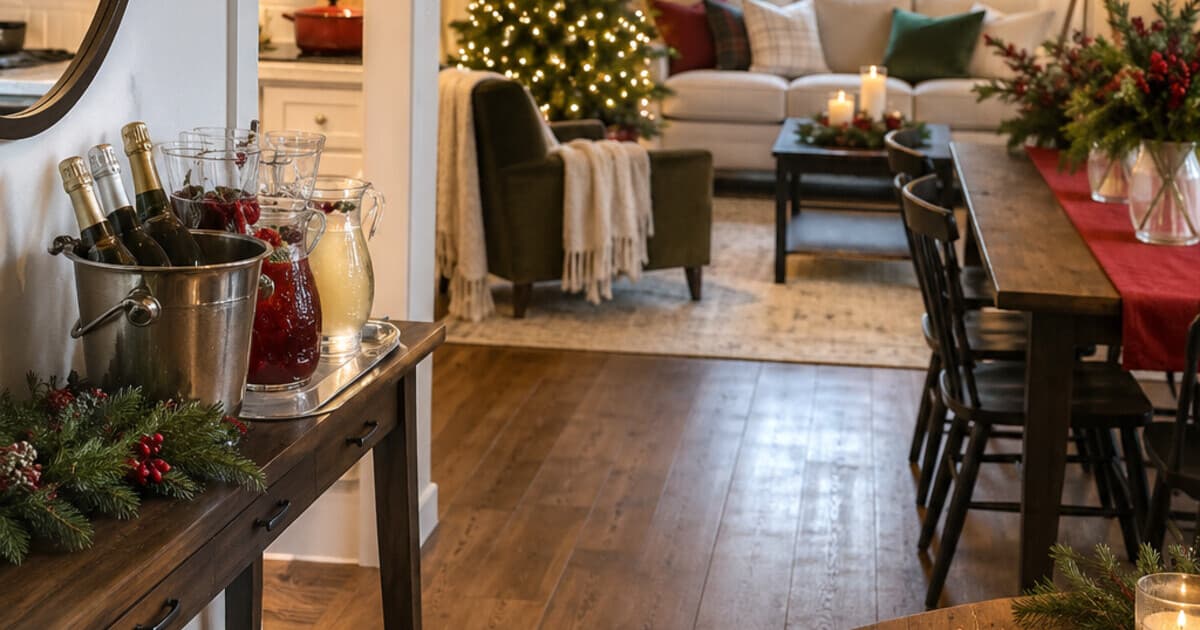
The refrigerator is a magnet. If every guest needs to enter the kitchen for water, ice, wine, or another drink, the cooking zone never belongs to the cook. Put cups, water, ice, openers, and a limited drink selection on a console, bar cart, sideboard, sturdy shelf, or cleared surface outside the main work path.
Keep backup beverages chilled elsewhere and restock in small batches. A station with three useful choices is better than a tiny home trying to imitate a hotel bar.
Use two food zones instead of one crowded buffet
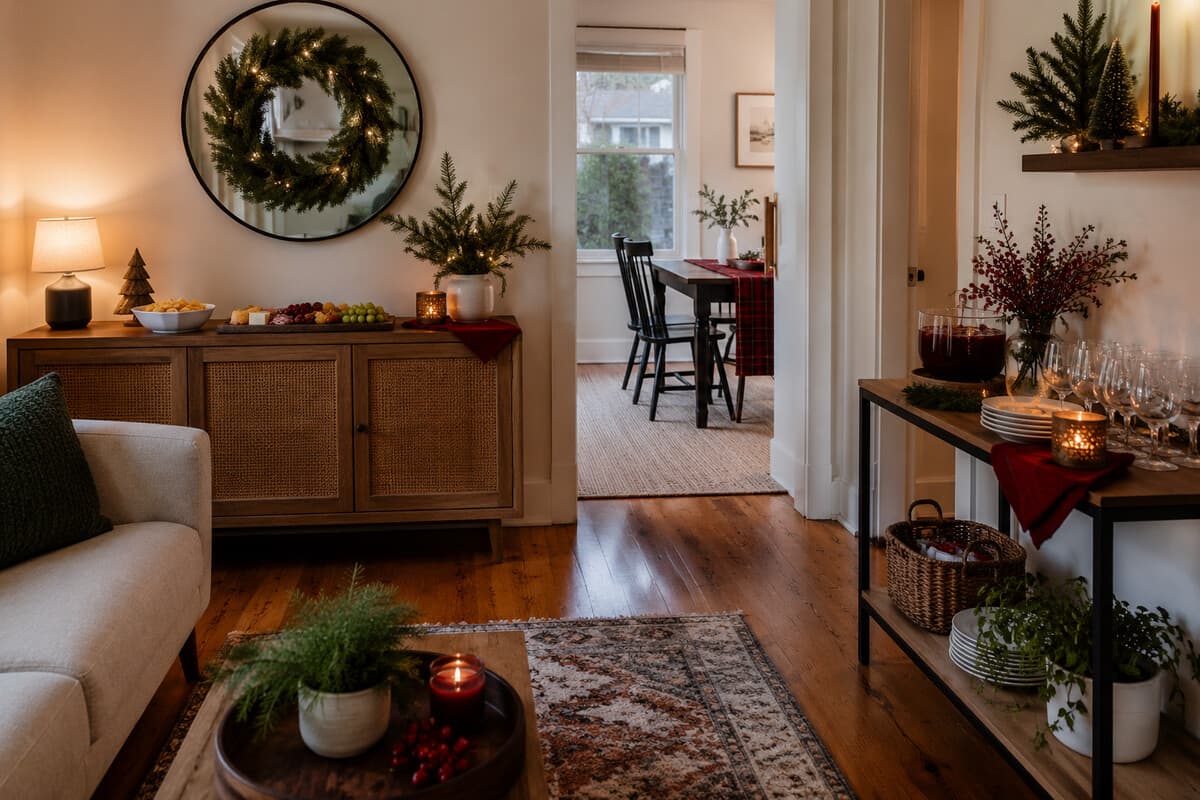
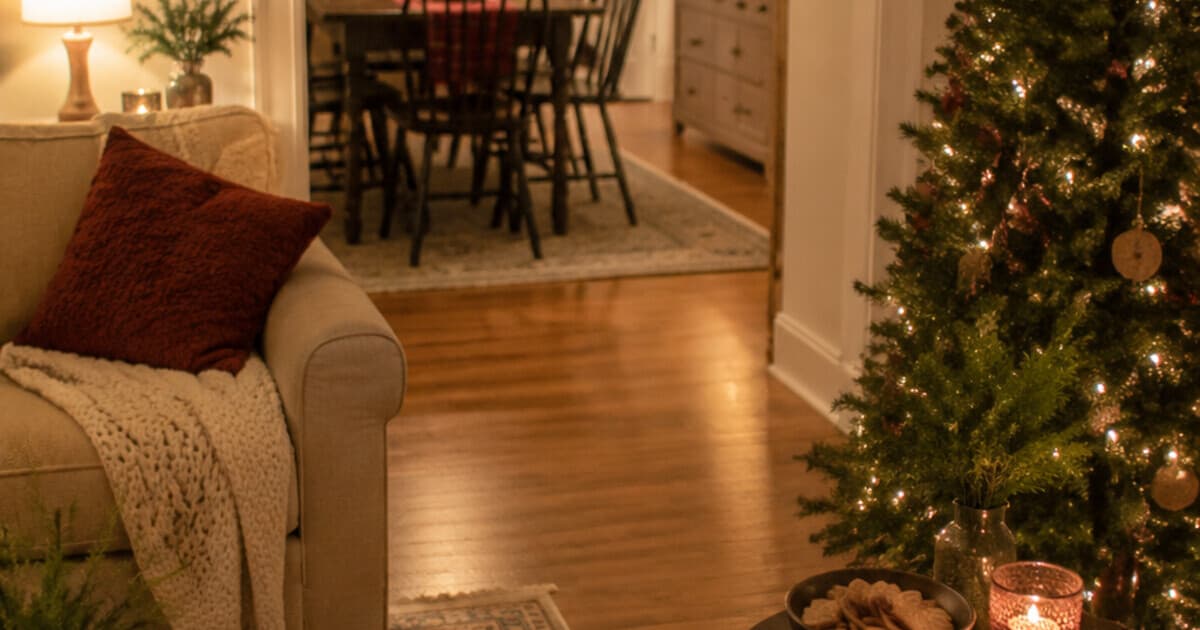
Split food by how people use it. Arrival snacks can live in the living room or near drinks; substantial food can appear later on a dining table or kitchen-adjacent buffet. Dessert can replace the first station after savory food clears.
This does more than create space. It gives guests a reason to move around the home instead of forming one permanent semicircle around a cheese board. Distribute food and seating so no single area carries the whole party.
Mixed sitting and standing is normal at a house party
You do not need one dining chair for every invited adult unless you are serving a seated meal. Keep the sofa, add a few lightweight dining or side chairs around the perimeter, and use stable benches or ottomans if you already own them. Leave enough open floor area for people to stand in conversational clusters.
Do not create unsafe improvised seating from fragile tables or decorative objects. The objective is options, not a mathematically perfect seat count.
Choose food that does not require everyone to queue at once
A small home works better with waves than with one dramatic buffet opening. Put out a first set of appetizers, then replenish or introduce the substantial food later. If the party overlaps dinner, include something filling enough that guests do not need a full plate and knife.
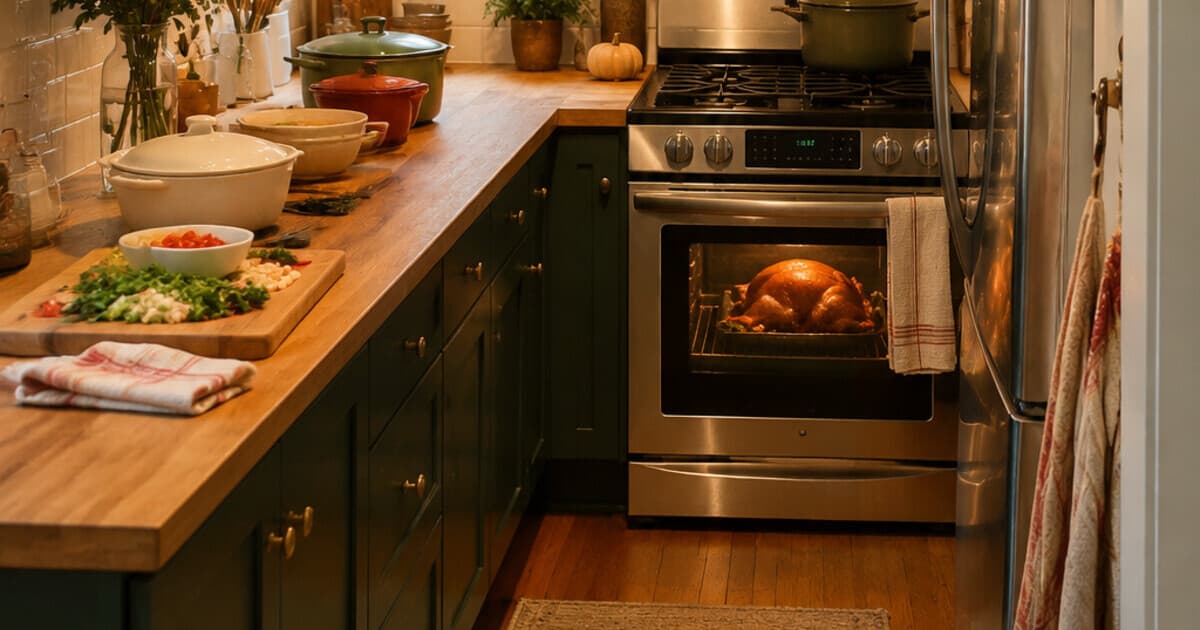
Make-ahead food matters more in a tight kitchen because dirty prep equipment consumes physical space. Finish dessert, dips, sauces, and recipe-approved advance work before party day; reset the sink and counters before guests arrive.
Create a dirty-dish return point that is not the sink
When every used glass and plate lands in the sink, the kitchen becomes unusable. Put a bus tub, tray, or defined return area somewhere stable. Guests will often use it if the purpose is obvious.
You do not need to wash dishes during the party unless you are running out. Scrape or stack only as necessary, then return to your guests. The deep cleanup can happen later.
Protect the bathroom from becoming a surprise project
The bathroom is one of the few rooms every guest may use. Clear personal clutter, put out extra toilet paper where it is visible, provide a clean hand towel or disposable hand towels if that is your preference, refill soap, empty the trash, and check the light.
Do this before decorating. A working bathroom is more valuable to the party than another garland.
Reverse timeline: one week before
Decide whether this is a dinner party, cocktail party, or open-house style gathering. The format determines seating and food. Confirm the realistic guest count, then walk the traffic path and choose the coat, drink, savory food, dessert, and dish-return zones.
If the group is larger than your normal hosting capacity, borrow only the equipment that solves a real constraint: a folding table, a few chairs, a cooler, or a coat rack. Do not add furniture that makes circulation worse.
Reverse timeline: the day before
Finish make-ahead food, clear refrigerator space, move unnecessary furniture, clean the bathroom, and set out the empty serving vessels. Charge a speaker if you use one. Put extension cords away from walking paths and avoid any decor arrangement that creates a trip hazard.
Do a trash and recycling reset. A small kitchen loses usable space quickly when delivery boxes, bottles, and prep scraps are already present before the party starts.
Reverse timeline: 45 minutes before arrival
Move personal coats and bags out of the guest coat zone. Set up water and the first drinks. Put out only the first snack wave and keep perishable backups safely chilled. Turn on music, adjust lighting, and walk the path once more while carrying a pretend plate or drink.
Then stop moving furniture. Last-minute optimization creates more problems than it solves.
Small-house Christmas party checklist
The house is ready when a guest can enter, drop a coat, get a drink, find food, use the bathroom, and return a glass without needing the host to direct traffic.
- Front door and main walking paths are clear.
- Coats and bags have a dedicated destination.
- Drinks are outside the primary kitchen work zone.
- Food is split into two zones or served in waves.
- There is useful mixed seating without blocking circulation.
- Perishable food has a safe storage and replenishment plan.
- Used dishes and glasses have a return area.
- Bathroom has soap, hand drying, visible extra toilet paper, and an empty trash bin.
- Kitchen counters and sink start the party clear.
- Decor, cords, and borrowed furniture do not create trip hazards.
TAKE IT TO PAPER
Useful printables for this plan
SOURCES
Sources & references
These links support factual rules, quantities, safety guidance, or planning context. The final prioritization and sequencing in this guide are editorial decisions. See how sources are chosen.
- Editorial referenceApartment Therapy — Advice for Hosting a Gathering in a Small Homeapartmenttherapy.com
- Community contextReddit r/partyplanning — Hosting Xmas Party in a Very Small Spacereddit.com
- Public guidanceFDA — Serving Up Safe Buffetsfda.gov
FAQ
Questions people ask before guests arrive
How many people can I host in a small house for Christmas?
There is no universal guest-to-square-foot formula that guarantees comfort. Capacity depends on room layout, exits, local rules, furniture, whether guests sit for dinner, and how much circulation space you can preserve. Invite to the function of your home rather than chasing a generic number.
Do I need a seat for every guest at a Christmas house party?
Not for a cocktail or open-house style party. Provide a reasonable mix of safe seating and standing space, with priority for guests who need seats. If you are serving a formal plated meal, then each diner does need appropriate seating and table space.
Where should food go in a small house party?
Avoid placing every food and drink item in one doorway or kitchen corner. Use at least two functional zones when possible—for example, drinks and arrival snacks in the living area, then substantial food on a dining table or sideboard. Dessert can replace an earlier savory station later.
How do I keep guests out of a small kitchen?
Move self-service jobs out of it: water, cups, ice, openers, appetizers, and used-glass return. Keep backup drinks somewhere accessible to the host, and give anyone who wants to help a specific task outside the narrowest cooking area.