A punch bowl is supposed to reduce bartending, but it can create a new hosting problem when the drink is warm, flat, too sweet, or exhausted before the second wave of guests arrives. The fix is not a more complicated recipe. Use a tested non-alcoholic Christmas punch recipe you like, then treat it as a service system: cold base, late carbonation, controlled ice, and measured refills. This guide focuses on making that system work for a real party rather than claiming a new recipe was kitchen-tested here.
Choose the recipe for service, not just the photo
Look for a punch built from a still base plus a sparkling component that can be added late. Cranberry or pomegranate, citrus, pineapple, apple cider, ginger ale, sparkling cider, and sparkling water all work well in batchable holiday-punch formats because the still and sparkling components can be chilled separately. The exact flavor is your choice; the important hosting feature is separability.
Avoid a recipe that requires muddling, shaking individual glasses, or a fragile garnish for every serving if the goal is self-service. If your guest list includes children or adults who avoid alcohol, keep the main punch fully non-alcoholic rather than asking guests to guess which bowl is safe for them.
Make the still base ahead and save the bubbles
For recipes designed to be made ahead, a practical sequence is to combine the non-carbonated base in advance, refrigerate it, and wait to add ginger ale, sparkling cider, sparkling water, or another fizzy ingredient until close to service. Carbonation begins escaping as soon as the bottle is opened and continues to fade after mixing.
If you add citrus slices, herbs, spices, or other garnish to an overnight base, follow the recipe's guidance; some garnishes can become bitter, limp, or overpowering with long contact. A safer generic approach is to prep garnish separately and assemble the visual layer shortly before guests arrive.
Chill the ingredients before they meet the ice
Starting with refrigerator-cold juice and sparkling ingredients reduces the amount of ice needed to reach a pleasant serving temperature. That helps with dilution and also gives you more control over the bowl. Do not rely on a room-temperature bottle plus a mountain of cubes as the primary cooling method.
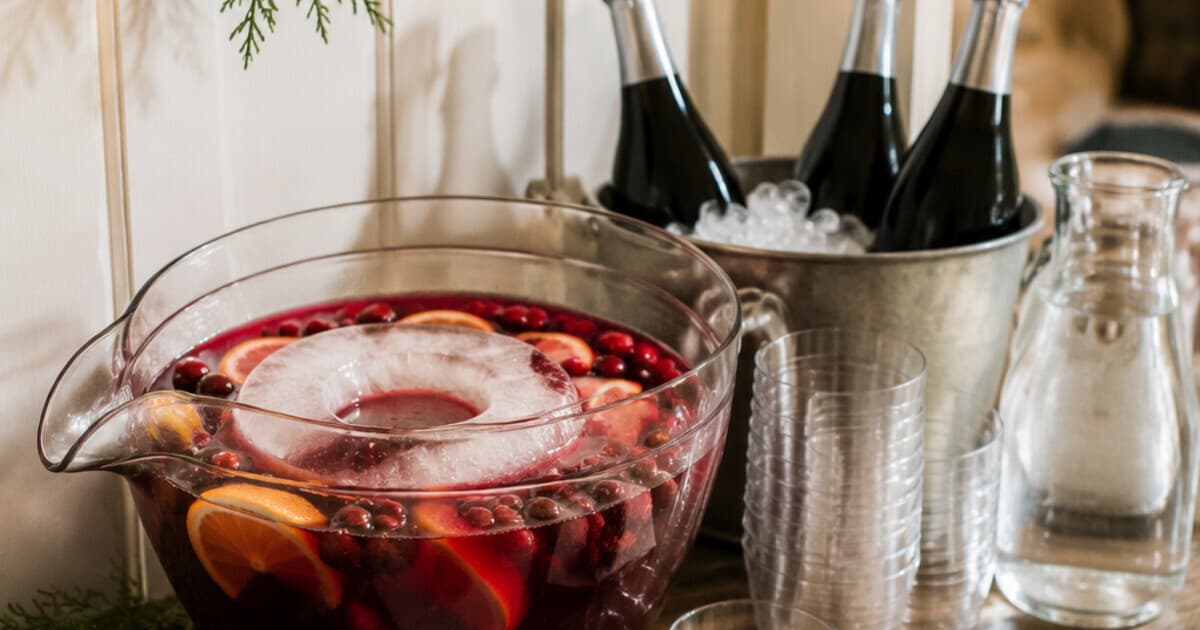
For a large bowl, an ice ring or a few large-format ice blocks melt more slowly than many small cubes because they expose less surface area for the same volume. Another useful approach is cubes made from some of the punch base, or fruit prepared in a form that fits both the tested recipe and the ages of the guests; avoid treating whole or hard frozen fruit as a universal garnish when young children will be drinking.
Serve one smaller batch and keep the second batch cold
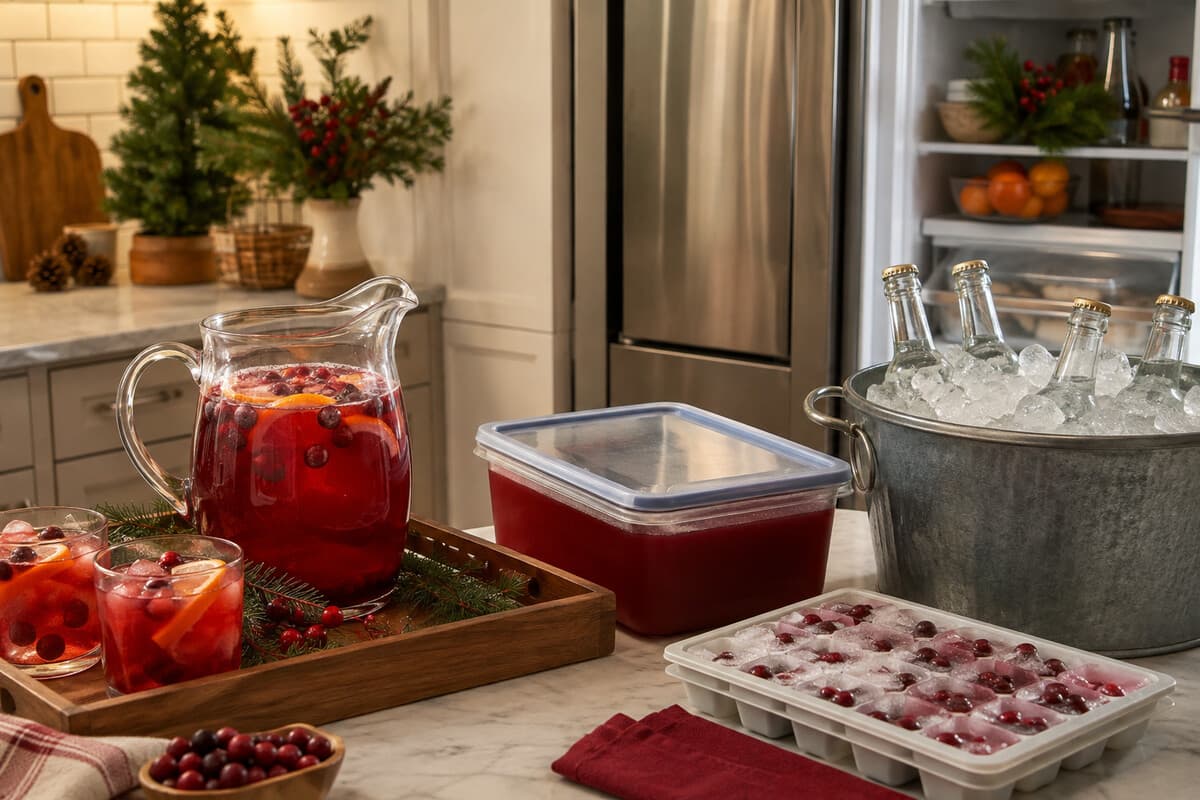
The prettiest giant punch bowl is not always the best party tool. A smaller first batch stays fresher and leaves the host with cold backup. This is especially useful for an open house, where the first guests may arrive long before the last ones. Label the backup containers so another person can refill without changing the ratio.
Keep unopened sparkling ingredients cold until the refill. When the first batch gets low, make a fresh small batch rather than topping a nearly flat bowl with everything at once. This produces a more consistent drink and prevents the full party supply from warming on the table.
Set the punch station up so it can survive without a bartender
Put the bowl or pitcher on a stable surface away from the kitchen's busiest path. Give it a ladle or dispenser that actually fits, enough cups, cocktail napkins, a small trash or discard point for used garnishes, and water nearby. Place a towel underneath if drips are likely.
If adults may add alcohol to their own servings, keep that separate and clearly labeled rather than adding alcohol directly to the communal punch. This preserves the non-alcoholic option and makes the drink station easier for every guest to understand.
Scale by servings, then add a buffer instead of guessing by bowl size
Start with the serving yield on the recipe you are using. Multiply that recipe only by a ratio it can reasonably support and fit the batch into containers you can actually chill. Guest count alone is not enough: party length, other beverage choices, weather, children, and whether punch is the only special drink all affect demand.
Rather than mixing an enormous speculative batch, buy enough ingredients for an extra partial refill and keep them unopened. Unmixed sparkling bottles and sealed juice are easier to save than a gallon of leftover finished punch.
Reverse timeline: the day before through 30 minutes before
The day before, chill every liquid, mix the still base if your chosen recipe permits it, and prepare an ice ring or frozen punch cubes if you are using them. Wash and dry the punch vessel and serving tools. Prepare garnish components and refrigerate them appropriately rather than leaving cut fruit on the counter overnight.
Thirty minutes before guests, set the station, move the first cold base to the bowl, add the sparkling component at the point recommended by the recipe, and add the first garnish. Keep the refill components refrigerated. Do not open all of the carbonated bottles “to save time.”
Reverse timeline: during the party
Watch the level, temperature, and appearance rather than stirring constantly. Refill with a newly mixed batch when practical. Replace soggy or tired garnish instead of continuously adding more decorative ingredients to an old bowl. Follow the recipe's refrigeration and holding instructions for any perishable components, including opened juices, dairy, cut fruit, or other ingredients that require cold storage.
If you serve cut fruit or other perishable food alongside the punch, remember the broader buffet rule: FDA guidance says cold perishable foods should be held at 40°F or colder and discarded after more than two hours at room temperature unless safely held cold, or after one hour when the ambient temperature is above 90°F.
Non-alcoholic Christmas punch checklist
The host-friendly version of punch is less about a secret ingredient and more about protecting temperature, carbonation, and refill capacity.
- Recipe is appropriate for batching and self-service.
- Still base is prepared ahead only if the recipe permits it.
- All liquids start refrigerator-cold.
- Sparkling ingredients remain sealed until close to service.
- Ice strategy limits unnecessary dilution.
- First batch is smaller than the full party supply.
- Backup base and sparkling ingredients stay cold.
- Punch station has cups, ladle or dispenser, napkins, water, and a drip plan.
- Alcohol, if offered, remains clearly separate from the communal punch.
- Leftover finished punch is handled according to the recipe's storage guidance.
SOURCES
Sources & references
These links support factual rules, quantities, safety guidance, or planning context. The final prioritization and sequencing in this guide are editorial decisions. See how sources are chosen.
- Editorial referenceA Couple Cooks — Christmas Punch Make-Ahead Tipsacouplecooks.com
- Editorial referenceCompletely Delicious — Family-Friendly Holiday Punchcompletelydelicious.com
- Public guidanceFDA — Serving Up Safe Buffetsfda.gov
- Public guidanceCDC — Choking Hazardscdc.gov
FAQ
Questions people ask before guests arrive
Can I make non-alcoholic Christmas punch the night before?
Often the still juice base can be made ahead, but use the storage instructions from the specific recipe. Keep sparkling ingredients sealed until shortly before serving so the drink does not lose carbonation overnight.
How do I keep Christmas punch from getting watery?
Start with thoroughly chilled ingredients and use less, larger ice rather than trying to cool warm liquid with many small cubes. An ice ring, large-format cubes, frozen fruit, or cubes made from compatible punch ingredients can reduce dilution.
How much Christmas punch do I need for a party?
Use the yield of the recipe you choose as the starting point and adjust for guest count, party length, children, and what other drinks are available. Keeping ingredients for one unopened backup batch is usually more flexible than mixing every possible serving at the start.
Can adults add alcohol to a non-alcoholic Christmas punch?
Yes, if you want that option, keep alcohol separate so each adult can add it to an individual serving. Clearly label it and keep the communal punch non-alcoholic so guests do not have to guess what is in the bowl.