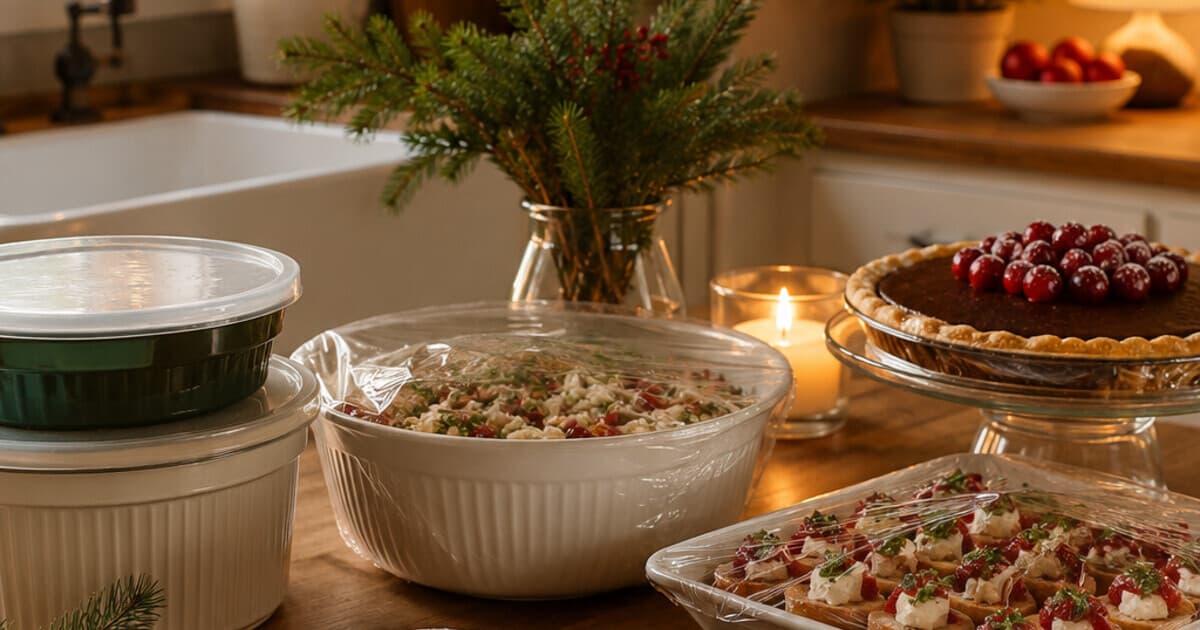
Most Christmas party checklists are long but not useful. They place “buy napkins,” “choose music,” “plan menu,” and “clean the bathroom” on one page without showing which decision has to happen first. A calmer timeline works like a dependency map: guest count affects food, food affects appliances and serving pieces, and the party format affects seating. This plan starts four weeks out, but it can be compressed if your party is sooner by keeping the same order of decisions.
Four weeks before: lock the decisions that control everything else
Choose the date, start and end time, party format, approximate budget, and first-pass guest list. Decide whether this is dinner, cocktails with substantial food, an open house, brunch, game night, or another format. The format matters more than a theme because it determines seating, food quantity, serving style, and how long guests are likely to stay.
Send invitations once the basics are stable. Ask about dietary restrictions in a practical way and include any parking, shoe, child, gift-exchange, or arrival information guests actually need. For a casual home party without hired vendors, four focused weeks can be enough. Larger events, popular dates, rentals, or catering may require a longer lead time, so adjust the calendar to the commitments you actually have.
Three weeks before: design the menu around your kitchen
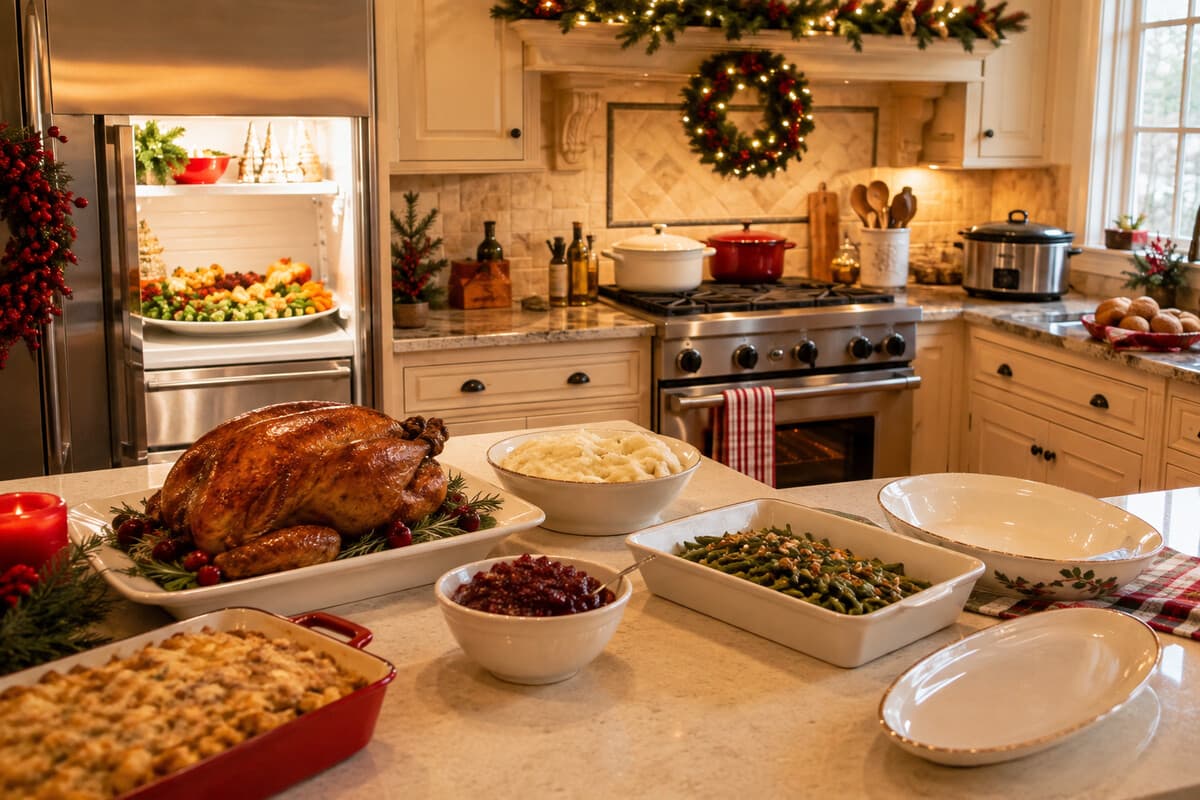
Write the menu as a production plan, not a wish list. Next to each dish, note whether it is cold, specifically intended for room-temperature service, stovetop, slow cooker, oven, or assembled at the last minute. If four important dishes need the oven in the same thirty-minute window, the menu is not finished. Replace or move items until the appliance load is realistic.
Choose serving pieces now. You do not need to set the table three weeks early, but you should know whether the dip has a bowl, the punch has a pitcher, the warm food has a safe holding vessel, and the buffet physically fits the surface you plan to use.
One-oven Christmas pressure test: reject collisions before shopping
Before the menu becomes a grocery list, write the final oven step for every hot dish. If the roast, potatoes, casserole, and bread all require the same last forty minutes, the menu is over capacity even if each recipe is easy by itself. Keep the roast as the protected oven block, move at least one side to the stovetop or an earlier recipe-approved reheat, and use the roast resting window only for dishes whose real instructions fit inside it.
Two weeks before: buy the things that do not need to be fresh
Purchase shelf-stable drinks, mixers, crackers, nuts, canned goods, frozen items, disposable or reusable party supplies, and any special pantry ingredient you would be annoyed to discover is sold out later. Verify that you have enough plates, glasses, utensils, serving spoons, trivets, ice storage, and trash or recycling capacity.
This is also the right time to decide what you are not doing. Drop a fussy decoration project, an extra appetizer, or a complicated activity before it starts consuming party-day attention. A checklist should remove work as often as it adds it.
One week before: map food, people, and traffic
Follow up with unanswered guests, then plan from the realistic range rather than the most optimistic headcount. Walk from the entry to coats, drinks, food, seating, and bathroom. Move drinks away from the kitchen if guest traffic would interfere with cooking. Decide where used glasses and plates will go so the sink does not become the only return point.
Write the cooking schedule backward from the moment you want the first hot food served. Include preheating, resting, reheating, garnish, transfer to serving dishes, and any appliance that two recipes share. If timing is tight, change the menu now rather than trusting yourself to cook faster on party day.
Three days before: do the work that stays done
Clean the guest bathroom and main gathering areas, clear refrigerator shelves, make ice if you have freezer capacity, and prepare recipe-approved items that hold well. Wash serving pieces that have been stored, put labels or sticky notes in them if that helps, and group pantry ingredients by dish.
Avoid deep-cleaning rooms guests will not use. Focus on surfaces, floors where people will walk, the bathroom, visible clutter, and the kitchen reset. The goal is functional clean, not an inspection.
The day before: make tomorrow a finishing day
Complete make-ahead dips, sauces, desserts, casseroles or fillings only when the recipe supports that storage schedule. Cut sturdy vegetables, chill beverages, set up the drink station without opening anything fizzy, and place empty serving dishes where they belong. Prep garnish separately so it stays fresh.
Review food-safety requirements for the menu. FDA guidance for buffets says cold perishable food should stay at 40°F or colder and hot food at 140°F or warmer; food not being held safely should not remain out for more than two hours, or more than one hour when the ambient temperature is above 90°F. Smaller platters that are replaced from safe storage are easier to manage than one oversized display.
Reverse timeline: four hours through 60 minutes before guests
Four hours before, clear the dishwasher or dish return area, empty trash, check the bathroom, move completed perishable prep promptly into safe cold storage as appropriate, and take personal clutter out of guest zones. Start long-cooking items according to their tested recipes. Keep counters as empty as possible.
Two hours before, assemble cold components that can safely wait in the refrigerator, set water and shelf-stable drink supplies, and change clothes before the final cooking sprint if that prevents a later rush. One hour before, start the last hot-food sequence, activate lighting and music, and stop beginning new cleaning projects.
Reverse timeline: the final 30 minutes
Thirty minutes out, move the first safe cold platter into position, fill water, put out shelf-stable nibbles, and finish the hot dish that most benefits from being fresh. Keep backup perishables refrigerated. Fifteen minutes out, clear the sink, wipe the main counter, check towels and toilet paper, remove recipe printouts and packaging, and put on the music volume you actually want for conversation.
Five minutes before, wash your hands, get yourself a drink, and stop optimizing. A party that begins with one appetizer still in the oven is fine. A host who spends the first forty minutes rearranging the room is much harder to recover from.
Christmas party checklist
Use this as the final pass. If a task does not affect guest comfort, food safety, basic atmosphere, or the host's ability to participate, it can probably wait.
- Date, time, format, guest list, and invitation details are final.
- Menu fits the available oven, stovetop, refrigerator, and counter space.
- Dietary information has been considered without promising an unsafe accommodation.
- Serving dishes, utensils, plates, glasses, napkins, ice, and trash capacity are ready.
- Entry, coats, drinks, food, seating, bathroom, and dish return have defined zones.
- Make-ahead food is finished according to the recipe's storage instructions.
- Cold food has refrigerator space and hot food has a safe serving plan.
- Guest bathroom is stocked and main traffic paths are clear.
- Final 30-minute tasks fit on one short list.
- Host stops cleaning before guests arrive.
TAKE IT TO PAPER
Useful printables for this plan
SOURCES
Sources & references
These links support factual rules, quantities, safety guidance, or planning context. The final prioritization and sequencing in this guide are editorial decisions. See how sources are chosen.
- Editorial referenceMartha Stewart — Party-Planning Timeline (2026)marthastewart.com
- Public guidanceFDA — Serving Up Safe Buffetsfda.gov
FAQ
Questions people ask before guests arrive
When should I start planning a Christmas party at home?
For a casual home party without hired vendors, starting about three to four weeks ahead gives useful breathing room for invitations, menu planning, and shopping. Larger events, popular dates, rentals, or catering may need much more lead time.
What should I do the day before a Christmas party?
Finish recipe-approved make-ahead food, chill beverages, clear refrigerator and counter space, set serving pieces, prepare the bathroom and main rooms, and write the final cooking sequence. The day before should eliminate decisions, not create a second full party day.
What should be left for the last hour before guests arrive?
Only tasks that truly benefit from being last-minute: final hot cooking, delicate garnish, setting out the first safely held cold food, activating drinks, lighting, music, and a quick bathroom check. Furniture moves, shopping, menu choices, and deep cleaning should already be done.
Can I cook Christmas dinner with one oven?
Yes, if the menu is designed around capacity instead of wishful timing. Give the main roast a protected oven block, move flexible sides to stovetop or make-ahead methods, and use the roast resting window only for dishes whose tested reheating or baking instructions genuinely fit.