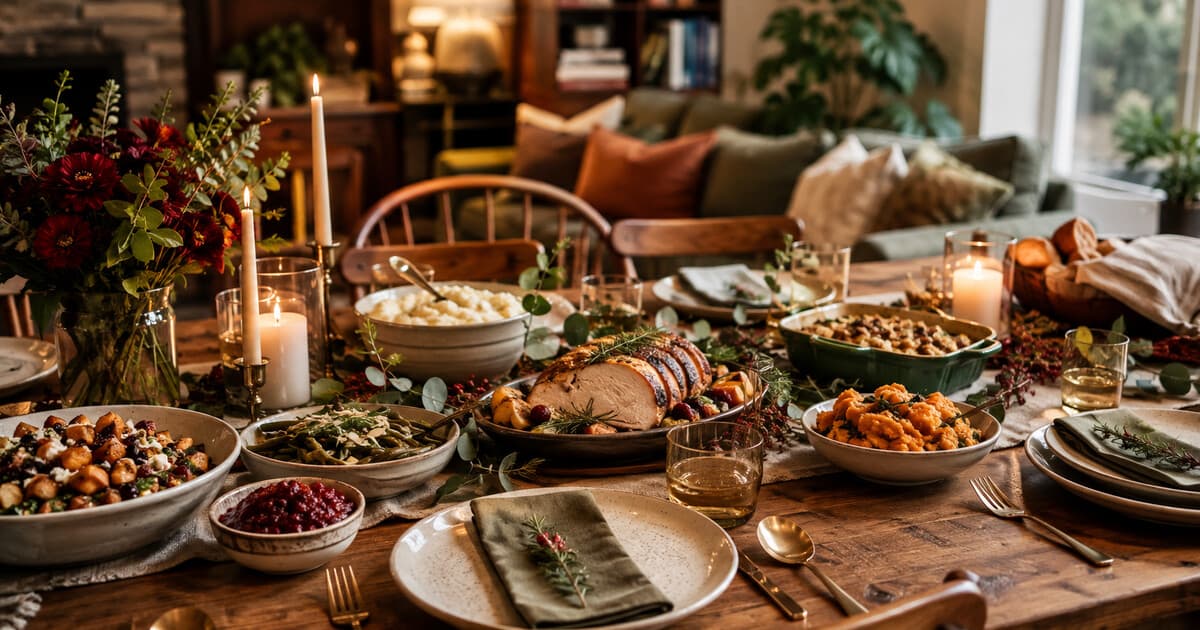
Friendsgiving is supposed to be the lower-pressure Thanksgiving. Then fourteen people join a group chat, five say “I can bring whatever,” three choose pie, and someone arrives with an uncooked casserole that needs forty-five minutes at a temperature your oven is not using. A good potluck needs less cooking from the host but more structure before the party. The goal is not control for its own sake. It is making everyone's contribution actually useful.
Build the menu as slots before people choose dishes
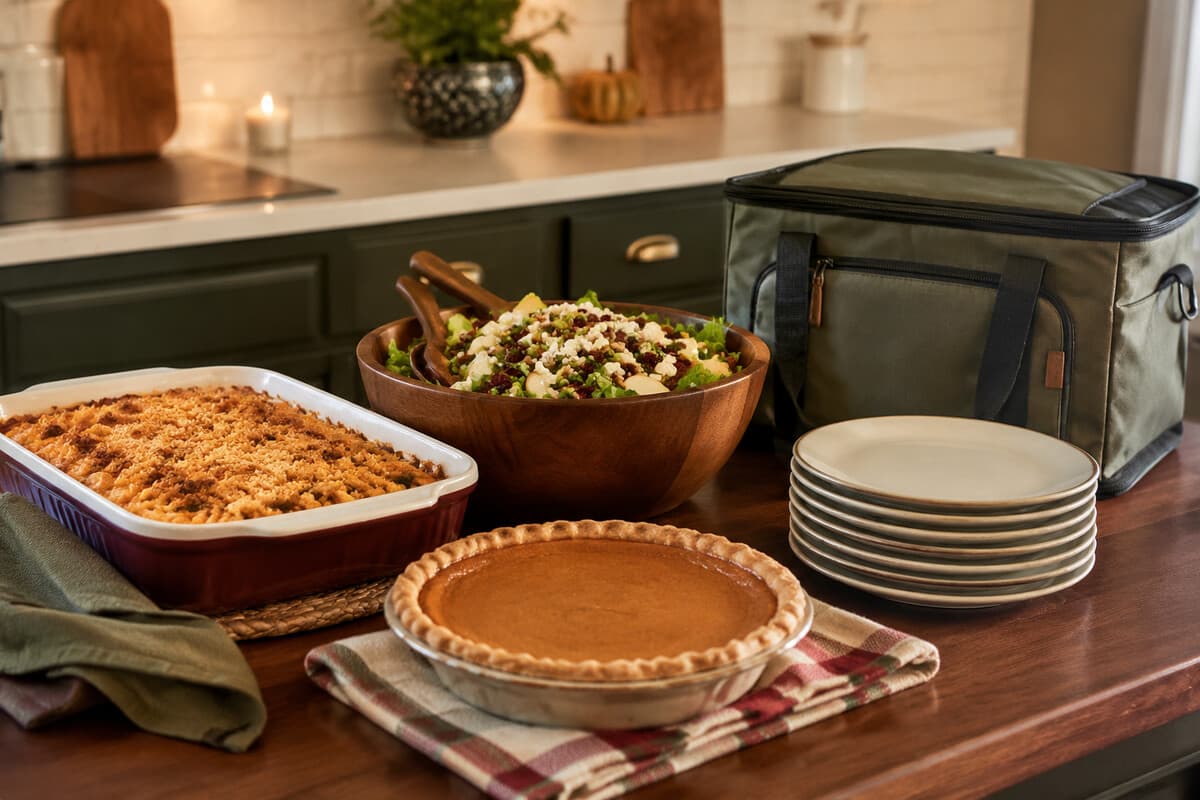
Start with the number of guests, then create a short list of jobs. For a group around ten to twelve, that might be: one main, one vegetarian main or substantial side, one potato, one stuffing or grain, two vegetables, one fresh salad, bread, two desserts, and two drink assignments. Adjust to your traditions, but create the structure first.
Then let people claim a slot and tell the group the exact dish. “Vegetable” becomes “roasted Brussels sprouts with lemon.” “Dessert” becomes “apple pie.” That single step makes duplicates visible while there is still time to change them.
- Main dish
- Vegetarian main or substantial meat-free side
- Potato
- Stuffing, dressing, or grain side
- Two different vegetables
- Fresh or acidic salad/slaw
- Bread or rolls
- Two desserts
- Alcoholic drinks if wanted
- Water, sparkling water, or another non-alcoholic drink
The host should own the boring infrastructure
The host does not need to cook the most food. The host should own the room: plates, flatware, napkins, water, ice, trash, serving surfaces, trivets, basic condiments, leftover containers, and the final menu map. If you are also cooking a main, keep your other contribution simple.
Ask guests to bring the serving utensil their dish needs. This prevents nine casserole dishes arriving with zero large spoons. If someone is bringing soup, gravy, or punch, ask whether they are bringing the ladle or pitcher too.
Protect the oven before the group chat gets ambitious
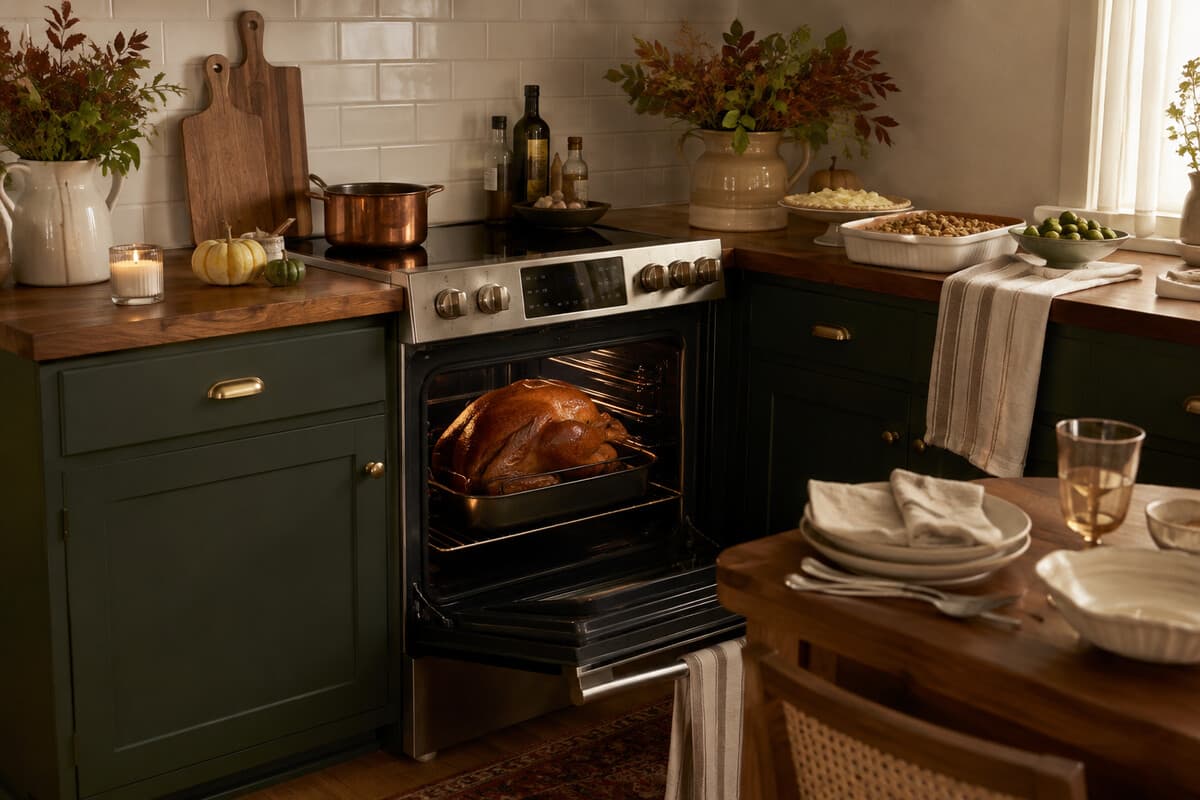
Tell guests whether reheating space exists. A useful rule is: dishes should arrive ready to serve, ready for a short reheat, or in a slow cooker that can plug in somewhere safe. Do not promise oven space to everyone. A standard home oven cannot politely accommodate six surprise casseroles.
If two hot dishes genuinely need the oven, assign them compatible temperatures or staggered windows. Everything else should be transported hot in an insulated carrier, served at room temperature only when the recipe is specifically intended for it, or reheated on the stovetop or in a slow cooker.
Make dietary needs visible without turning dinner into labels everywhere
Ask about serious allergies and major dietary restrictions when the invitation goes out, then share the information with people whose dishes are affected. At the party, a small card with the dish name and a few useful notes—“contains nuts,” “vegetarian,” “dairy-free”—is more helpful than making guests interrogate every cook.
Do not promise that a shared home kitchen is allergen-free if it is not. For severe allergies, the person affected may need a separate plan based on their own safety needs. The potluck organizer's job is clarity, not overconfidence.
Reverse timeline: one week out
Close the guest list and the menu slots. Set an arrival time and an eating time separately—for example, arrive at 5:00, eat around 6:00. Confirm who has a serving dish, who needs an outlet, and who needs a five-minute reheat. If someone still says “I'll decide later,” assign them drinks, bread, or ice.
Check seating. Friendsgiving can be buffet-style with mixed chairs, but everyone still needs a real place to eat. A coffee table can support appetizers; it is a poor plan for a plate of turkey, potatoes, salad, and gravy.
Reverse timeline: two days out
Buy host supplies, chill drinks, clear refrigerator shelves, and set up the serving zone. Put a strip of removable tape where each major dish will go if the buffet is tight. Group hot foods together, cold foods together, and put gravy or sauces near the foods they belong with.
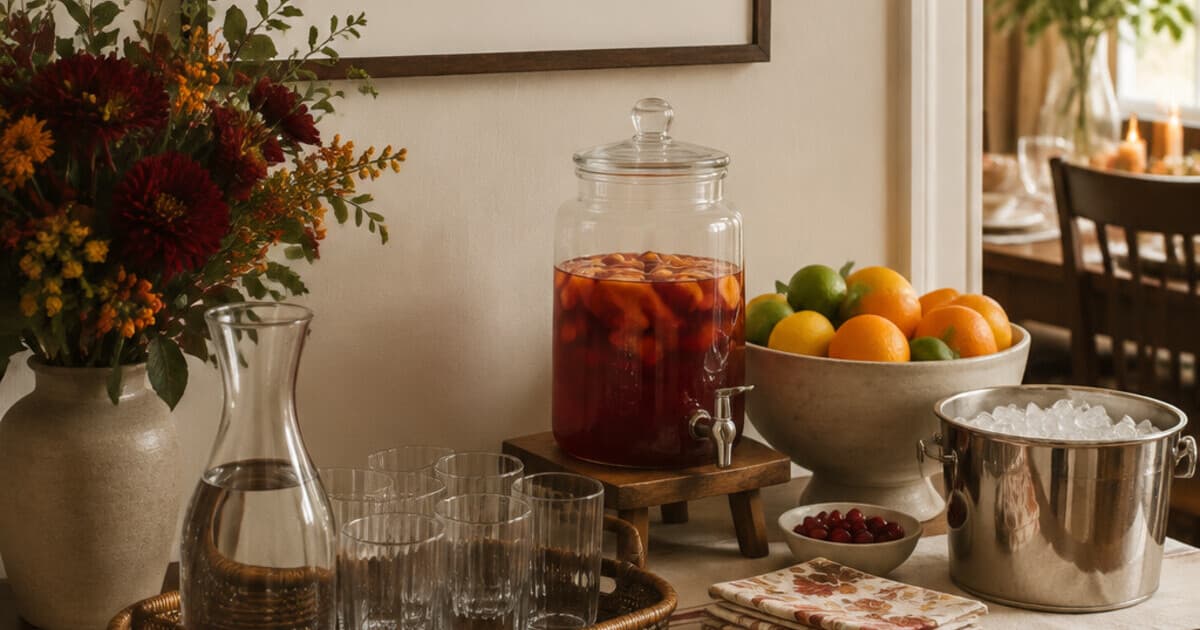
Create a drink station away from the food queue. Put water there first. If twenty people have to enter the buffet line every time they want another glass of water, the room will feel more crowded than it is.
Reverse timeline: day of
Finish your own food early enough to clean the kitchen before arrivals. Set out trivets, serving utensils, labels, plates, napkins, cups, ice, and trash/recycling. Keep the buffet empty until dishes arrive; an uncluttered surface is more useful than early decor.
As food comes in, ask one question: “Does this need to stay hot, stay cold, or is it a shelf-stable food that is appropriate for room-temperature service?” FDA guidance recommends holding hot foods at 140°F or warmer and cold foods at 40°F or colder. Perishable dishes should not be treated as room-temperature food simply because it is a party.
Friendsgiving host checklist
This is the list to run before the first text says “parking now.”
- Every menu slot has a named person and exact dish.
- No more hot dishes are promised oven space than the oven can handle.
- Serving utensils are assigned or supplied.
- Dietary notes are clear where they matter.
- Arrival time and eating time are both communicated.
- Water and non-alcoholic drinks are easy to reach.
- Buffet and drink station are in separate traffic zones if possible.
- Trivets and outlet locations are ready for hot dishes.
- Fridge has room for cold arrivals and leftovers.
- Trash and recycling are visible.
- Take-home containers or foil are ready before cleanup starts.
Handle leftovers as a group project too
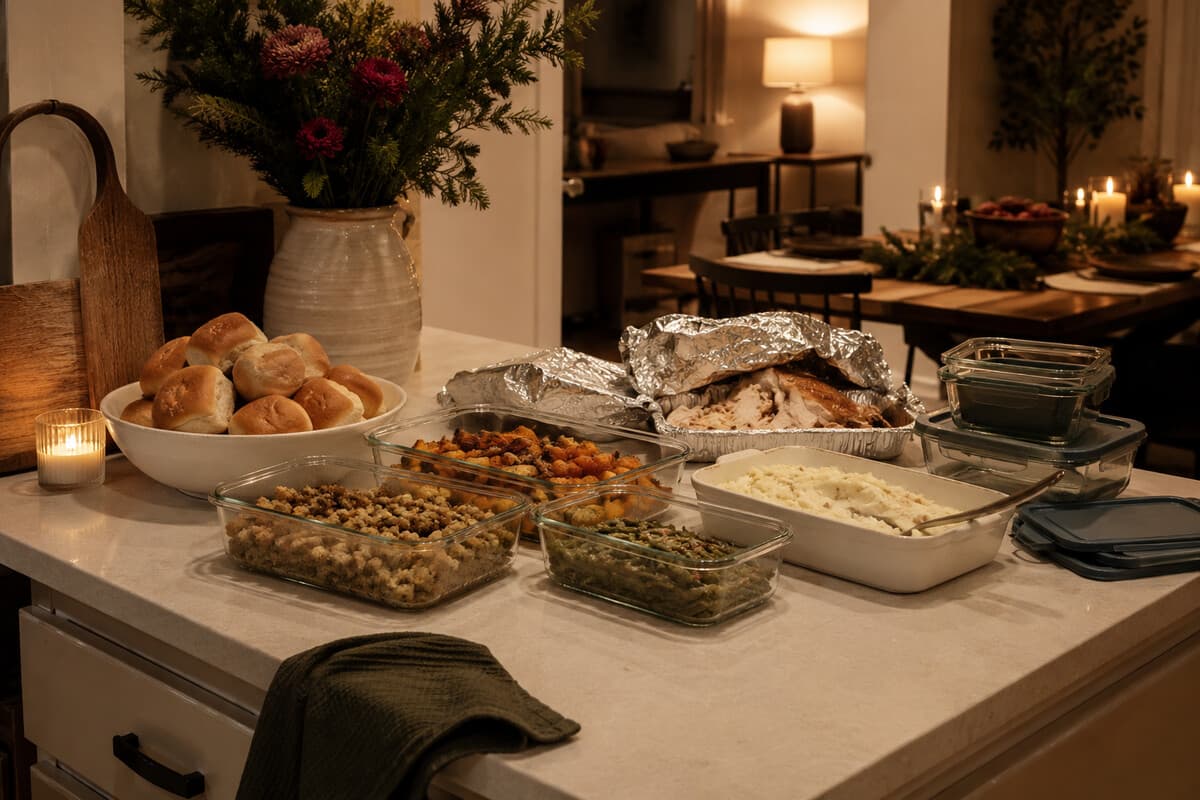
Before everyone leaves, pack food rather than letting it sit through a second round of conversation. USDA guidance says perishable leftovers should be refrigerated within two hours—or within one hour when the temperature is above 90°F—cooled in shallow containers, and generally used within three to four days when refrigerated.
Let contributors take some of their dish home, but redistribute intelligently. Nobody needs to leave with the same nine servings of stuffing they arrived with. Friendsgiving is one of the rare parties where sending food away is a sign of success.
SOURCES
Sources & references
These links support factual rules, quantities, safety guidance, or planning context. The final prioritization and sequencing in this guide are editorial decisions. See how sources are chosen.
- Public guidanceFDA — Entertaining All Year: Food Safetyfda.gov
- Public guidanceUSDA FSIS — Leftovers and Food Safetyfsis.usda.gov
FAQ
Questions people ask before guests arrive
How do you organize a Friendsgiving potluck?
Create menu categories before asking people to choose dishes, then have each person claim a category and name the exact dish. Track who needs oven space, outlets, refrigeration, or serving utensils so the host can plan the room instead of improvising at arrival time.
What should the host provide at Friendsgiving?
The host should provide infrastructure: plates, flatware, napkins, water, ice, trash and recycling, serving surfaces, basic condiments, trivets, and some leftover containers. The host may cook a main, but does not need to make most of the meal.
How do I stop everyone from bringing dessert to Friendsgiving?
Do not use an open 'bring whatever' invitation. Publish a menu-slot list with a fixed number of dessert spots, then redirect later volunteers to vegetables, bread, drinks, ice, or another missing category.
Can guests bring food that needs to be reheated?
Yes, but coordinate it before the party. Limit the number of oven-dependent dishes, give them short reheating windows, and encourage slow-cooker, stovetop, insulated-carrier, cold, or foods specifically intended for room-temperature service for the rest.