Party quantity planning starts with deciding what each number means. Twelve guests do not need twelve full portions of every appetizer, side, dessert, and bread option. A three-hour appetizers-only gathering also needs different math from a short snack window before dinner. Start with ranges, then adjust them once for the crowd you are actually feeding.
QUICK REFERENCE
Party food starting ranges
| Food role | Useful starting range | What changes it |
|---|---|---|
| Pre-meal appetizers | About 4–7 bite-size pieces per adult as a starting range | Short wait before dinner, party length, piece size, or appetite |
| Main protein planning target | About 6–8 oz per adult | Recipe/cut yield, bone-in purchase weight, second main, appetite, leftovers |
| Side dishes | About 4–6 oz for one side; taper each as choices grow | Number of sides and how heavy the menu is |
| Dessert | About 1 serving per adult across all desserts | Multiple desserts, small tasting portions, planned leftovers |
| Appetizers as the meal | Planner assumption: roughly 8–14 pieces depending on length and substance | Party length, time of day, how filling each piece is |
Start with the job the food is doing
Before you calculate anything, decide whether the food is a real meal, a snack window before dinner, or the entire event. This single choice matters more than the guest count. A bowl of olives and a few crostini can be enough when dinner is coming in forty-five minutes. The same amount is nowhere near enough when guests arrive at six and the appetizers are dinner.
This is why “how much food per person?” has no universal answer. The per-person number only makes sense after you define the role of the food. Once that role is clear, the ranges become much more useful.
Use a range for a full meal instead of one exact total
Iowa State University Extension's 2026 graduation-party guidance gives practical crowd-planning ranges that are useful beyond graduation parties: about 6–8 ounces of protein per person, 4–6 ounces for a side-dish serving, 4–7 bite-size appetizers, and roughly one standard dessert serving. Those numbers are a starting point, not a promise that every guest will eat the same plate.
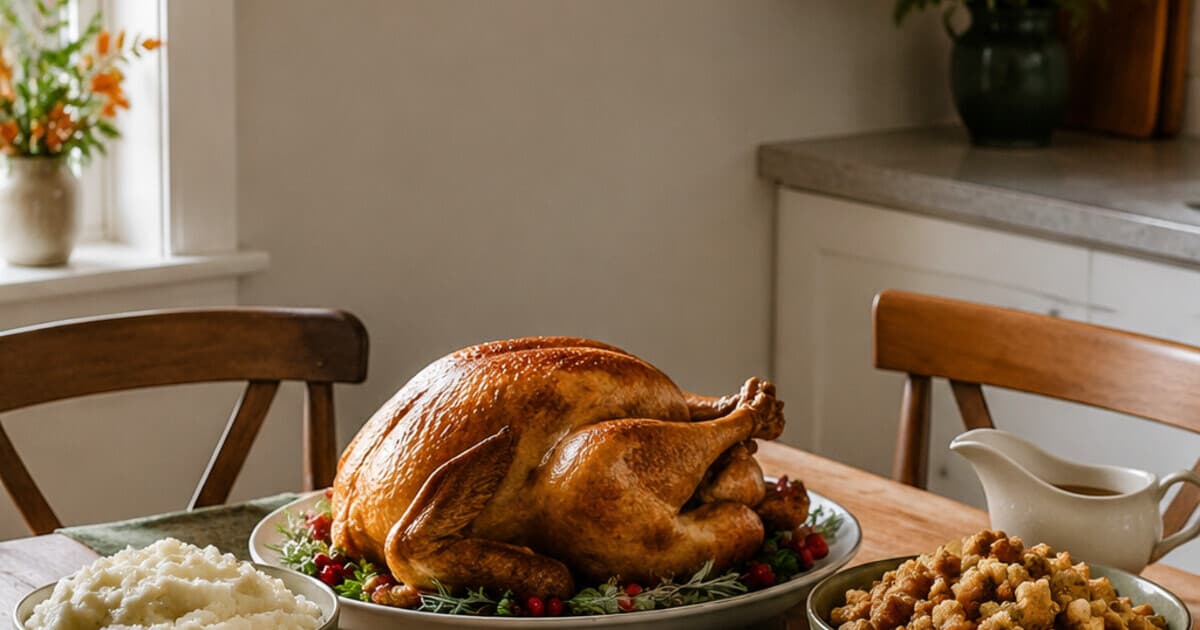
For a dinner-party menu, use the lower end when there are many choices and the crowd is light. Use the upper end when the menu is narrow, guests are hungry, or you intentionally want leftovers. If another substantial main dish is present, do not give both mains a full 6–8 ounces per person unless you truly want a large surplus.
Do not count every side as if it were the only side
Side dishes are where shopping lists inflate fastest. If you serve potatoes, roasted vegetables, salad, bread, and pasta salad, guests will divide their plates among them. A per-side range is still useful, but the number of sides should change how you use that range.
For one side, a normal 4–6 ounce serving is a useful starting point. With two sides, the total can grow, but each dish should usually get less than a full standalone allocation. With four or five sides, taper each one further. The goal is a complete plate, not four or five separate full side servings per guest.
Appetizers need different math when they replace dinner
Pre-meal appetizers are a bridge. They should give arriving guests something to eat without becoming a second dinner. The published 4–7-piece range can be adjusted downward when the arrival window is very short and a substantial meal follows promptly. If the main meal is delayed, the appetizer quantity has to rise because guests are no longer simply waiting; they are eating through the normal dinner window.
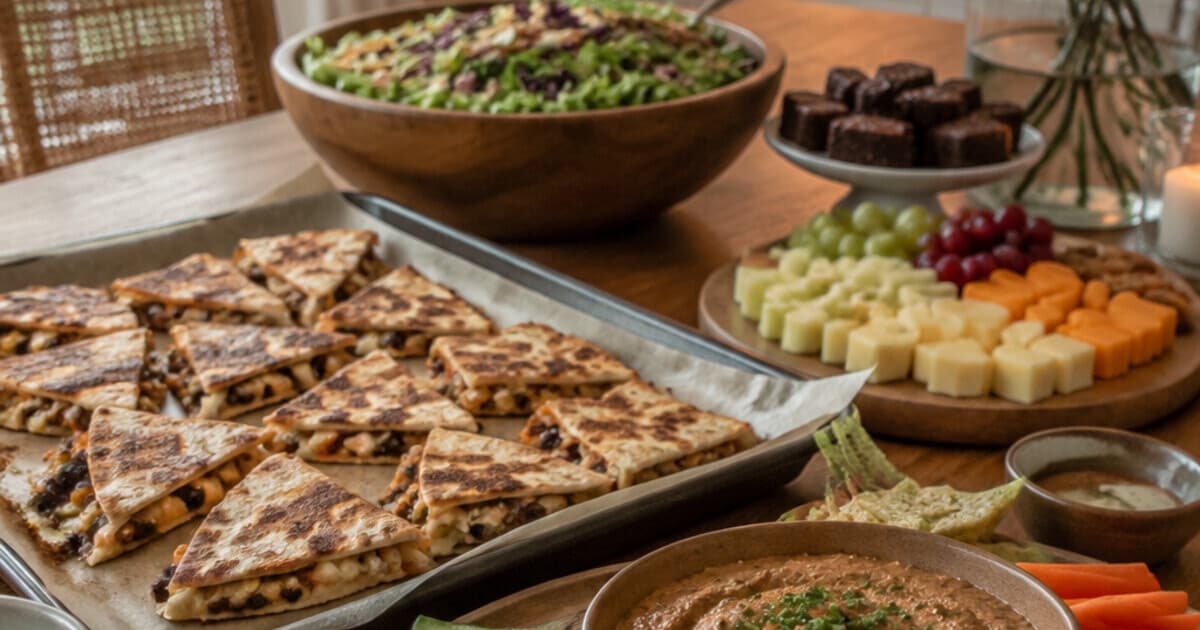
When appetizers are the meal, duration matters much more. A short one-hour gathering can work with a smaller number of substantial pieces. A three- or four-hour grazing party needs more. Piece size matters too: sliders, meatballs, mini sandwiches, cheese, and hearty dips carry more food value than tiny crackers with garnish. Count the spread by substance, not just by how many objects are on the tray.
Count children separately, but keep the shortcut honest
A simple planning shortcut is to count a younger child as roughly half an adult food portion. That keeps a guest list with several small children from being treated like the same number of hungry adults. It is only a planning assumption, not a nutrition rule.
Hungry teenagers should usually go in the adult count. So should any older child you already know eats a normal adult plate. The useful question is not age alone; it is whether the person is likely to take an adult-size serving from this particular menu.
Adjust for appetite once, not dish by dish
Hosts often add a little extra protein, then a little extra potato, then a little extra dessert, then buy an extra tray of appetizers “just in case.” That stacks several safety margins on top of each other. The result can be far more food than the guest count ever justified.
Instead, choose one overall appetite adjustment. For a light crowd with many choices, plan near the lower end. For a hungry crowd, move toward the upper end or add a modest overall buffer. Use the same logic for leftovers: either leftovers are a goal or they are not. Do not accidentally plan leftovers five separate times.
Separate serving targets from raw purchase weight
A per-person protein serving range is not automatically the amount to buy raw. Meat and poultry can lose moisture during cooking, while bone-in cuts include weight that will not become edible meat. Use the serving range as a planning target, then use the recipe, package, butcher guidance, or a tested yield for that specific cut to convert it into a shopping amount.
Let recipe yield overrule generic party math
If a tested recipe says a 9-by-13 casserole serves twelve, use that yield to decide how many pans or batches you need. Map the target range onto the recipe instead of forcing every dish through a generic pounds-per-person rule. If one brownie pan reliably gives twenty-four small party squares and you need about twenty servings, one pan already covers the plan.
Plan buffet refills as part of the quantity, not after it
The amount you buy does not have to equal the amount sitting on the table at one time. FDA buffet guidance recommends keeping hot foods at 140°F or warmer and cold foods at 40°F or colder. Perishable food should not remain at room temperature for more than two hours, or one hour when the temperature is above 90°F.
FDA also advises replacing nearly empty serving dishes instead of adding fresh food to a dish that has already been sitting out. For a home party, this supports a simple logistics rule: use smaller serving platters and keep backup food properly hot or cold until refill time. That can protect both food quality and the buffet setup.
Quantity checklist before you shop
A useful quantity plan should survive these checks before it becomes a grocery list.
- The food role is clear: pre-meal snacks, full meal, or appetizers as the meal.
- Adults, hungry teens, and younger children are not all treated as identical portions.
- A single appetite adjustment has been chosen instead of padding every dish.
- Leftovers are either intentional or kept modest.
- Multiple sides are scaled as part of one plate, not as five separate dinners.
- Per-person serving targets are converted to purchase quantities using the actual recipe, cut, package guidance, or tested yield.
- Recipe yield has been checked before doubling a batch.
- Buffet backup food has a hot/cold holding plan and smaller refill vessels are available.
TAKE IT TO PAPER
Useful printables for this plan
SOURCES
Sources & references
These links support factual rules, quantities, safety guidance, or planning context. The final prioritization and sequencing in this guide are editorial decisions. See how sources are chosen.
- Editorial referenceIowa State University Extension and Outreach — Graduation Party Tipsblogs.extension.iastate.edu
- Public guidanceFDA — Serving Up Safe Buffetsfda.gov
FAQ
Questions people ask before guests arrive
How much food should I plan per person for a party?
For a full meal, a practical starting point is roughly 6–8 ounces of main protein per adult as a planning range, with 4–6 ounces as a useful benchmark for a side when the menu has only a few sides, plus a few pre-meal appetizer pieces and about one dessert serving. As you add more sides, reduce the amount of each one instead of multiplying a full side portion by every dish.
How many appetizers do I need per person before dinner?
Iowa State University Extension gives about 4–7 bite-size appetizer pieces per person as a crowd-planning starting range. A very short arrival window before a substantial dinner may justify less; if appetizers are the entire meal, use a much higher range and adjust for party length and how substantial the pieces are.
How should I count kids when planning party food?
A simple planning shortcut is to count younger children as about half an adult food portion. Treat hungry teens and children who normally eat adult-size portions as adults. The shortcut is for shopping estimates, not a nutrition recommendation.
Should I add 10 or 20 percent extra food for a party?
Use one deliberate leftovers or appetite buffer rather than adding extra to every individual dish. A small overall buffer can be useful, while a larger one makes sense only when leftovers are an explicit goal or your crowd is predictably hungry.