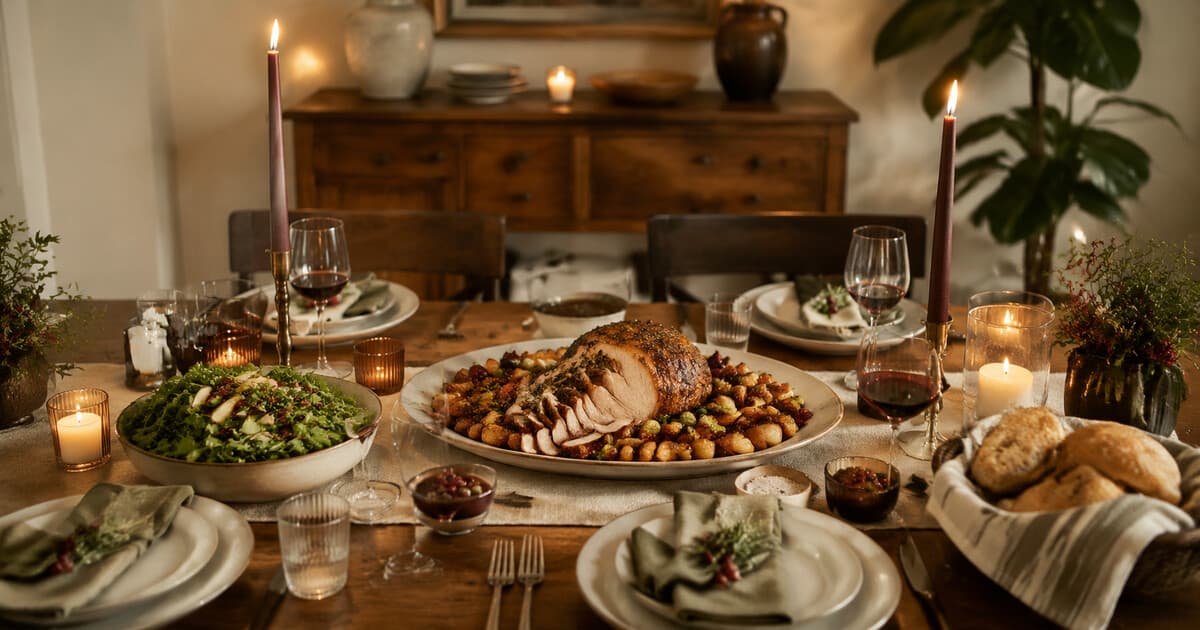
The dinner parties that feel effortless are usually not effortless. They are designed so the host's hardest work happens before anyone arrives. A relaxed dinner does not require matching chairs, a six-course menu, or the ability to sauté while maintaining eye contact with three conversations. It needs food that tolerates real life, a room that tells guests what to do, and a host who is physically at the table instead of disappearing into the kitchen every seven minutes.
Use the 1-1-1-1-1 menu
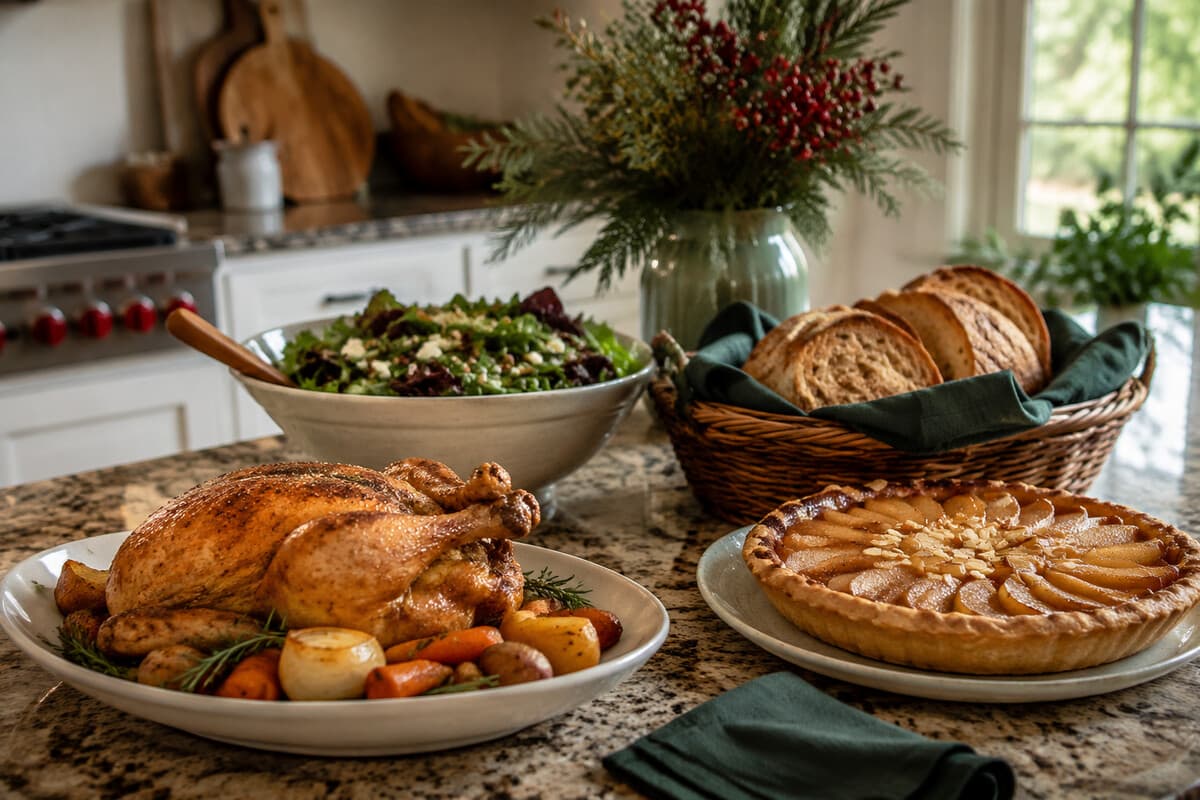
Build dinner from five parts: one arrival snack, one main, one cooked side, one fresh side, and one dessert. The arrival snack can be olives, nuts, dip, or cheese. The main should be forgiving—braise, roast, baked pasta, stew, or another dish that does not collapse if dinner starts twenty minutes late.
The cooked side should use a different piece of equipment than the main when possible. The fresh side brings acid and crunch. Dessert should be finished before the doorbell. This formula gives the meal contrast without creating a restaurant line in your home kitchen.
- Arrival snack: no last-minute cooking.
- Main: forgiving and able to rest, hold, or reheat.
- Cooked side: different equipment from the main if possible.
- Fresh side: salad, slaw, herbs, or something acidic.
- Dessert: fully made before guests arrive.
Choose one thing to care about
Maybe you care about the main dish. Maybe you want a beautiful table. Maybe dessert is your thing. Pick one. Everything else can be competent and simple. If you spend all afternoon making fresh pasta, buy the dessert. If you baked a complicated cake, roast chicken and serve a salad you already know.
Guests experience the evening as a whole. They do not award points for difficulty. One memorable element plus five calm decisions usually feels more generous than seven ambitious elements plus a stressed host.
Make the room self-explanatory
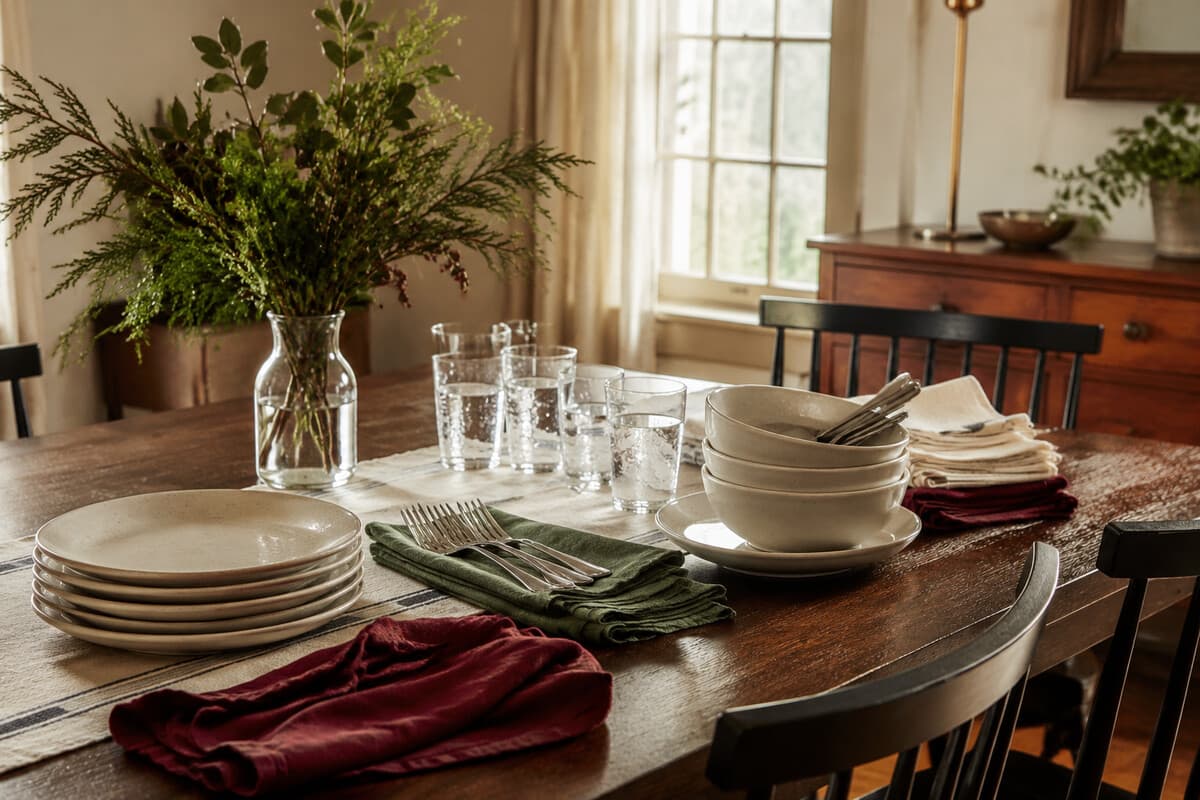
When people walk in, they should quickly understand where coats go, where drinks are, and where they are allowed to sit. Put water and glasses where guests can reach them without asking. Keep drinks away from your main prep counter. Move fragile decor or unnecessary furniture out of the traffic path before the party.
If the dining chairs do not match, stop noticing. What matters is that everyone has a stable chair, enough elbow room, and a place for a glass. A bench, two borrowed chairs, or a small second table can work better than crowding one photogenic setup.
Reverse timeline: three days out
Confirm the group and ask about allergies or major dietary restrictions. Choose the final menu and write down each dish's last action: reheat, roast, dress, carve, or simply uncover. If more than two dishes have complicated last actions, simplify.
Shop for everything except any very delicate produce you prefer to buy later. Make dessert if it holds. Make sauces, dressings, marinades, or braising liquids. Clear refrigerator space and decide which serving dish belongs to which food.
Reverse timeline: one day out
Cook a braise or baked main if it improves overnight. Prep vegetables, wash greens, toast nuts or breadcrumbs, and set the table if doing so removes mental clutter. Chill drinks. Empty the dishwasher. Put serving spoons and trivets somewhere obvious.
Do not clean the entire home. Clean the entry, bathroom, kitchen, dining area, and visible floor. Close doors to the rest. A party is not a property inspection.
Reverse timeline: three hours before
Do the messy cooking now. Then wash the large tools you will not need again, clear the sink, wipe the counter, and take out the trash. Start reheating any slow, forgiving main well before you are hungry.
Set the drink station, fill water, arrange the arrival snack, and put any food specifically intended for room-temperature service in its final vessel. Choose music before you need it. The house should be transitioning from kitchen mode to party mode.
Reverse timeline: thirty minutes before
Stop starting things. Finish the one hot side, check the main, put out the snack, turn on lamps, and get yourself ready. If a salad is washed and dressing is made, it can wait. If bread needs warming, that can happen while people are settling in.
The thirty-minute stop rule is what separates a relaxed host from a person shouting hello from behind a cloud of steam. Nothing on the menu should be so fragile that it requires your uninterrupted attention at arrival time.
Serve in two big moments, not six tiny courses
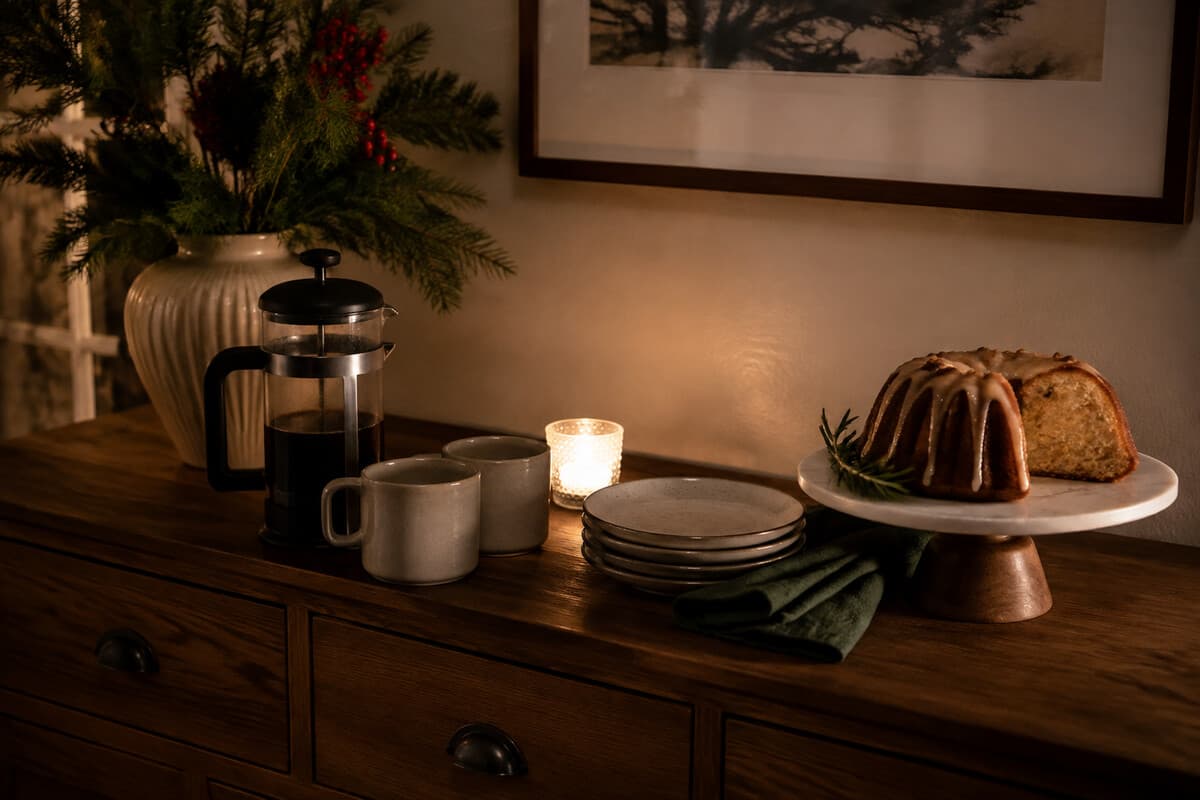
Let the arrival snack happen naturally while people gather. Then serve the main, cooked side, and fresh side together. Family-style is warm and social if the table has room; buffet-style is easier when serving bowls would crowd everyone. Dessert can appear later after plates are cleared.
Do not plate every serving unless you enjoy doing it. Passing food or letting guests serve themselves moves some labor off the host and lets people choose portions that make sense for them.
Relaxed-host checklist
If these are true, you are done enough.
- Menu has one main focus, not five competing projects.
- Dessert is complete before guests arrive.
- Water and drinks can be self-served away from the stove.
- Coats and bags have an obvious landing place.
- Every guest has a real seat and usable eating space.
- Serving dishes and utensils are assigned.
- Sink and dishwasher have room for dirty dishes.
- Fresh side needs only dressing or tossing.
- Host stops active cooking thirty minutes before arrival.
- Music and lighting are already set.
- Nobody is being apologized to for mismatched napkins.
The part people remember
People remember being welcomed, having enough to eat, laughing at the table, and staying longer than they expected. They rarely remember whether your herb garnish was missing. If something burns, serve the other things. If dinner is late, offer another cracker and tell the truth.
The useful skill in home entertaining is not flawless execution. It is recovering so smoothly that a small problem never becomes the center of the evening.
TAKE IT TO PAPER
Useful printables for this plan
SOURCES
Sources & references
These links support factual rules, quantities, safety guidance, or planning context. The final prioritization and sequencing in this guide are editorial decisions. See how sources are chosen.
- Public guidanceFDA — Serving Up Safe Buffetsfda.gov
- Public guidanceFDA — Food Allergiesfda.gov
FAQ
Questions people ask before guests arrive
What is the easiest menu for a dinner party?
Use one no-cook arrival snack, one forgiving main such as a braise, roast, baked pasta, or stew, one cooked side, one fresh salad or vegetable, and a dessert made ahead. The key is limiting last-minute cooking rather than choosing a particular cuisine.
How far ahead should I prepare for a dinner party?
Three days is plenty for most casual dinners. Confirm the menu and shop, make sauces or dessert ahead, prep components the day before, then reserve party day for the main, one hot side, final assembly, and room setup.
How do I host dinner in a small home?
Keep drinks away from the cooking area, move unnecessary furniture, use buffet service if the dining table is small, and give coats a defined landing zone. Mixed chairs and a compact second table are fine if they make eating more comfortable.
How can I stop cooking when guests arrive?
Choose food that holds or reheats, write down each dish's final action, and use a thirty-minute stop rule. By then, the main should be ready or holding, the fresh side should need only dressing, and the arrival snack should already be out.