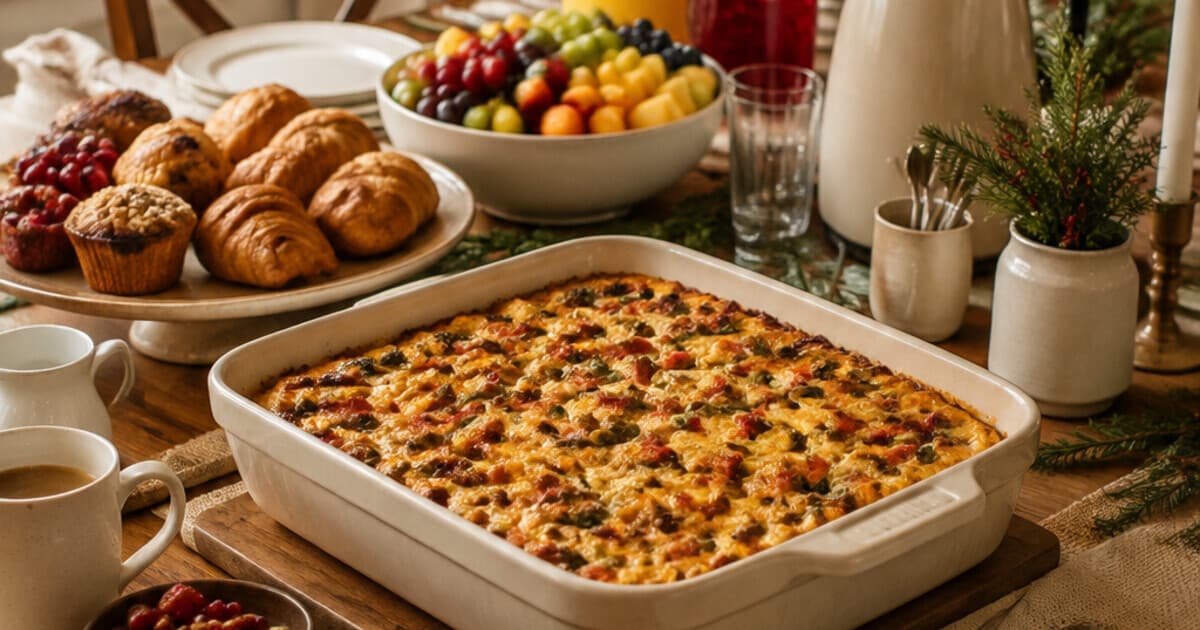
Christmas brunch becomes exhausting when the menu is built like a restaurant breakfast: eggs on the stove, bacon in the oven, pancakes in batches, potatoes in another pan, fruit being cut, coffee running out, and guests asking where to sit. A better home brunch has one hot anchor and several foods that are already done or nearly done. The goal is not to make every breakfast favorite. It is to create a complete table that lets the host participate in Christmas morning.
Add one fresh thing and one easy carbohydrate
Fruit makes a rich brunch feel less heavy, but it does not need to be a complicated fruit salad. Choose fruit that can be washed, dried, and partly prepped ahead, then finish delicate cutting in the morning if necessary. For the carbohydrate, bought pastries, good bread, muffins, or a simple bake can be more useful than pancakes or waffles made one serving at a time.
Store-bought is especially valuable at Christmas because the host may already be cooking another meal later in the day. Use the bakery for the item it can make better than you can at 7 a.m., then spend your attention on one homemade dish you care about.
Give coffee and cold drinks their own system
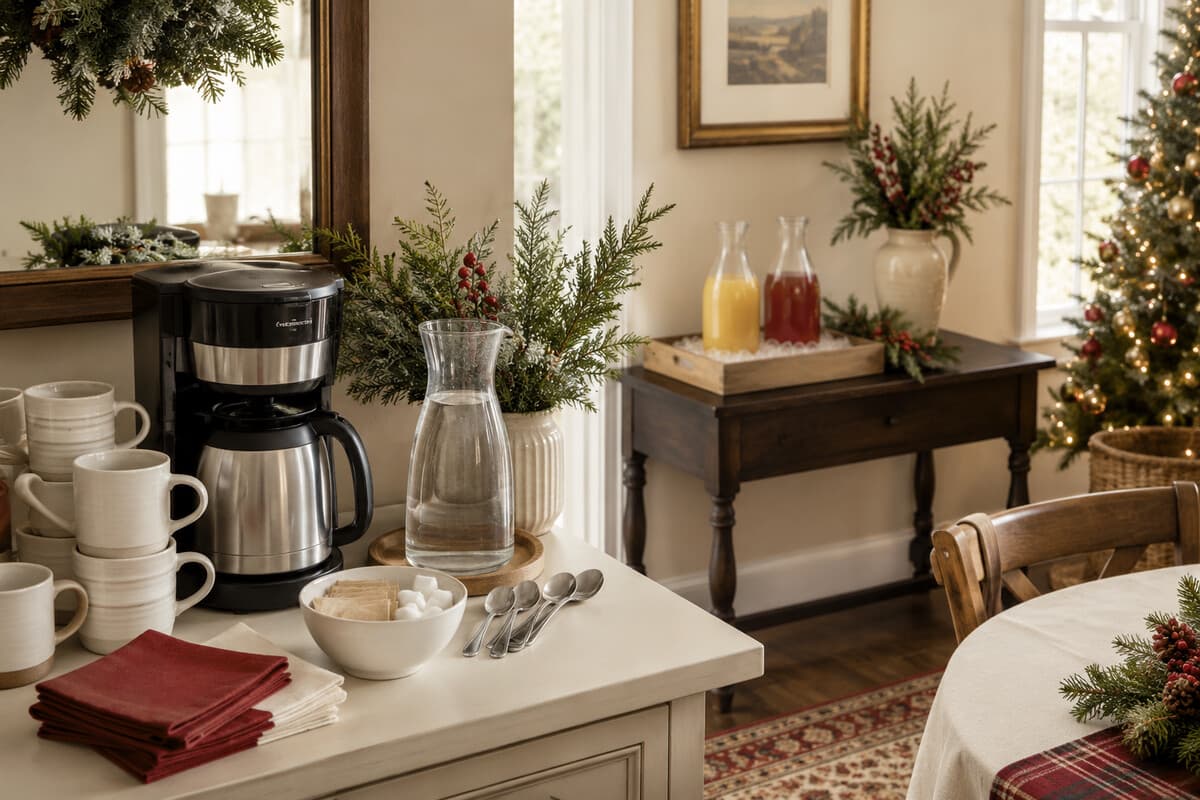
Set mugs, sweeteners, spoons, and coffee supplies the night before. If your machine makes only a few cups at once, decide how you will brew the second round before everyone asks at the same time. Put water and a cold non-alcoholic drink in a separate self-serve area so the coffee station is not doing every job.
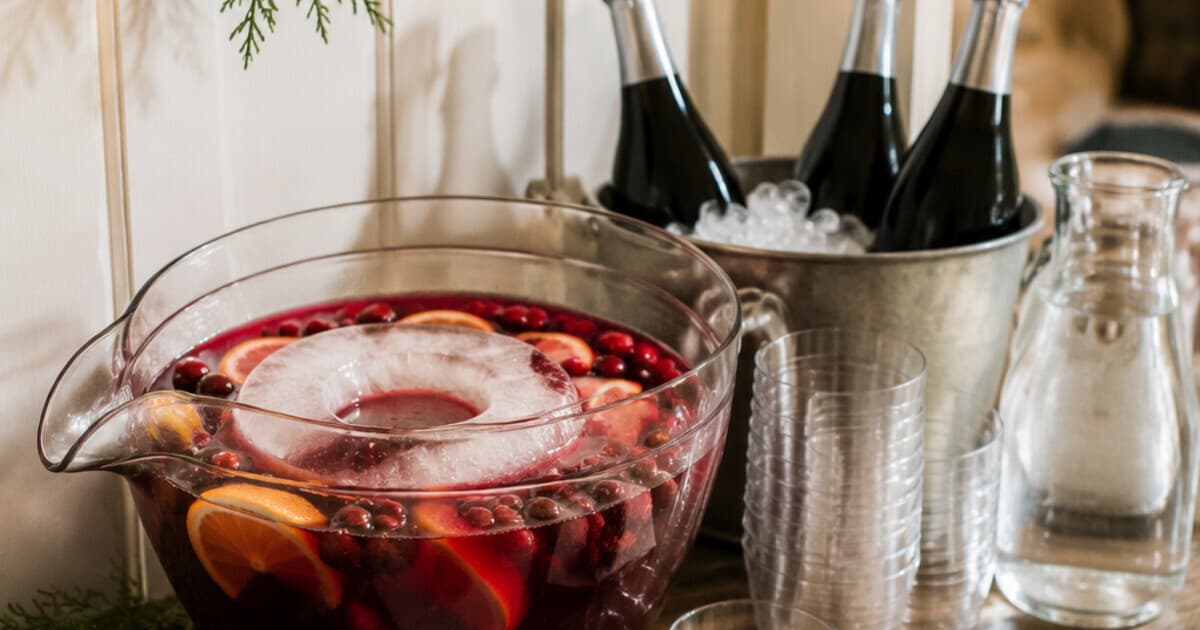
A make-ahead Christmas punch base can work at brunch, but add sparkling ingredients closer to service. If you serve juice, smaller chilled containers that can be replaced are easier than leaving every bottle on a crowded table.
Build a brunch plate with contrast, not ten dishes
A complete plate can be one savory or sweet hot main, fruit, a pastry or bread, and one simple supporting item. If the centerpiece is rich and cheesy, add something crisp or acidic. If the centerpiece is sweet baked French toast, add a savory protein or a less-sweet side rather than a table of cinnamon rolls, muffins, and pastries competing with each other.
This reduces both waste and oven traffic. A short menu organized as one game plan is easier to execute than a table of unrelated breakfast recipes that all need separate finishing steps.
Make Christmas Eve do the decision-heavy work
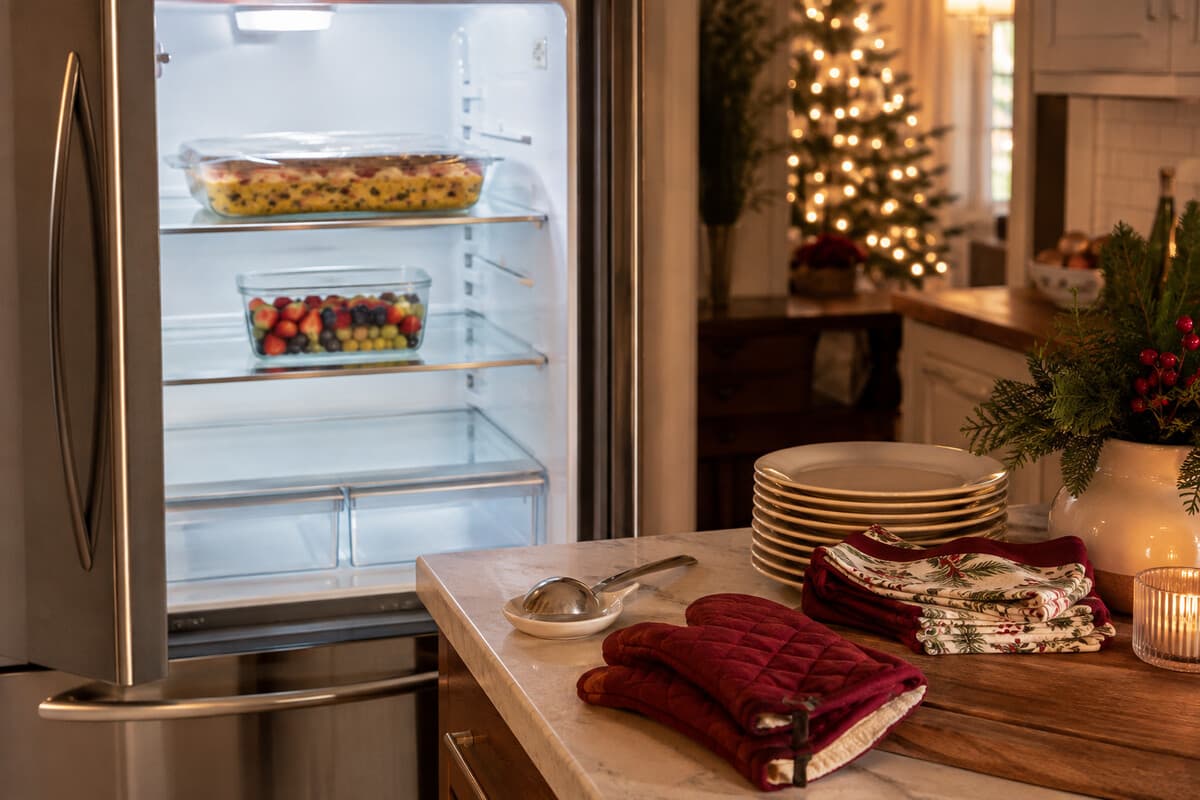
On Christmas Eve, assemble the overnight dish according to its tested recipe, prep permitted fruit components, set the table or stack plates, choose serving utensils, stage the coffee station, chill beverages, and clear one refrigerator shelf for brunch. Put the recipe, thermometer, oven mitts, and serving piece in one place.
Do not fully cook food just because you want to “get ahead” unless the recipe specifically supports safe cooling and reheating. USDA egg guidance says dishes containing raw eggs should be cooked immediately or refrigerated and cooked within 24 hours, and cooked egg dishes should be refrigerated promptly if they are being saved for later.
Keep the oven plan deliberately boring
If the main needs the oven, do not schedule a second food that has to bake at a conflicting temperature during the same window. Plain or recipe-approved pastries can be served at room temperature, lightly warmed after the main comes out, or bought in a form that does not need heating; keep custard-, cream-, meat-, or other perishable-filled pastries under the storage conditions their recipe or package requires. Bacon or sausage can be prepared using a method that fits around the anchor rather than automatically claiming another rack.
Write the serving time, recipe bake time, standing or resting time, and preheat time backward on a note. That four-line calculation is more useful than a complicated Christmas morning schedule.
Reverse timeline: Christmas Eve
By early evening, finish grocery shopping and confirm refrigerator space. Assemble the main dish if the recipe allows overnight refrigeration. Set dishes, napkins, coffee supplies, and shelf-stable pastry. Prepare the first stage of fruit, then cover and refrigerate it as appropriate. Put juice, milk, and other cold beverages in the refrigerator.
Before bed, check the recipe's instruction for whether the casserole goes straight from the refrigerator to the oven or needs a short counter period. Do not improvise a long room-temperature warm-up for egg or dairy dishes. Set an alarm based on the actual preheat and cook time.
Reverse timeline: Christmas morning
About ninety minutes before eating, start only if your chosen recipe needs that much time; otherwise protect your morning. Preheat according to the recipe, finish any safe fruit prep, and make the first coffee. Bake the anchor dish and verify doneness with the recipe plus the appropriate safe internal temperature.
Twenty to thirty minutes before serving, arrange pastries, fruit, cold drinks, butter or condiments, and plates. Let the hot dish rest if its recipe calls for it. Bring food to the table only when you are ready to eat rather than turning the buffet into long-term storage.
Make-ahead Christmas brunch checklist
A brunch is ready when the host can explain the morning in one sentence: “Bake the main, finish the fruit, make coffee, put everything out.”
- One primary hot dish carries the meal.
- Hot dish has a tested recipe and known oven window.
- Egg-based dishes have a thermometer and safe-temperature plan.
- Fruit or another fresh component balances the menu.
- Pastries or bread do not compete for critical oven space.
- Coffee setup is staged and second-round capacity is known.
- Cold drinks are chilled and self-serve.
- Serving dishes and utensils are chosen on Christmas Eve.
- Refrigerator has space for overnight prep and leftovers.
- Perishable brunch food is refrigerated promptly after service rather than lingering through the afternoon.
SOURCES
Sources & references
These links support factual rules, quantities, safety guidance, or planning context. The final prioritization and sequencing in this guide are editorial decisions. See how sources are chosen.
- Editorial referenceMartha Stewart — Christmas Brunch Recipesmarthastewart.com
- Public guidanceFoodSafety.gov — Safe Minimum Internal Temperaturesfoodsafety.gov
- Public guidanceUSDA FSIS — Shell Eggs from Farm to Tablefsis.usda.gov
- Public guidanceFDA — Serving Up Safe Buffetsfda.gov
FAQ
Questions people ask before guests arrive
What is the easiest make-ahead Christmas brunch menu?
Use one overnight hot centerpiece, fruit, good pastries or bread, one simple supporting side, coffee, water, and a festive cold drink. The easiest menu minimizes individual stovetop cooking and does not require several foods to use the oven at the same time.
Can I assemble a breakfast casserole the night before?
Many breakfast casseroles and stratas are specifically designed for overnight refrigeration, but follow the tested recipe you are using. USDA guidance says dishes containing raw eggs should be cooked immediately or refrigerated and cooked within 24 hours.
What temperature should an egg casserole reach?
FoodSafety.gov lists 165°F for casseroles, including meatless casseroles. It separately lists 160°F for egg dishes such as quiche and frittata. Use the category that matches your tested recipe and verify the center with a food thermometer.
How do I keep Christmas brunch warm for late guests?
If guests are arriving over a long window, serve smaller quantities and keep backup food safely hot or cold according to the recipe and appliance guidance. Do not leave egg, meat, dairy, or cut-fruit dishes sitting at room temperature for hours while waiting for late arrivals.