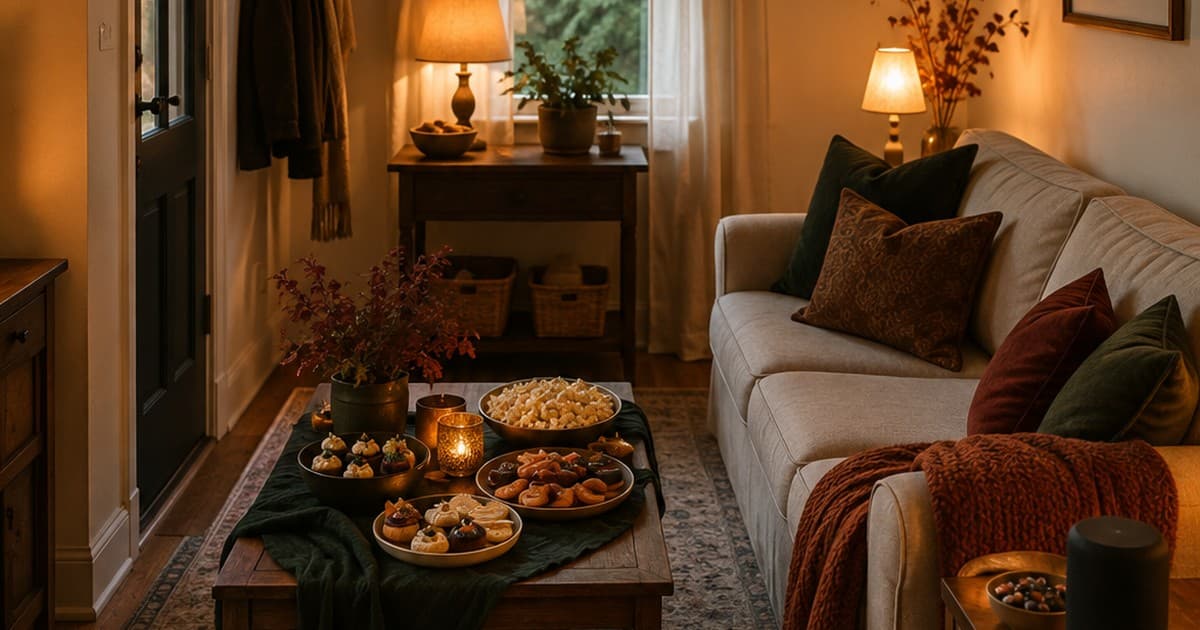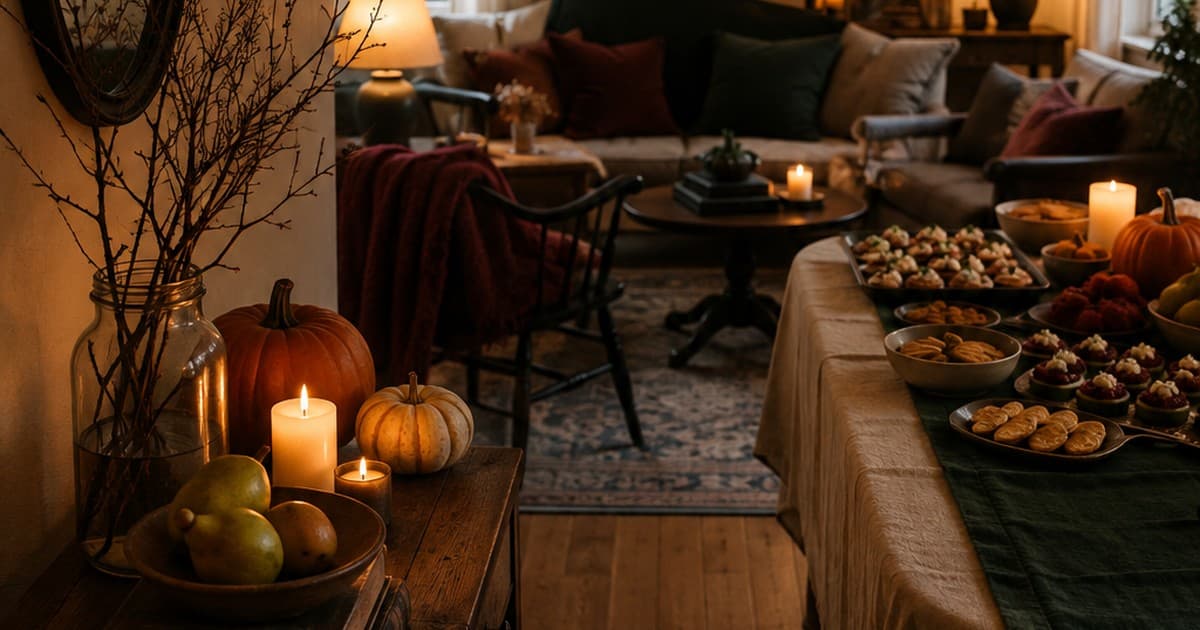
A party timeline is useful for one reason: it tells you what not to be doing at 5:47 p.m. while the first guest is already circling for parking. Halloween creates extra temptations—costumes, decorations, themed food, games—so the plan needs to be more ruthless than a normal get-together. This one assumes a home party with snacks or casual food, not a catered event, and it deliberately leaves breathing room.
First, define the party in one sentence
Before buying anything, write one sentence that sets the boundaries: “Twelve adults, 7–10 p.m., costumes optional, mostly appetizers, two cocktails plus a non-alcoholic punch.” That sentence prevents the party from quietly becoming dinner for twenty, a costume contest, a haunted house, and a dessert buffet all at once.
Decide the guest count, start and approximate end time, food format, whether children are coming, and whether costumes are expected. Then choose one visual idea for the room—paper bats and warm candlelight, pumpkins and dark green, or vintage orange and cream. A clear constraint is more useful than a giant inspiration board.
Reverse timeline: two weeks out
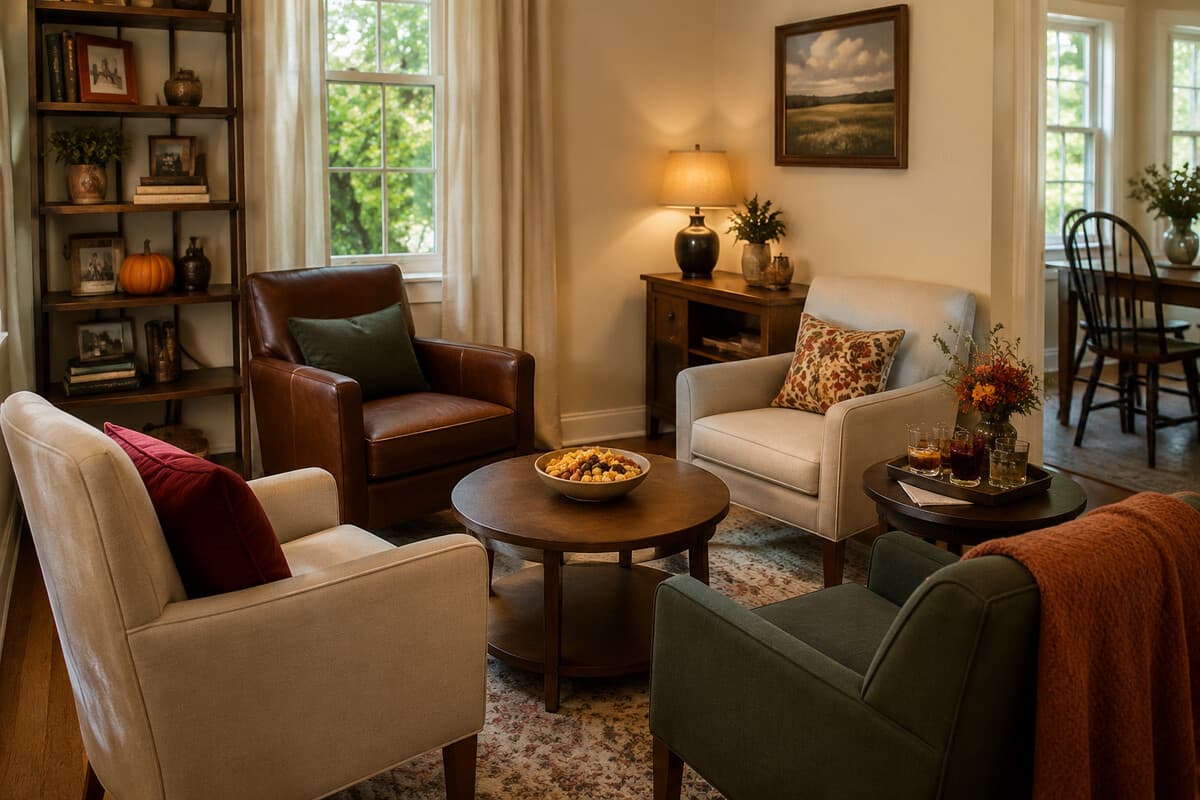
Send invitations or confirm the group. Ask about food allergies or major dietary restrictions before you lock the menu. Decide whether guests are eating a full meal or grazing; the quantity and furniture layout are different. If you want a game, choose one now and make sure it works with your actual group size.
Walk through the house as a guest. Where do coats go? Where is the bathroom? Where will drinks live? Can people reach the food without forming a line through the kitchen? Pick the two or three rooms guests will use and stop planning decor for the rest.
Reverse timeline: one week out
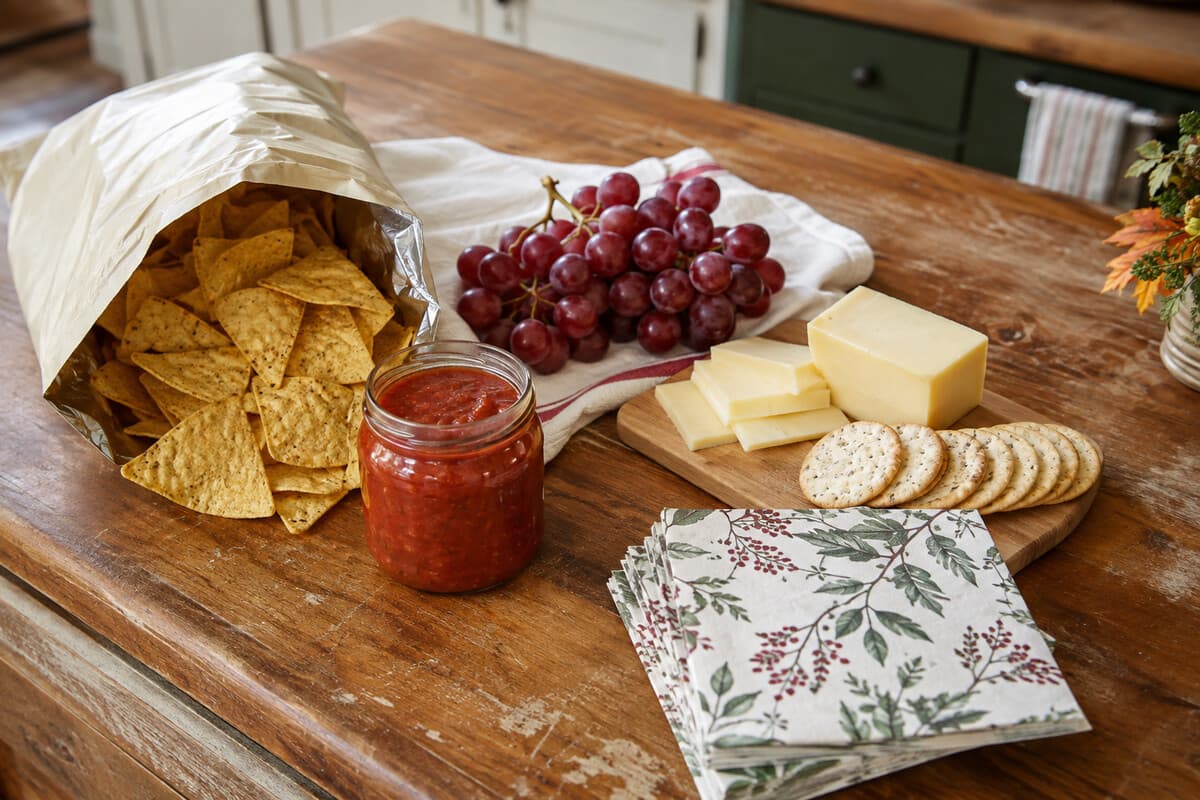
Buy shelf-stable drinks, napkins, candles or battery lights, paper goods you genuinely need, and ingredients that keep well. Pull out platters, pitchers, bowls, ice tubs, serving spoons, and trash bins. If you discover you own six platters but no serving spoon, that is a cheap problem to solve now.
Test the furniture layout. Move one unnecessary chair, plant, or side table if it pinches the walking path. Put the snack table where people can approach from more than one side. If your entry is narrow, create a coat zone farther inside instead of building a traffic jam at the door.
Reverse timeline: two days out
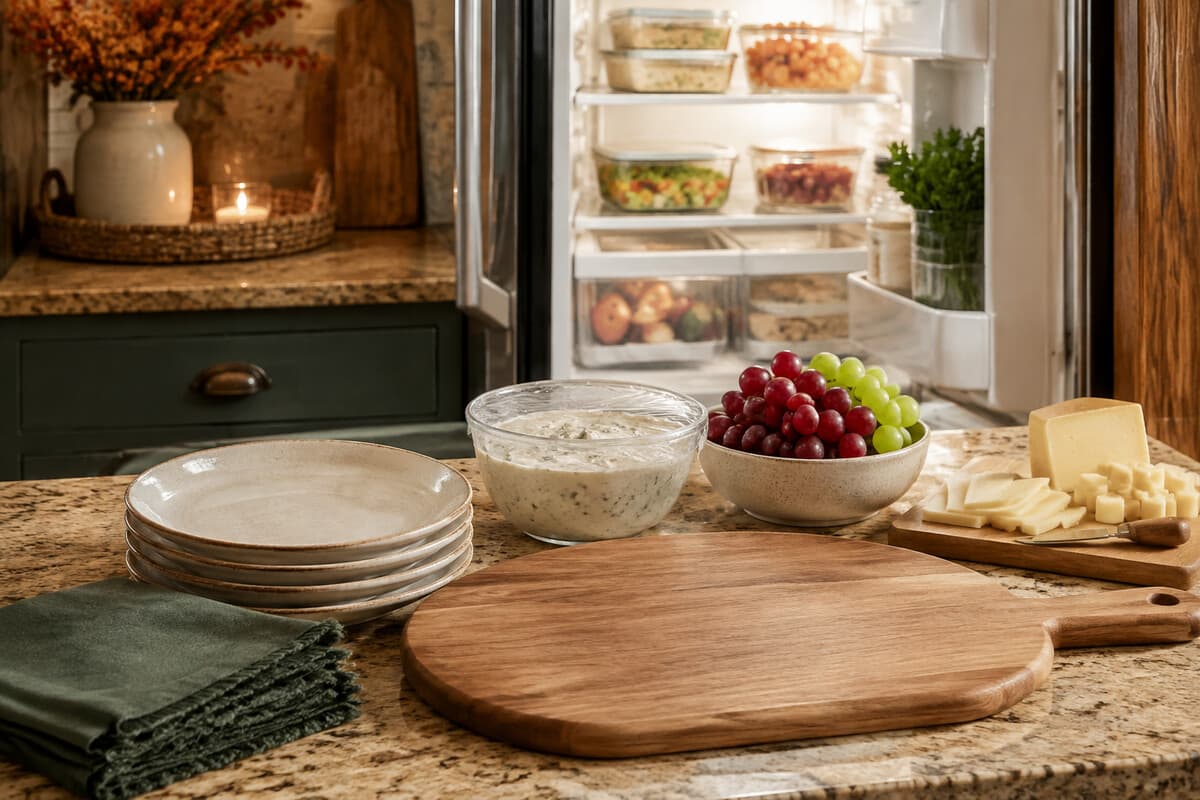
Decorate the big surfaces: wall, entry, dining table, mantel, or one shelf. Stop when the room reads as Halloween from the doorway. Make dips, sauces, dressings, desserts, or other foods that hold well. Wash produce, chill drinks, and freeze enough ice if you have the freezer space.
Clear refrigerator space and empty obvious kitchen clutter from the counters. Do a bathroom reset with soap, hand towel, toilet paper, and an empty trash can. These invisible hosting jobs are more useful than making another garland.
Reverse timeline: the morning of
Finish cold prep, cut vegetables that hold well, set out non-perishable serving pieces, and label the job of each platter with a removable note if needed. Put out unopened drinks that do not require refrigeration. Set the music queue. Charge the speaker. Put costume pieces you need in one place instead of discovering half of them under the bed at 6 p.m.
If you are serving perishable food buffet-style, plan to bring it out in smaller waves rather than setting everything down for the entire party. FDA guidance recommends holding cold foods at 40°F or colder, hot foods at 140°F or warmer, and not leaving perishables at room temperature beyond two hours—or one hour when the ambient temperature is above 90°F—unless they are being kept safely hot or cold.
Reverse timeline: three hours before
Do the cooking that creates dishes, splatter, or smells now. Then clean the sink, run or empty the dishwasher, wipe the counters, and take out the trash. This is your kitchen reset line. After it, every remaining food task should be assembly, reheating, or one simple oven job.
Set up the drink zone completely: opener, cups or glasses, water, napkins, ice tool, non-alcoholic option, and a small towel for condensation. Keep alcohol separate enough that guests who want water do not have to reach through a mini bar.
Reverse timeline: one hour before
Turn on lamps and safe battery candles, start music, close doors to rooms guests do not need, and make the entry obvious. Put out the first shelf-stable snack and only the first small round of perishable food. Refill later from the refrigerator.
Then stop. Get dressed, put on your costume if you are wearing one, drink water, and sit down for five minutes if you can. The last hour should not contain crafting, furniture assembly, or a recipe you found that afternoon.
Party-night checklist
You should be able to scan this once and know the house is ready.
- Entry is lit and there is a clear place for coats and bags.
- Bathroom has soap, hand towel, paper, and an empty bin.
- Water and a non-alcoholic drink are visible without asking the host.
- First food wave is out; backup perishables are still chilled or safely hot.
- Serving utensils are on the table, not hidden in a drawer.
- Trash and recycling are easy to find.
- Music is playing at conversation volume.
- Walking paths are clear of cords, props, and loose decor.
- One game or activity is ready but not forced on arrival.
- Kitchen sink has room for used dishes.
- Host is dressed and no longer cooking anything complicated.
The after-party ten-minute close
When the party winds down, prioritize food and obvious mess. Refrigerate leftovers promptly, collect glasses, put soaking dishes in one place, and take out anything that smells. You do not need to deep-clean at midnight.
Leave yourself a morning that is annoying rather than punishing: counters mostly clear, food stored, trash contained, and furniture safe to walk around. Future-you can deal with the paper bats.
TAKE IT TO PAPER
Useful printables for this plan
SOURCES
Sources & references
These links support factual rules, quantities, safety guidance, or planning context. The final prioritization and sequencing in this guide are editorial decisions. See how sources are chosen.
- Editorial referenceMartha Stewart — Party-Planning Timeline (2026)marthastewart.com
- Public guidanceFDA — Entertaining All Year: Food Safetyfda.gov
FAQ
Questions people ask before guests arrive
When should I start planning a Halloween party?
Two weeks is comfortable for a home party because it gives you time to confirm the group, choose the food format, test the room layout, and buy shelf-stable supplies. A simpler party can be planned in a few days if you cut decor and menu complexity.
What should I do the day before a Halloween party?
Finish make-ahead food, decorate the large focal areas, chill drinks, clear refrigerator space, reset the bathroom, and put out serving pieces. The goal is to make party day mostly assembly, reheating, lighting, and getting yourself ready.
How early should I put party food out?
Put out a small first wave shortly before guests arrive rather than the whole night's food. Refill as needed. Perishable foods should not sit at room temperature for more than two hours—or more than one hour when the ambient temperature is above 90°F—unless they are being held safely hot or cold.
What is the most useful Halloween party checklist item people forget?
Create a clear coat-and-bag zone and an obvious water station. Both reduce interruptions at the door and bar, and neither is glamorous enough to appear on most inspiration boards—which is exactly why hosts forget them.