Christmas charcuterie boards are usually taught as a decorating project: make a wreath, make a tree, add rosemary, fill every gap. A host needs a different answer first—how much food belongs on the board, what should stay refrigerated, what gets soggy, and whether the board is an appetizer or the meal. Once those decisions are correct, the Christmas shape is easy. This planning guide treats the board as a service station rather than a single photo moment.
Decide whether the board is an appetizer or the meal
This one choice changes the quantity more than the shape of the board. If dinner follows soon, guests are tasting. If the party runs through the dinner hour and the board is the main food, it must carry far more substance and should include enough bread, crackers, fruit, vegetables, and other filling components to behave like a grazing meal.
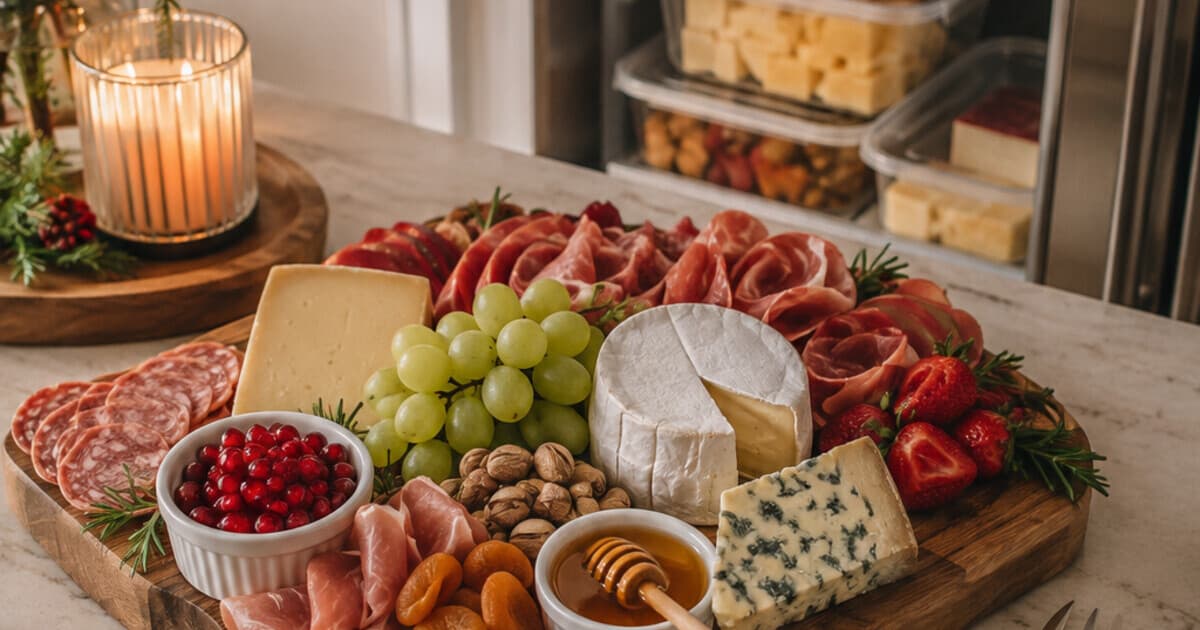
For an appetizer board, Food Network’s current guide suggests roughly 2–3 ounces of meat and about 3 ounces of cheese per person. Treat that as a generous planning reference rather than a rule: if several other appetizers or a full meal follow soon, scale the board down; if the board is the main food, plan substantially more total food and add filling accompaniments.
Use a simple quantity model instead of buying twelve varieties
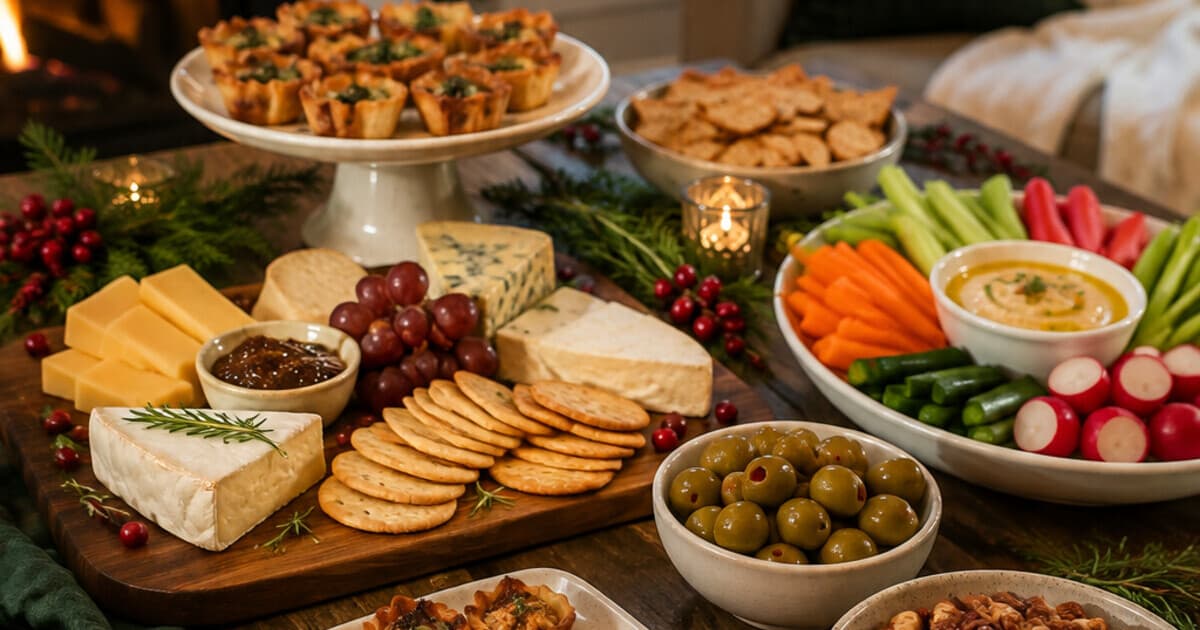
For an appetizer board, start with the guest count and choose two or three cheeses, two meats if you are serving meat, two cracker or bread textures, one fresh fruit, one dried or sweet element, one briny element, and one nut or crunchy extra. A smaller variety in adequate quantity is easier to replenish than a collection of tiny specialty packages.
If the board is the main meal, increase the total amount and add more filling non-charcuterie components rather than simply doubling expensive cured meat. A substantial dip, vegetables, sliced bread, roasted nuts, fruit, and another easy protein can turn grazing into dinner without making one board impossibly crowded. If young children will eat from the board, modify or replace choking hazards such as whole or chopped nuts, whole grapes, and hard raw produce pieces.
Keep crackers and wet food separate until they need to meet
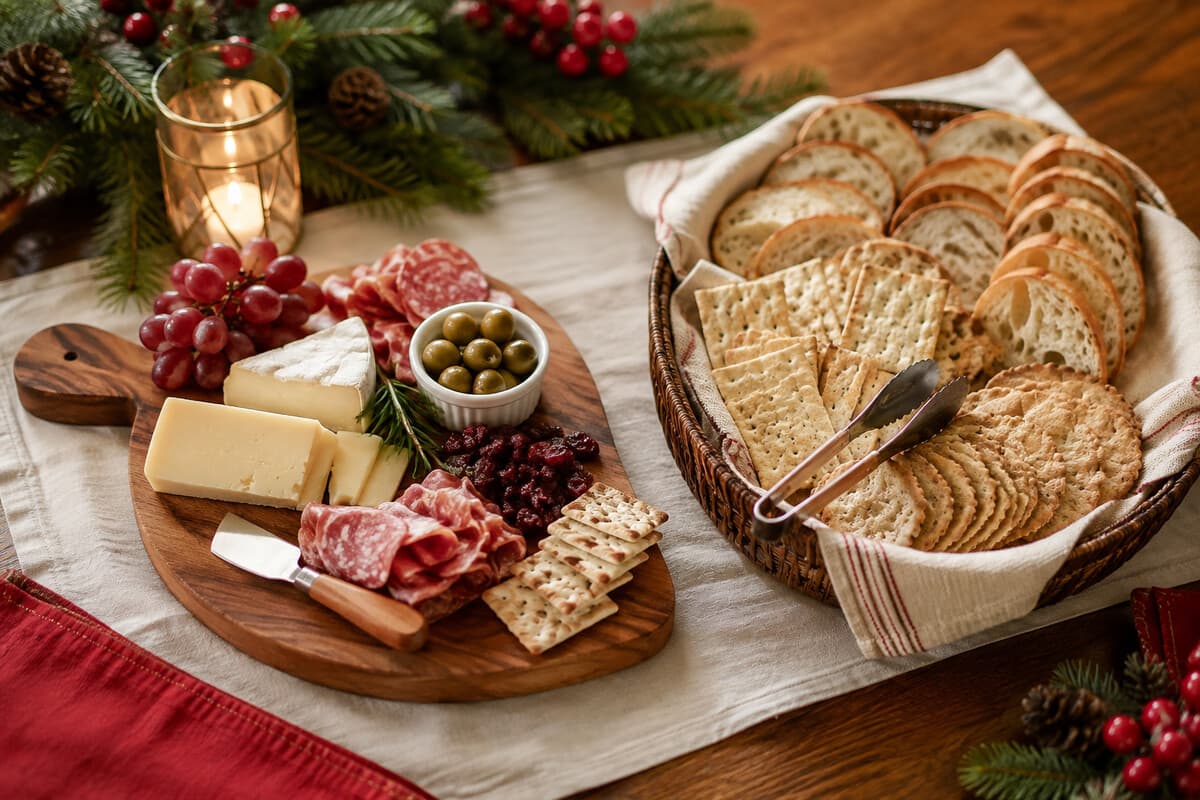
Crackers lose texture when they sit against cut fruit, pickles, moist cheese, or spreads. Keep a large portion of crackers in a separate basket or tray and add a small amount to the board for the visual. Use ramekins for olives, jam, honey, mustard, or anything with liquid.
This also creates refill space. When the first crackers disappear, you can replenish without rebuilding the meat and cheese. If a cracker basket empties, it is obvious what the host needs to do; when crackers are buried under the board, guests may assume there are none left.
Build Christmas color without turning garnish into clutter
Red, green, and white are easy to suggest with grapes, apples, pears, cranberries used as decoration where appropriate, pomegranate, olives, herbs, pale cheeses, and a red jam. Rosemary is common on Christmas-tree and wreath boards because it visually reads as evergreen, but it does not need to touch every food.
Use only edible garnish in places where guests may reasonably mistake decoration for food, and keep non-food holiday decor off the eating surface. A recognizable wreath or tree outline can be made with spacing and ingredient placement; it does not require a pile of ornaments or loose decorative material around uncovered food.
Prepare components ahead, not the entire exposed board
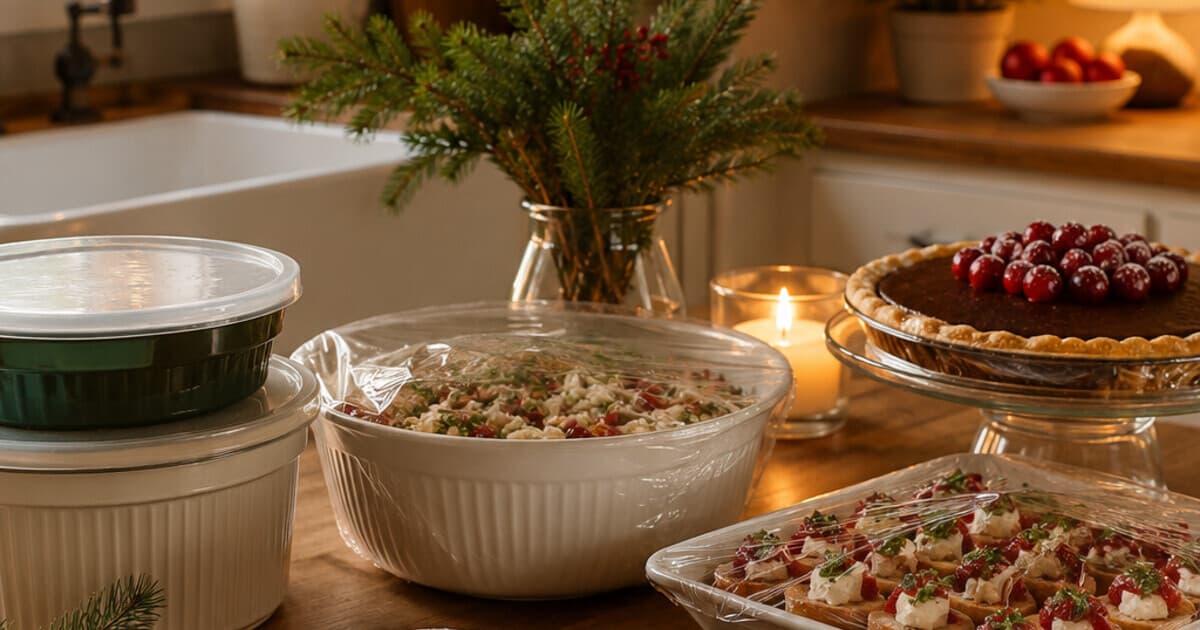
A day ahead, you can usually portion nuts and pantry items, wash and fully dry sturdy fruit, prepare ramekins, label serving tools, and cut or portion foods when their package or recipe storage guidance allows it. Keep meats, cheeses, cut fruit, and other perishables refrigerated. Save crackers and bread for party day.
Assembling most of a covered board ahead can work when you have refrigerator shelf space and compatible ingredients, but a component system is often easier in a real home because it lets you adapt to the final guest count and prevents crackers from going soft.
Use a smaller board plus refrigerated refills for a long party
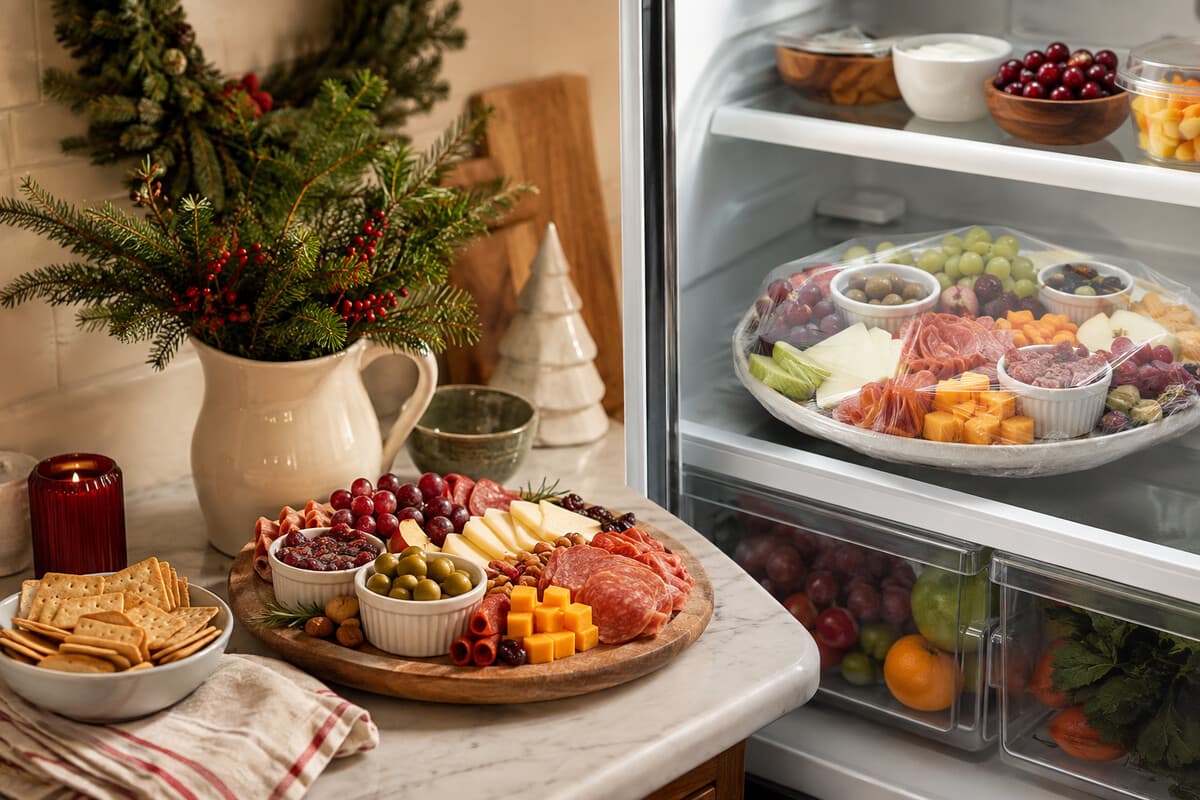
FDA buffet guidance is more useful than aesthetic advice when the gathering lasts several hours: keep cold perishable food at 40°F or colder, and do not leave perishable food at room temperature for more than two hours—or more than one hour when the ambient temperature is above 90°F—unless it is being safely held. Small platters that are replaced from refrigeration are easier to control than one monumental board.
Do not add fresh refrigerated meat and cheese onto the warm remnants of a platter that has been sitting out. Swap in a clean board or platter when practical. This also makes the second wave look intentional instead of patched.
Reverse timeline: shopping through the day before
Several days ahead, buy pantry items, sealed meats and cheeses within their date guidance, serving picks, napkins, and any specialty accompaniment. Check that the board actually fits on the refrigerator shelf if you plan to chill it assembled. Decide where the backup food will live so it is not buried behind party drinks.
The day before, prep safe components, portion backup quantities into containers, wash serving tools, and create a simple layout photo or note if someone else may assemble the board. Do not pre-open crackers just to make tomorrow look easier.
Reverse timeline: 45 minutes before through refill time
About forty-five minutes before guests, arrange the first quantity of meat, cheese, bowls, and stable fruit according to the storage and serving guidance for the products you are using. Add crackers and bread closer to guest arrival. Put the backup food back in the refrigerator immediately rather than leaving containers on the counter.
During the party, replenish dry components freely and manage perishable components by time and temperature. For a long open house, plan a fresh second board rather than attempting to make one exposed board last the entire event.
Christmas charcuterie board checklist
The successful board is the one guests can actually eat from comfortably while the host can maintain it safely.
- Board role is defined: appetizer, substantial snack, or main grazing meal.
- Quantity is based on guest count and the rest of the menu, not board dimensions alone.
- There are enough crackers or bread, with most kept separate from moist food.
- Spreads, olives, pickles, and wet ingredients have bowls or ramekins.
- Perishable backup food has dedicated refrigerator space.
- Serving knives, small tongs, forks, and napkins are ready.
- Decorative herbs or shapes do not make the board difficult to serve.
- A second clean platter is available for a later refill if the event is long.
- Time and temperature are monitored for perishable food.
- Leftovers are refrigerated promptly rather than left on the party table overnight.
SOURCES
Sources & references
These links support factual rules, quantities, safety guidance, or planning context. The final prioritization and sequencing in this guide are editorial decisions. See how sources are chosen.
- Editorial referenceFood Network — How to Build a Perfect Charcuterie Boardfoodnetwork.com
- Editorial referenceFeast + West — Holiday Charcuterie Boardfeastandwest.com
- Editorial referenceCulinary Hill — Christmas Charcuterie Boardculinaryhill.com
- Public guidanceFDA — Serving Up Safe Buffetsfda.gov
- Public guidanceCDC — Choking Hazardscdc.gov
FAQ
Questions people ask before guests arrive
How much meat and cheese should I buy for a Christmas charcuterie board?
For an appetizer board, Food Network’s current guide suggests roughly 2–3 ounces of meat and about 3 ounces of cheese per person. That is a generous reference, not a requirement; scale down when several other appetizers or a full meal follow, and plan more total food when the board is the main meal.
Can I make a Christmas charcuterie board the night before?
You can prepare many components ahead, but whether the assembled board can be refrigerated overnight depends on the ingredients and your storage space. Keep crackers and bread separate until close to serving, and follow product storage guidance for meat, cheese, cut fruit, and spreads.
How long can a charcuterie board sit out?
FDA buffet guidance says perishable food should not remain at room temperature for more than two hours—or more than one hour when the ambient temperature is above 90°F—unless it is being held safely, and cold perishable food should be kept at 40°F or colder. For a long party, use smaller boards and refrigerated refills.
What makes a charcuterie board look Christmas-themed without buying special food?
Use normal foods with seasonal color and shape: green grapes or olives, red fruit or jam, pale cheeses, and a small amount of fresh herbs. Arrange the ingredients as a loose wreath or tree if you want the visual, but prioritize easy serving over a perfect silhouette.